Tag: trauma

  • Another Chance – by Ardhan Swatridge

    A new poem by Ardhan (Paul) Swatridge – October 2019

    We learned so much:
    How not to trust,
    how not to feel
    and if we did,
    to hide our fear
    our loneliness,
    our inner truth,
    at any cost.

    The rules served to
    indoctrinate,
    forced compliance,
    closed our hearts.
    We all obeyed
    except the few
    who broke and went
    to darker hells.

    We who survived,
    the lucky ones,
    buried deep our pain,
    which sits for years,
    a weight in waiting
    for that later crisis
    or the drip drip drip
    that wears away the stone.

    We needed armour then,
    to try to be a ‘man’,
    though much too young,
    our innocence suppressed:
    that vulnerable beauty
    of shame-free feelings
    lived fully in the raw;
    of laughter, tears and rage.

    Creativity first flowed
    and then was blindly crushed
    beneath those adaptations;
    ‘for your own good’ – they said.
    So I forgot to mind
    that innocent one,
    to hug and hold that boy;
    his fragile truth betrayed.

    Is this present crisis
    now another chance
    to override my need
    for a grey numb state?
    for safe isolation,
    for letting go a lie?
    Can those hatches,
    battened down for decades,
    release their padlocks now?

    Can I dare to feel
    the grief of those lost years?
    Can I let my ‘pleaser’ go?
    Can I face the facts
    and name it trauma now?
    Can I give myself
    the gift ‘he’ holds
    in ‘his’ unblemished hands?

    Relief at last, to breathe him
    back to life again.
    A light to penetrate
    the dark of old beliefs
    that nothing ever tried
    could mend those cracks.
    Now hope and love
    are seeping through.

    Is this coming home
    after so long away?
    Can these fragments
    make a healthy whole?
    So many loves lost,
    but what about him?
    He awaits me still,
    to hold him and say,
    “I love you my son.”

  • How Breath Can Heal Your Trauma – and transform your life

    by Kasia Patzelt
    Kasia Patzelt
    You might have heard it before: breath is essential for our well-being. Unfortunately, unless they have experienced ‘breathwork’, most people would say: Yeah, I know how to breathe, not even fathoming the possibility of the profound healing that can happen within a breath session.

    But first things first. Let’s define some terms here.

    What is breathwork?

    There are many types of breathwork: Holotropic Breathwork, Rebirthing, Alchemy of Breath, Biodynamic Breath and Trauma Release System (BBTRS), Transformational Breathing and many more.

    Even though I haven’t tried all of them, I know they have one thing in common: breath. Duh.

    The idea is to charge the body with oxygen through deep connected breathing. No pause between inhalation and exhalation. This brings you in a slightly altered state of consciousness and creates all sorts of unexpected unfamiliar sensations in the body. Some very pleasant, some initially maybe less so. But all of it can serve as a trigger for deep insights, in which you can feel more clearly the energetic undercurrent of your life.

    It’s like letting go of the left brain perspective of your life only and taking a deep dive into the unchartered waters of your subconscious

    In BBTRS the goal is to trigger the fight and flight response in order to give it an opportunity to complete its cycle. But before we go further into that, we have to understand one thing:

    What is trauma?

    The best way to describe it is through Peter Levine’s example in his book Waking the Tiger.

    Photo by Mark Galer on Unsplash

    Imagine a zebra being chased by a lion. Its adrenalin pumping as it runs for its life. Then the lion gets hold of it! What happens to the zebra? It goes stiff. Numb. Frozen.

    According to Levine, this response has two functions:

    a) when numb, the zebra won’t feel much whilst being eaten alive (which is a compassionate mechanism of nature itself) and

    b) this ‘playing dead’ may give it another opportunity to run for its life at a later time when the predator’s attention is averted.

    Let’s see what happens if for some reason the lion gets distracted and the zebra indeed gets a second chance for life. Imagine it: It’s stock stiff lying there on the ground. How does it get from that frozen state into running at 100km/h again? Or put it another way: what happened to all the adrenalin pumping through its blood before going into freeze?

    Exactly, it froze. It didn’t just disappear.

    That means it still is inside, somewhere. For the zebra to be able to get up and run again, it will first have to ‘shake off’ all that access energy. It literally does so through shaking, trembling and tremoring for some time. (Watch this youtube video to see a polar bear going through this process, only 2 minutes).

    After having gone through the ‘discharge’ process, it will take a few deep breaths, get up and join its zebra mates without experiencing trauma.

    As part of our brain is ‘reptilian’ in nature, we are wired the same way as our four-legged friends. This whole cycle is called the ‘fight, flight or freeze’ response. And every time we experience danger, this cycle gets triggered in us. It’s a fantastic tool that nature created to ensure our survival.

    There is one problem, however.

    Many of us are experiencing ‘fight and flight’ on a daily basis. The danger might not be a tiger, but the traffic jam making us late for work and maybe risking losing our job, an angry boss or spouse, the impending economic crisis, the emotional unsafety in our family homes, etc. They can all trigger our Nervous System into survival.

    These dangers are much more abstract and therefore less tangible. This means often we don’t even notice that we are in a state of fight and flight because society normalizes it. And through that, it invalidates the need for discharge or emotional release.

    (author’s note: there are of course many varying degrees and types of trauma. For the sake of this article, I will keep it general and mild as the principle behind is the same)

    To put it simply: We go through the ‘Fight, Flight and Freeze’- Response oftentimes without being consciously aware of it. Without understanding it, and without having the safe space to complete the cycle through discharge, like the zebra. Therefore the access build up energy stays inside of us which leads to trauma.

    Trauma results from the ‘Freeze’ energy in our bodies, energy that hasn’t had the chance to complete its cycle through a discharge. Trauma does NOT result from what happens to us. It results from how effective our Nervous System was able to deal with the energy that was triggered in us.

    Two people can go through the same horrific event, one ending up feeling traumatized and the other one without any adverse effects. It depends on whether the person went into ‘freeze’ and stayed there or whether they took action (fight and flight).

    The good news is that, regardless of the ‘what’ happened to you, you won’t have to carry it with you all your life if you give your self the chance to release it.

    How can breathwork help?

    As mentioned above: breathwork can create a safe space for the cycle of ‘Fight, Flight or Freeze’ to complete itself. Through charging the body with oxygen, and therefore energy, the Fight and Flight kicks in and the body can go through a process of discharging: shaking, tremoring, sweating, shivering, crying, laughing, shouting, myofascial unwinding (the body moving by itself).

    Emotions that had never been acknowledged can finally rise up to the surface, be felt and released. Muscular tension that has been holding the ‘frozen energy’ in place can finally relax and create a feeling of spaciousness inside.

    People often report they can breathe better and more freely. The feeling of looking at their lives from behind a window and not fully participating goes away and they start feeling part of everything. A sense of belonging emerges. They start sensing their own presence and the presence of others.

    They feel more connected to themselves, their feelings, their needs, and their physical aliveness. They have more confidence and trust in expressing their emotions and truth.

    They start feeling safe.

    In the last century humanity made huge leaps in understanding the physiology of trauma. There are countless techniques and tools to help individuals move beyond it.

    Personally I have found Breathwork and especially BBTRS to be incredibly fast and effective. Deep held tensions in my being started releasing just after 2,3 sessions, opening me up to a whole new felt-sense of existence.

    I hadn’t known, I had kept so much inside till I started releasing it. Which is the same I hear from all my clients!

    Wow, I had no idea I could feel like that just through my breath!

    And that’s exactly the beauty of breathwork: it’s the one thing that you have available 24/7 and it’s free. Of course, a skilled facilitator is needed to guide you through the process, however, this whole notion of ‘healer’ disappears as you are healing yourself through your own breath.

    And that’s empowering on a whole new level.

    For those of you interested in more information, I recommend reading ‘Feel to Heal’ by Giten Tonkov, founder of BBTRS. It provides an in-depth understanding of all the above and hopefully some inspiration and hope on your journey!

    Kasia Patzelt works as an Embodiment Coach and writer living in Ibiza, Spain. She helps individuals to move out of trauma into a more wholesome, joyful life through one-on-one sessions and retreats. She is the editor of Embodied Thinking.

  • The Unlearning – by George Monbiot.

    Boarding school, a peculiarly British form of abuse, has devastating impacts not only on the boarders, but on those they grow up to dominate.

    By George Monbiot, published in the Guardian 7th November 2019

    There are two stark facts about British politics. The first is that they are controlled, to a degree unparalleled in any other Western European nation, by a tiny, unrepresentative elite. Like almost every aspect of public life here, government is dominated by people educated first at private schools, then at either Oxford or Cambridge.

    The second is that many of these people possess a disastrous set of traits: dishonesty, class loyalty and an absence of principle. The current Prime Minister exemplifies them. What drives him? What enables such people to dominate us? We urgently need to understand a system that has poisoned the life of this nation for over a century.

    I think I understand it better than most, because there is a strong similarity between what might have been the defining event of Boris Johnson’s childhood and mine. Both of us endured a peculiarly British form of abuse, that is intimately associated with the nature of power in this country. We were sent to boarding school when we were very young.

    He was slightly older than me (11, rather than 8), but was dispatched, as so many boys were, after a major family trauma. I didn’t think a school could be worse than my first boarding school, Elstree, but the accounts that have emerged from his – Ashdown House – during the current independent inquiry into child sexual abuse, suggest that it achieved this improbable feat. Throughout the period when Johnson was a pupil, the inquiry heard, paedophilia was normalised. As the journalist Alex Renton, another ex-pupil, records, the headmaster was a vicious sadist, who delighted in beating as many boys as possible, and victimised those who sought to report sexual attacks and other forms of abuse.

    Johnson was at first extremely hostile to the inquiry, describing it as money “spaffed up a wall”. But he later apologised to other former pupils. He has accepted that sexual assaults took place at the school, though he says he did not witness them. But a culture of abuse affects everybody, one way or another. In my 30s, I met the man who had been the worst bully at my first boarding school. He was candid and apologetic. He explained that he had been sexually abused by teachers and senior boys, acting in concert. Tormenting younger pupils was his way of reasserting power.

    The psychotherapist Joy Schaverien lists a set of symptoms that she calls Boarding School Syndrome. The effects of early boarding, she finds, are similar to being taken into care, but with the added twist that your parents demand it. Premature separation from your family “can cause profound developmental damage”.

    The justification for early boarding is based on a massive but common misconception. Because physical hardship in childhood makes you physically tough, the founders of the system believed that emotional hardship must make you emotionally tough. It does the opposite. It causes psychological damage that only years of love and therapy can later repair. But if there are two things that being sent to boarding school teach you, they are that love cannot be trusted, and that you should never admit to needing help.

    On my first night at boarding school, I felt entirely alone. I was shocked, frightened and intensely homesick, but I soon discovered that expressing these emotions, instead of bringing help and consolation, attracted a gloating, predatory fascination.

    The older boys, being vulnerable themselves, knew exactly where to find your weaknesses. There was one night of grace, and thereafter the bullying was relentless, by day and night. It was devastating. There was no pastoral care at all. The staff watched with indifference as the lives of the small children entrusted to them fell apart. They believed we should sink or swim. (The same philosophy applied to swimming, by the way: non-swimmers were thrown into the deep end of an unheated pool in March).

    I was cut off from everything I knew and loved. Most importantly, I cut myself off from my feelings. When expressions of emotion are dangerous, and when you are constantly told by parents and teachers that this terrible thing is being done for your own good, you quickly learn to hide your true feelings, even from yourself. In other words, you learn the deepest form of dishonesty. This duplicity becomes a habit of mind: if every day you lie to yourself, lying to other people becomes second nature.

    You develop a shell, a character whose principal purpose is to project an appearance of confidence and strength, while inside is all fear and flight and anger. The shell might take the form of steely reserve, expansive charm, bumbling eccentricity, or a combination of all three. But underneath it, you are desperately seeking assurance. The easiest means of achieving it is to imagine that you can dominate your feelings by dominating other people. Repressed people oppress people.

    In adulthood you are faced with a stark choice: to remain the person this system sought to create, justifying and reproducing its cruelties, or to spend much of your life painfully unlearning what it taught you, and learning to be honest again: to experience your own emotions without denial, to rediscover love and trust. In other words, you must either question almost nothing, or question almost everything.

    Though only small numbers of people went through this system, it afflicts the entire nation. Many powerful politicians are drawn from this damaged caste: David Cameron, for example, was seven when he was sent to boarding school. We will not build a kinder, more inclusive country until we understand its peculiar cruelties.

    www.monbiot.com

  • The Great Taboo: Patriarchy Begins At Home.

    Reposted from Womb of Light – by Bethany Webster.

    There’s a reason why it’s been really hard for us to find solutions to our current global challenges. There’s a reason why feminism, with all its gains, has made only limited sustainable momentum for women. There’s a reason why we’re seeing regressive movements and a rise in authoritarianism around the world. It’s due to a huge taboo that we haven’t been willing to face as a collective.

    We have a short window of time to make significant changes before we’re on an irreversible course of climate change, which will impact the earth and humanity in staggering and unforeseen ways. Species are dying off at an unprecedented rate. All things female or representing “femaleness” are under attack: women and our right to reproductive choice, female children, our oceans, animal species, air quality, loss of farmable agricultural land, just to name a few. The violence perpetrated by men and groups of men is being revealed to be more brazen and psychopathic than we had imagined.

    Patriarchy and the Mother Wound: An Urgent Call to Look Within

    One could say that our global situation is a projection of the devastation of our inner landscapes, mirroring something that we must urgently look at within ourselves.

    The Stigma of Victimhood

    A major hurdle to confronting our taboo is that there’s a strong bias against victims in our culture. No one wants to feel like a victim. No one wants to appear as a victim to others. The problem is that this anti-victim bias is precisely what keeps us perpetually stuck in a victimhood.

    Not wanting to be a victim keeps us stuck in victimhood.

    We all bear a mark of victimhood that we are deeply defended against acknowledging because we’ve learned to equate being victim with weakness and defend against it. There’s a deep memory of powerlessness of early childhood that we want to avoid. Our avoidance keeps us in a cycle of replicating the wound over and over again personally and collectively.

    The Family is Patriarchy’s Chief Institution

    The family is patriarchy’s chief institution, as Kate Millet said back in the 70’s. We can name all the atrocities we see out in the world, feel outraged, start initiatives, create organizations, etc. We may become “activists.” But if we haven’t grappled with how we personally have been force-fed patriarchy’s anti-life, anti-female, anti-feeling philosophy as small, helpless children, we can’t move beyond it. As a species, we may not even make it. We have to get to the root first.

    The Mother Wound is the social condition, rooted in patriarchy, which manifests on the personal, cultural, spiritual and planetary level. 

    The Mother Wound is the result of patriarchy’s damaging impact on human development, by way of the systematic oppression of women through hundreds of generations, thus crippling humanity and leading to unprecedented death and destruction on our planet.

    Do you want to learn more about the Mother Wound and how it may be impacting you? Click here to download the new ebook: What is the Mother Wound? An Essential Guide for Women.

    We Know Patriarchy is an Issue. Why Hasn’t More Been Done? 

    Patriarchy values competition, domination, maleness, and a mode of “winning at all costs.” This isn’t just a cultural atmosphere that we get a whiff of every now and then. It’s flowing through our veins and is present in our brain’s neural-circuitry. It got locked into place by the time we were 7 years old.

    Humanity is locked in survival mode, a place of reactivity, flight, flight, freeze or fawn. We are a traumatized species creating more trauma around us. 

    The beliefs, patterns and behaviors we internalized in order to survive in patriarchy are all inside us, and because our families were ground zero for this cultural transfer to take place, they got mixed with our basic human needs of love, safety and belonging. This has compromised our trajectory. Like an invisible fence, we unconsciously stay within certain confines of thinking, feeling and behaving and stay away from others, all while heading off a cliff of collective destruction.

    Childhood Trauma is Normalized

    The majority of us grew up in emotional warzones that were our childhood homes. We have to confront the emotional magnitude of how we suffered as children as a result of the passing along of patriarchal values and norms. None of us have fully escaped this. The reason we keep avoiding this is because this requires emotional resilience and openness to pain, empathy and care, the very things that patriarchy has deemed taboo. As children we were alone with our pain. It’s like a black hole we avoid but subsconsiously it’s controlling our choices and keeping us stuck. We like to think that as adults, we’ve moved beyond childhood simply because we’re older, but in reality we are stuck there emotionally.

    Being with our pain isn’t victimhood. It’s the epitome of personal responsibility and a mark of emotional maturity. 

    Moving through this pain can only happen through being with the pain, through having a loving, empathic inner witness alongside it, what I call an “Inner Mother”. This shift in consciousness is a bridge we must cross psychologically if we are to evolve as a species.

    False Narratives Keep Us in Denial: “It wasn’t that bad.”

    I’ll never forget watching helplessly as my father tormented my little brother. Any time he cried, my father would tell him to “take the pain” and sadistically not allow him to cry. Often he would come home and start hitting him for no reason. I would scream to get him to stop. When I got older, I recall hearing about how my grandfather would beat my father as young as 2 years old, sometimes throwing him against a wall, beating him almost to the point of passing out.

    Our standards for humanity are really low when progress looks like each subsequent generation is slightly less suicidal and desperate than the next.

    I recall how terrifying it was as a little girl, to long to hold my mother for comfort, but instead I sensed her emotional desperation and had no choice but to endure her focus on me as a kind of surrogate mother to the motherless child within her. I disassociated, thought about suicide at 11 years old, and withdrew into spirituality as a cocoon from the pain of emotional neglect. I found out later that my mother had been threatening suicide to my brother when he was a teen. A big secret in her family was that her mother was drunk for much of her childhood and threatened to commit suicide to her as well.

    Our everyday problems are constantly showing us symptoms of the deeper wounds that are potential entry points for insight and healing.

    These may sound like extreme examples to some, but my family looked like a perfect family from the outside. Up until college, I idealized my family and was in complete denial of any pain I went through. What I learned is that the everyday surface problems that we experience are “cover stories” for the real story beneath. We are in deep denial of the old narrative running in the background. We don’t have to go “digging” in our past, it’s all present just beneath the surface.

    The Taboo of the Mother Wound

    The great taboo is that Patriarchy is a traumatizing culture and we all suffer from the Mother Wound to some degree as a result. We’ve been traumatized personally in our families, in the culture at large, spiritually through a sense of being subject to a judgmental male god, and on planetary level by feeling disconnected from the earth.

    We are at an existential crisis point in which our survival depends on integrating the female/mother aspect of humanity we’ve been denying. 

    This unresolved trauma we experienced privately at home was doubly reinforced by our experiences with education, the state, media, entertainment, religion, etc. The Mother Wound is the “center of the wheel of suffering” that impacts every area of our lives, from our relationships, to careers, to parenting, to relationships to our bodies and more. Admitting this is not being a victim or powerless; it’s a sign of intelligence and hope for our species. The most potent access points to healing is looking at how the Mother Wound shows up in our personal lives. When enough of us doing this our culture can be transformed. As we heal, we evolve and humanity moves forward.

    White Male Privilege and Spiritual Bypassing

    Our collective denial is so strong that most doctors, many therapists, and scores of spiritual teachers and coaches, are active purveyors of this great denial of childhood trauma. It’s as though there’s an overlay that blinds us to it and also blinds us to the reality that we’re blind to it.

    I was watching a talk recently between Gabor Mate and Adyashanti, two authors I admire. Towards the end of the talk, the topics of trauma and spiritual bypassing were finally broached. Both agreed that trauma is extremely prevalent in their students and how in recent years dozens of highly regarded spiritual teachers were exposed for sexual assault and improprieties. Adyashanti said “You should not expect your spiritual teacher to be an expert on trauma.” My question is why not? If the vast majority of your students and followers suffer from some form of trauma (as they mentioned) then why not make your teachings and resources inclusive of that?

    True integrity demands that every spiritual teacher or leader of any kind be experts on their own trauma at the very least. And they should consider themselves to be ongoing students of trauma, deepening their understanding of how it affects human potential. One can’t have grounded spirituality without acknowledging how trauma shapes us and blocks us from knowing our true nature.

    Any legitimate form of activism, spirituality or healing should always go hand in hand with an understanding that our personal trauma is always playing a role in how we show up. 

    Without this acknowledgement, our initiatives and movements will continue to be superficial, unsustainable, prone to conflict or unethical. In other words, some virulent thread of patriarchy will always remain and our efforts will be deeply limited.

    We need to be experts on how we were traumatized in our families and how it impacts our lives. This should no longer be a taboo. We need to make healing the Mother Wound a badge of honor and integrity. This isn’t blame, it’s generational responsibility. Patriarchy, and the trauma it creates, has blinded us to the depth and complexity of ourselves and each other. It’s time to raise the standard.

    At another point in the talk, Gabor expressed surprise that Adyashanti’s zen teacher was not some great man, but rather, an active mother of 5 children. I found it interesting that there was a marked lack of curiosity about her life or how she reached such heights of wisdom; no curiosity about how the fact of her being a mother may have factored into her spiritual advancement.

    Through objectification and commodification of female human life, we are a shadow of our collective potential and now a menace to life on earth. 

    Racism, homophobia, and sexism appear more rampant and escalated than ever. Our “othering” of certain humans based on race or sex is an echo of how we learned to “other” the traumatized child within us. It all emanates from there.

    Women are Closer to the Truth (and the Pain) 

    Through my teaching and coaching women, I’ve seen that working through your own Mother Wound begins to inoculate you from feeling like a victim and replicating those early wounds with others. The sense of victimhood greatly diminishes as it’s no longer a default setting running in the background. With the foggy glaze of denial dissolving around your own vision, you are better able to see reality as it is and able to be more honest with yourself.

    You are likely to feel more empowered and at choice in situations where you may have felt trapped in reactivity in the past.

    You feel more like an adult and less like a victimized child. Thus, you elevate the people and spaces around you by simply being who you are, unapologetically and undefensively. Part of our collective healing is supporting one another on this path.

    Both Men and Women Have Anti-Female Feelings

    We have to confront our anti-female feelings. We learned “anti-femaleness” through the cognitive dissonance of early childhood, in which our mothers were the most important, significant person in our lives. Yet, they were also the most denigrated, disempowered and disrespected in our own homes and in every aspect of the world.

    Ultimately, both men and women are suffering from a form of self-abandonment that occurred early in life, a splitting off from feelings, empathy, care, process, depth, presence; things that “Mother” represented and was defiled for.

    All kinds of dysfunction, pain and trauma flowed from there, for all of us, to varying degrees. These are the very qualities we have to birth in ourselves to move beyond patriarchy.

    Reckoning With the Taboo of the Mother Wound

    Reckoning with this great taboo is the ground zero for creating a new earth, a new era for humanity. Healing the Mother Wound widens the gap between stimulus and response so that we’re less often in a state of reactivity and fight, flight, freeze or fawn. Through that widened space, more human potential can be realized and solutions to our most pressing global problems can be found.

    Here’s a sample of what we recover through healing the Mother Wound: 

    1. Resensitize Yourself to Life: 

    Life gets re-animated. Instead of seeing things through a lens of deadening labels and an overlay of trauma, we can more easily perceive the visceral beauty, depth and the preciousness of life all around us.

    2. Integrate Instead of Compartmentalize: 

    We are more able to see life as an integrated whole and our self-awareness increases. We see connections more than differences. The differences feel less threatening. We are more open to feedback.

    3. Redefine Triggers as Opportunities: 

    Our reactivity is a teacher showing us what is next for us to heal from our past. Each trigger is an opportunity to make new choices that we couldn’t as kids.

    4. Reclaim Embodied Ways of Knowing:

    Felt experience becomes a source of wisdom and information. We act on our own self-knowledge and learn to trust it. Reclaiming ourselves as the authority of our experience. Learning to trust our observations and intuitions.

    5. Anoint Being Over Doing: 

    Trusting our need for rest, silence, for space, for time without feeling like something terrible is going to happen unless we’re productive.

    6. De-Objectify the World Around You: 

    As we become emotionally available for the traumatized child within us, we become emotionally available for other people, we feel empathy more deeply, we feel more connected to non-human species and the earth itself.

    7. Value the Vulnerable: 

    As we get in touch with the scope and magnitude of how much we suffered emotionally as children, we see value in things like grief, sadness, disappointment, welcoming them rather than judging or shaming ourselves for them. We look forward to the renewal and regeneration they offer and the clarity that always follows in their wake.

    Do you want to learn more about the Mother Wound and how it may be impacting you? Click here to download What is the Mother Wound? An Essential Guide for Women.

    Questions for Reflection: Patriarchy as a Culture of Trauma that begins in our childhood homes

    • How did patriarchy play out in your family of origin?
    • How were patriarchal values transmitted and reinforced?
    • What was that like for you emotionally?
    • How did you adapt or cope with that environment?
    • What challenges do you have in your current life that are rooted in those early experiences?
    • What are some ways you can be present to that child within you?
    • What resources or support do you need in our daily life to make this happen?

    Healing the Mother Wound is not a quick, glamorous or easy path. But it is the authentic path to inter-generational healing and transformation that we must undertake. Through this work, we create a better world for ourselves, our families, our children, and the earth.

    I invite you to join me to learn more:

    If you want to join a group of women focused on emerging from patriarchy, check out Emergence Now. If you want to dive deeper into your own personal healing work, check out the Mother Wound Online Course. If you have any questions reach out to my team at support@motherwound.com. Thank you for being here!

    Copyright 2019 Bethany Webster. All Rights Reserved.
     

  • My Mother

    This week I got a little closer to something I have been sidestepping for a long time. My partner tells me how I subtly withhold my self, my thoughts and feelings, my vulnerability, my love – for her and for others. I measure it all out from a distance.

    It has been a feature of our relationship, as she has her own ways of holding back in her love-giving. We have both been hurt in previous relationships and both had parental influences in our childhoods, where our patterns of withholding began. We are kind to each other over this, but we both long for the other to let go so we can drop into deeper connection.

    So we are gradually learning to heal and change these patterns. For me it has been clear for a long time that the root, the tap root at least, stems from the time when I was sent off to boarding school. I coped with the pain of separation from my parents by unconsciously deciding that I would not show them my love. I learned to withhold to protect myself, particularly from my mother. I was probably angry as well as sad and lonely.

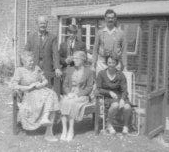
    Me with my mother, father, grandparents & great aunt (middle front).
    Me with my mother, father, grandparents & great aunt (middle front).
    My withhold included not telling my mother about my pains and unhappinesses over those years at school, as I grew up. It continued through my adult years, that I didn’t show her my love and I didn’t speak to her about those years and about my awareness, as it became clearer to me. I found myself stuck with this behaviour, unable to change it, except on rare occasions when I managed to offer her a kiss, or a quick hug. I don’t think I really wanted to change this. Maybe I was still holding resentment, even though in my maturity, I could see she had done the best she could as a mother.

    My mother is now 91 and although she is mentally alert, she may not have too much longer to live. Suddenly this week I could see the possibility of speaking frankly to her and trying to heal the lifelong divide that has sat between us, unaddressed.

    A few months ago I found myself speaking to her about a traumatic event that happened in a class at school, which ever since has left me with a fear of speaking in public, afraid of being shamed, as I was back then, and specifically now, unable to learn and speak italian for fear of making a fool of myself.

    My mother was shocked to hear of what happened to me at school and how it has left me with a lifelong scar of fear around performance related things. She has mentioned it several times and I am now feeling a strong urge to speak more openly with her about all of this and to try to close the ‘love gap’ that has kept us distant emotionally since I was eight.

    I won’t be seeing her face-to-face now till september, but when I go, I wonder if we can heal my wound (and hers) so that we can shed some tears, hug and be close in the vulnerability of my truth for the first time. And of course I wonder if the healing will bring benefits in all my other relationships, especially with my partner.