Category: Articles by others

  • Love as a verb

    Love as a verb

    By Nimue Brown

    One of the ideas that Pagan author Halo Quin has brought into my life recently is the notion of love as a verb. She’s been talking about this around self care especially. Many of us find the idea of self-love disconcerting at best. If it feels really alien as an idea it can be impossible to work with. However, when the focus is on what you can do rather than how you feel, it becomes easier to think about.

    It’s worth asking what we can do to take better care of ourselves. What do I need right now? What would help me? What does my body need? What would help my heart? What does my soul require? It’s good to check in with yourself regularly and to think about these things and then act on them. Self care as something we do, rather than as an idea, is a good deal more effective. 

    ‘Love’ as a word is easy to bandy about. I’ve had a few people in my life who liked to say extravagant things but never really followed through on it. When love is a feeling that lives inside you, that can be lovely, but if it isn’t expressed through actions, it’s of limited use to anyone else.

    This is definitely also an issue around religions. The idea of the love of God is something quite a lot of people like to talk about – especially right wing politicians. Without the actuality of putting that love into the world, it isn’t of any use to anyone. It may in fact be more about self delusion and hypocrisy.

    For Pagans, I think the most important question around spiritual love is whether we love nature as an idea, or whether we’re doing anything with that love.

    When you love actively, you build through action. In any context, turning love into deeds has the impact of putting your love into the world in ways that will make a difference. If the love that lives in your heart doesn’t inspire you into action, that’s worth thinking about. It may be a consequence of a worldview that divides soul things from the physical world. We exist as physical beings, and if love does not flow from us to inform what we do, then what are we doing with our lives?

  • The Meaningful World – by Charles Eisenstein, Nov 2022

    The Meaningful World – by Charles Eisenstein, Nov 2022

    Hi readers, I’d like to share some excerpts from an interview I did with Tam Hunt. Full interview here. I really appreciated Tam’s questions; some of them got me to speak of things I rarely touch in most interviews. It was a written interview but I recorded some parts in case you want to listen instead.

    Listen now · 8:35

    Tam Hunt: Why do you focus on beauty as such an important aspect of life, and of what’s missing in our modern world, with its “uglification” and industrialization of so much around us?

    Charles Eisenstein: Beauty is one of those things we cannot quantify, and therefore which fits poorly into conventional economic thinking. Money logic is good at maximizing efficiency, which is actually maximizing something measurable. For example, it produces large buildings cheaply.

    I focus on beauty a lot because it offers such a clear example of our poverty. The beauty lens makes it obvious that financial thinking, and quantitative thinking generally, is incapable of producing certain things that the human soul requires. What does the world need most right now? Is it more?

    How much does your fluency in another language and culture, quite different than US culture, influence your thinking and willingness to propose ideas that are radically different than the mainstream?

    Well, there are certainly plenty of multilingual people around, and not all of them are creative thinkers. But I think in my case, immersing in a radically different language and culture prevented my intellectual programming from calcifying. I was introduced to entirely new categories of thought before the old ones had fully formed.

    I also have to credit psychedelic medicines for exposing the narrowness and artificiality of what I’d until then accepted as real. They helped open my mind to different ways of conceiving and perceiving the world that local traditions of Buddhism and Taoism offered. I never studied either deeply, but they suffused the cultural atmosphere and influenced me profoundly, particularly Taoism.

    One influence I can say that Chinese has had on my later work is that it helped me work more comfortably with paradox. It is in many ways a less precise language than English; the same is true of the various Taoist sciences. You don’t start with basic definitions and first principles and work your way up from those. Taoism applies a more holistic logic and employs more teleological thinking. To some extent, this is embodied in the Chinese language too. Grammar is more fluid, words can morph from one part of speech to another, and the “atoms” of the language are semantic and not alphabetic. Aphabetic languages offer a model of reality in which meaning is an illusion. Just as meaningful words are composed of meaningless letters, so also is the meaningful world composed of meaningless protons, neutrons, and electrons. Chinese is not like that: meaning in Chinese is elemental. Perhaps these feature of the Chinese language primed me to explore non-reductionistic thinking and the relationship between story and reality in my later work.

    Were you always comfortable with being considered a radical? In my own experience studying various fields and finding myself coming to very different conclusions than the mainstream I’ve realized that there must be significant other factors than logic or evidence influencing whatever ideas or theories are most prominent — because so many of them just don’t make sense under scrutiny. I’ve thus found myself comfortable with being in many ways “on the fringe” but it’s not something I sought out. Have you experienced a similar dynamic in your intellectual meanderings?

    I have long and frequently felt a bit of an alien here. Until recently, that has mostly meant being ignored and dismissed, a mostly benign neglect outside the corner of the culture that comprises my readers. That changed with the pandemic, when ideas that I’ve written about for years all of a sudden attracted much more attention, much of it hostile. For example, in The Ascent of Humanity there is a section titled “The War on Germs,” in which I located conventional medicine within larger paradigms of conquest and offered quite specific critique of certain medical practices. But it was only in the last two years that such views drew public denunciation and cancellation — including by the very publisher who now carries that book. If I may flatter myself to say that my views are true, I can only hope that they exemplify Schopenhauer’s adage: “All truth passes through three stages. First it is ridiculed. Second, it is violently opposed. Third, it is accepted as being self-evident.”

    Is it practical to suggest that performing mundane acts like laundry, yard work, or changing diapers should be viewed as sacred tasks, as ways of creating a more beautiful world, as you suggest in your work?

    Well, our society little celebrates such activities, and our economy hardly rewards them. Yet, they require a lot of patience and humility. We need people to do such things with care and devotion, at least as much as we need people to invent new machines and build new organizations. Neither is more sacred than the other. However, I’m not suggesting that some people should spend their whole lives changing diapers and doing laundry. Calling such activities “sacred” is not a way to justify an unfair, exploitative division of labor. It is rather the opposite. If we as a society hold those activities as worthy, then no one will believe themselves to be above such things.

    Ultimately, I am advocating a reversal of an age-old prejudice, which values the abstract over the concrete, the spirit over the flesh, and the spiritual over the material. This anti-materialism has caused tremendous harm to materiality; that is, to nature. Part of recovering from the spell of money (which is itself an abstraction of value) is to re-value the material, the soil, the flesh, the living, and the human.

    You paint a nuanced view of technology, highlighting its ability (already realized in so many ways) to make problems worse through unwise “technofixes,” but also suggesting that there may indeed be “technologies of Reunion” that may bring us more quickly into the Age of Reunion you call for. Can you offer some rules of thumb on how to make this key kind of discernment about the role of new technologies in our lives?

    The key differentiating principle is that Technologies of Reunion are not based on control. What we call technology today is a system for applying force to matter with ever greater precision. The dream is that if we could only control every atom in the world, in our own bodies and brains, etc., if we could only quantify and manipulate everything in the material and social world, we could engineer paradise. Well, no matter how far we develop our ability to control the world, paradise remains on the horizon, as far away as ever. (The same is true on the personal level when we try to control other people in our lives.) In contrast, Technologies of Reunion draw on an understanding that the world is alive, that there are intelligences beyond the human, and that by participating in these intelligences we can co-achieve miraculous results. For example, technologies of control try to perfect agricultural yields by precisely controlling every component of the soil, eliminating weeds and pests, and so forth. Technologies of Reunion seek to support the aliveness of the soil, listening and observing it as a living being, asking what it needs, trusting that its thriving is connected to our own.

  • Loss Has Already Transfigured Your Life Into An Altar

    You will lose everything – Jeff Foster


    You will lose everything. Your money, your power, your fame, your success, perhaps even your memories. Your looks will go. Loved ones will die. Your body will fall apart. Everything that seems permanent is impermanent and will be smashed. Experience will gradually, or not so gradually, strip away everything that it can strip away. Waking up means facing this reality with open eyes and no longer turning away.
    But right now, we stand on sacred and holy ground, for that which will be lost has not yet been lost, and realizing this is the key to unspeakable joy. Whoever or whatever is in your life right now has not yet been taken away from you. This may sound trivial, obvious, like nothing, but really it is the key to everything, the why and how and wherefore of existence. Impermanence has already rendered everything and everyone around you so deeply holy and significant and worthy of your heartbreaking gratitude.

    Loss has already transfigured your life into an altar.

  • We Need Myths

    We are myth-making creatures and during the twentieth century we saw some very destructive modern myths, which ended in massacre and genocide [and ecocide].

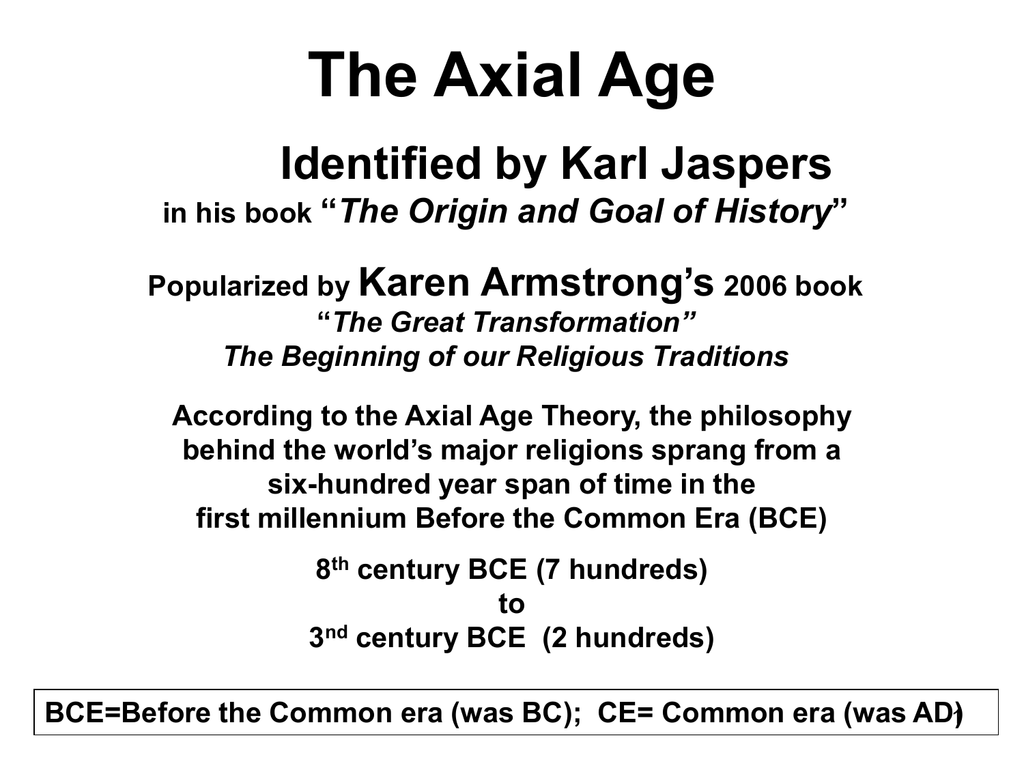
    These myths have failed because they do not meet the criterion of the Axial Age. They have not been infused with the spirit of compassion and respect for the sacredness of all life…….

    …..We need myths that help us venerate the earth as sacred once again, instead of merely using it as a resource. This is crucial because unless there is some kind of spiritual revolution that is able to keep abreast of our technological genius, we will not save our planet.

    Karen Armstrong.

  • How Breath Can Heal Your Trauma – and transform your life

    by Kasia Patzelt
    Kasia Patzelt
    You might have heard it before: breath is essential for our well-being. Unfortunately, unless they have experienced ‘breathwork’, most people would say: Yeah, I know how to breathe, not even fathoming the possibility of the profound healing that can happen within a breath session.

    But first things first. Let’s define some terms here.

    What is breathwork?

    There are many types of breathwork: Holotropic Breathwork, Rebirthing, Alchemy of Breath, Biodynamic Breath and Trauma Release System (BBTRS), Transformational Breathing and many more.

    Even though I haven’t tried all of them, I know they have one thing in common: breath. Duh.

    The idea is to charge the body with oxygen through deep connected breathing. No pause between inhalation and exhalation. This brings you in a slightly altered state of consciousness and creates all sorts of unexpected unfamiliar sensations in the body. Some very pleasant, some initially maybe less so. But all of it can serve as a trigger for deep insights, in which you can feel more clearly the energetic undercurrent of your life.

    It’s like letting go of the left brain perspective of your life only and taking a deep dive into the unchartered waters of your subconscious

    In BBTRS the goal is to trigger the fight and flight response in order to give it an opportunity to complete its cycle. But before we go further into that, we have to understand one thing:

    What is trauma?

    The best way to describe it is through Peter Levine’s example in his book Waking the Tiger.

    Photo by Mark Galer on Unsplash

    Imagine a zebra being chased by a lion. Its adrenalin pumping as it runs for its life. Then the lion gets hold of it! What happens to the zebra? It goes stiff. Numb. Frozen.

    According to Levine, this response has two functions:

    a) when numb, the zebra won’t feel much whilst being eaten alive (which is a compassionate mechanism of nature itself) and

    b) this ‘playing dead’ may give it another opportunity to run for its life at a later time when the predator’s attention is averted.

    Let’s see what happens if for some reason the lion gets distracted and the zebra indeed gets a second chance for life. Imagine it: It’s stock stiff lying there on the ground. How does it get from that frozen state into running at 100km/h again? Or put it another way: what happened to all the adrenalin pumping through its blood before going into freeze?

    Exactly, it froze. It didn’t just disappear.

    That means it still is inside, somewhere. For the zebra to be able to get up and run again, it will first have to ‘shake off’ all that access energy. It literally does so through shaking, trembling and tremoring for some time. (Watch this youtube video to see a polar bear going through this process, only 2 minutes).

    After having gone through the ‘discharge’ process, it will take a few deep breaths, get up and join its zebra mates without experiencing trauma.

    As part of our brain is ‘reptilian’ in nature, we are wired the same way as our four-legged friends. This whole cycle is called the ‘fight, flight or freeze’ response. And every time we experience danger, this cycle gets triggered in us. It’s a fantastic tool that nature created to ensure our survival.

    There is one problem, however.

    Many of us are experiencing ‘fight and flight’ on a daily basis. The danger might not be a tiger, but the traffic jam making us late for work and maybe risking losing our job, an angry boss or spouse, the impending economic crisis, the emotional unsafety in our family homes, etc. They can all trigger our Nervous System into survival.

    These dangers are much more abstract and therefore less tangible. This means often we don’t even notice that we are in a state of fight and flight because society normalizes it. And through that, it invalidates the need for discharge or emotional release.

    (author’s note: there are of course many varying degrees and types of trauma. For the sake of this article, I will keep it general and mild as the principle behind is the same)

    To put it simply: We go through the ‘Fight, Flight and Freeze’- Response oftentimes without being consciously aware of it. Without understanding it, and without having the safe space to complete the cycle through discharge, like the zebra. Therefore the access build up energy stays inside of us which leads to trauma.

    Trauma results from the ‘Freeze’ energy in our bodies, energy that hasn’t had the chance to complete its cycle through a discharge. Trauma does NOT result from what happens to us. It results from how effective our Nervous System was able to deal with the energy that was triggered in us.

    Two people can go through the same horrific event, one ending up feeling traumatized and the other one without any adverse effects. It depends on whether the person went into ‘freeze’ and stayed there or whether they took action (fight and flight).

    The good news is that, regardless of the ‘what’ happened to you, you won’t have to carry it with you all your life if you give your self the chance to release it.

    How can breathwork help?

    As mentioned above: breathwork can create a safe space for the cycle of ‘Fight, Flight or Freeze’ to complete itself. Through charging the body with oxygen, and therefore energy, the Fight and Flight kicks in and the body can go through a process of discharging: shaking, tremoring, sweating, shivering, crying, laughing, shouting, myofascial unwinding (the body moving by itself).

    Emotions that had never been acknowledged can finally rise up to the surface, be felt and released. Muscular tension that has been holding the ‘frozen energy’ in place can finally relax and create a feeling of spaciousness inside.

    People often report they can breathe better and more freely. The feeling of looking at their lives from behind a window and not fully participating goes away and they start feeling part of everything. A sense of belonging emerges. They start sensing their own presence and the presence of others.

    They feel more connected to themselves, their feelings, their needs, and their physical aliveness. They have more confidence and trust in expressing their emotions and truth.

    They start feeling safe.

    In the last century humanity made huge leaps in understanding the physiology of trauma. There are countless techniques and tools to help individuals move beyond it.

    Personally I have found Breathwork and especially BBTRS to be incredibly fast and effective. Deep held tensions in my being started releasing just after 2,3 sessions, opening me up to a whole new felt-sense of existence.

    I hadn’t known, I had kept so much inside till I started releasing it. Which is the same I hear from all my clients!

    Wow, I had no idea I could feel like that just through my breath!

    And that’s exactly the beauty of breathwork: it’s the one thing that you have available 24/7 and it’s free. Of course, a skilled facilitator is needed to guide you through the process, however, this whole notion of ‘healer’ disappears as you are healing yourself through your own breath.

    And that’s empowering on a whole new level.

    For those of you interested in more information, I recommend reading ‘Feel to Heal’ by Giten Tonkov, founder of BBTRS. It provides an in-depth understanding of all the above and hopefully some inspiration and hope on your journey!

    Kasia Patzelt works as an Embodiment Coach and writer living in Ibiza, Spain. She helps individuals to move out of trauma into a more wholesome, joyful life through one-on-one sessions and retreats. She is the editor of Embodied Thinking.

  • The Unlearning – by George Monbiot.

    Boarding school, a peculiarly British form of abuse, has devastating impacts not only on the boarders, but on those they grow up to dominate.

    By George Monbiot, published in the Guardian 7th November 2019

    There are two stark facts about British politics. The first is that they are controlled, to a degree unparalleled in any other Western European nation, by a tiny, unrepresentative elite. Like almost every aspect of public life here, government is dominated by people educated first at private schools, then at either Oxford or Cambridge.

    The second is that many of these people possess a disastrous set of traits: dishonesty, class loyalty and an absence of principle. The current Prime Minister exemplifies them. What drives him? What enables such people to dominate us? We urgently need to understand a system that has poisoned the life of this nation for over a century.

    I think I understand it better than most, because there is a strong similarity between what might have been the defining event of Boris Johnson’s childhood and mine. Both of us endured a peculiarly British form of abuse, that is intimately associated with the nature of power in this country. We were sent to boarding school when we were very young.

    He was slightly older than me (11, rather than 8), but was dispatched, as so many boys were, after a major family trauma. I didn’t think a school could be worse than my first boarding school, Elstree, but the accounts that have emerged from his – Ashdown House – during the current independent inquiry into child sexual abuse, suggest that it achieved this improbable feat. Throughout the period when Johnson was a pupil, the inquiry heard, paedophilia was normalised. As the journalist Alex Renton, another ex-pupil, records, the headmaster was a vicious sadist, who delighted in beating as many boys as possible, and victimised those who sought to report sexual attacks and other forms of abuse.

    Johnson was at first extremely hostile to the inquiry, describing it as money “spaffed up a wall”. But he later apologised to other former pupils. He has accepted that sexual assaults took place at the school, though he says he did not witness them. But a culture of abuse affects everybody, one way or another. In my 30s, I met the man who had been the worst bully at my first boarding school. He was candid and apologetic. He explained that he had been sexually abused by teachers and senior boys, acting in concert. Tormenting younger pupils was his way of reasserting power.

    The psychotherapist Joy Schaverien lists a set of symptoms that she calls Boarding School Syndrome. The effects of early boarding, she finds, are similar to being taken into care, but with the added twist that your parents demand it. Premature separation from your family “can cause profound developmental damage”.

    The justification for early boarding is based on a massive but common misconception. Because physical hardship in childhood makes you physically tough, the founders of the system believed that emotional hardship must make you emotionally tough. It does the opposite. It causes psychological damage that only years of love and therapy can later repair. But if there are two things that being sent to boarding school teach you, they are that love cannot be trusted, and that you should never admit to needing help.

    On my first night at boarding school, I felt entirely alone. I was shocked, frightened and intensely homesick, but I soon discovered that expressing these emotions, instead of bringing help and consolation, attracted a gloating, predatory fascination.

    The older boys, being vulnerable themselves, knew exactly where to find your weaknesses. There was one night of grace, and thereafter the bullying was relentless, by day and night. It was devastating. There was no pastoral care at all. The staff watched with indifference as the lives of the small children entrusted to them fell apart. They believed we should sink or swim. (The same philosophy applied to swimming, by the way: non-swimmers were thrown into the deep end of an unheated pool in March).

    I was cut off from everything I knew and loved. Most importantly, I cut myself off from my feelings. When expressions of emotion are dangerous, and when you are constantly told by parents and teachers that this terrible thing is being done for your own good, you quickly learn to hide your true feelings, even from yourself. In other words, you learn the deepest form of dishonesty. This duplicity becomes a habit of mind: if every day you lie to yourself, lying to other people becomes second nature.

    You develop a shell, a character whose principal purpose is to project an appearance of confidence and strength, while inside is all fear and flight and anger. The shell might take the form of steely reserve, expansive charm, bumbling eccentricity, or a combination of all three. But underneath it, you are desperately seeking assurance. The easiest means of achieving it is to imagine that you can dominate your feelings by dominating other people. Repressed people oppress people.

    In adulthood you are faced with a stark choice: to remain the person this system sought to create, justifying and reproducing its cruelties, or to spend much of your life painfully unlearning what it taught you, and learning to be honest again: to experience your own emotions without denial, to rediscover love and trust. In other words, you must either question almost nothing, or question almost everything.

    Though only small numbers of people went through this system, it afflicts the entire nation. Many powerful politicians are drawn from this damaged caste: David Cameron, for example, was seven when he was sent to boarding school. We will not build a kinder, more inclusive country until we understand its peculiar cruelties.

    www.monbiot.com

  • Every Great Social Movement – by David Korten

    When ordinary people reject the cultural stories that limit their possibilities and bind them to servitude, the course of history turns.

    This article is adapted from excerpts from: Agenda for a New Economy: From Phantom Wealth to Real Wealth.

    Every great social movement begins with a set of ideas validated, internalized, and then shared and amplified through media, grassroots organizations, and thousands, even millions, of conversations. A truth strikes a resonant chord, we hear it acknowledged by others, and we begin to discuss it with friends and associates.The new story spreads out in multiple ever-widening circles that begin to connect and intermingle.

    A story of unrealized possibility gradually replaces the falsified story that affirmed the status quo. The prevailing culture begins to shift, and the collective behavior of the society shifts with it.

    For the civil rights and women’s movements, the old story said:

    Women and people of color have no soul. Less than human, they have no natural rights. They can find fulfillment only through faithful service to their white male masters.

    A profound cultural shift occurred between 1950 and 1980 as the consequence of a growing rejection of these stories in favor of a new story that recognized and affirmed the full humanity and rights of all people.

    It began with the civil rights movement, inspired in part by the words and writing of W. E. B. DuBois, founder of the National Association for the Advancement of Colored People (NAACP). His ideas were carried forward by others such as the Reverend Martin Luther King Jr. Communicated through books, periodicals, and speeches, these ideas inspired and shaped countless conversations, particularly in black churches, about race and the possibilities of integration based on a full recognition of the inherent humanity of people all races. A story of unrealized possibility gradually replaces the falsified story that affirmed the status quo. The prevailing culture begins to shift, and the collective behavior of the society shifts with it.

    Thinkers, writers, and activists who embraced the idea of integration engaged in verbal combat with those who defended the status quo as legitimated by the old story. As the story of possibility gained currency, proponents engaged in nonviolent civil disobedience in the form of sit-ins in segregated facilities, which began to create a new reality and set the stage for political demands to replace laws that institutionalized the old story with laws that institutionalized the new.

    In 1963, as the civil rights movement was gaining traction, Betty Friedan published The Feminist Mystique, calling attention to a vague dissatisfaction plaguing housewives. It touched a deep chord and became the focus of thousands of living room conversations in which women who had been raised on the story that the key to a woman’s happiness was to find the right man, marry him, and devote her life to his service gathered to share their own stories. Conditioned to believe that failure to find happiness in service to their husbands revealed a character flaw they must strive to correct, those for whom this wasn’t working found they were not alone. The flaw lay not with them, but with the false story.

    Those whom these discussions initially liberated lent their voices to a growing chorus that spread a story of women’s rights and abilities. As millions of women joined in the conversation, a new gender story came to the fore and unleashed the feminine as a powerful force for global transformation.

    The environmental movement emerged as a challenge to two old stories, one biblical and one secular:

    God gave nature to man to do with as he pleases.

    Nature has no value beyond its market price and is properly used for whatever purpose generates the greater financial return.

    Many trace the origin of the modern environmental movement to Rachel Carson’s Silent Spring, published in 1962. It stimulated countless conversations about the human relationship to nature. The resulting challenge to the old stories spread through media and academic programs. A new political consensus on the human imperative and responsibility to protect and conserve nature began to emerge.

    These transforming experiences have combined with the growth in global intercultural exchange that came with the expansion of international air travel to awaken a consciousness of culture as a perceptual lens and a human construct with powerful consequences. With that awakening came recognition of the need to accept responsibility for our shared stories and their consequences.

    The awakened consciousness is relatively immune to manipulation by corporate media, advertising, and political demagogues. For those who share this experience, the stories that affirm and encourage racism, sexism, homophobia, and consumerism are more easily seen for what they are—a justification for imperial domination, exploitation, and violence against life.

    The global awakening creates the opportunity for the first time in 5,000 years to consign the dominator structures of Empire to the dustbin of history, bring forth a New Economy, and complete the human transition to full-fledged democracy and Earth Community.

  • Break Free From The Stimulation Nation

    I just came across this article which feels very relevant as a follow-on from my theme of Silence:

    Written by Dr. Perry, PhD


    “I believe people are afraid to be still because we’re used to being stimulated.” ~Michael W. Smith

    When was the last time you sat alone in silence without anything or anyone to distract you? For many of us, it is difficult to be alone without something to entertain us or to focus our attention on. In its most obvious and prevalent form, the distraction comes in the form of our mobile phones. The real question then should be when was the last time you spent a day without your mobile phone? I accept that we all depend on our mobile phones for a myriad of reasons such as work, staying in touch with friends and family and in case of an emergency. The issue that I am seeing more often in my practice is the inability to put the mobile phone down or to stop constantly checking social media apps for updates. Further, there appears to be almost a fear of being on our own without a mobile phone or some other distraction.

    The inability to tolerate quiet moments is something that we are being taught from the world around us. We are becoming a Stimulation Nation. Mass media, as well as current cultural norms, are promoting the idea that stimulation equals life. We are consciously and subconsciously being told that if we are not doing something exciting there must be something wrong with us.

    Our phone provides us with an illusory sense of connection with others in the world. Of course, others may be interested in your social media life but the reality is that the majority of people who “follow” are complete strangers. They do not know you in the same capacity that your loved ones know you. By choosing to focus your energy on your phone you are wasting a precious life source. The phone is an instrument designed for communication but in reality, it has become an object that robs us of a meaningful connection to the world around us.

    At the end of your life, what will have more meaning to you? Will it be the thousands of filtered images you spent “liking” on social media or the real-life moments you spent with loved ones? Realize that every single moment you spend looking at your phone instead of the face of your loved one is a missed opportunity of having a real connection. Your support group in life should consist of the interconnected arms of the real people you know encircling you with love, not the sporadic connectivity of the world wide web.

    So how does one stop feeding the need for stimulation? You have to decide to stop allowing yourself to be programmed. Most, if not all video games and social media apps are carefully and thoughtfully designed to keep you hooked to their programs. It is all very Pavlovian. But, the apps on our phones are not training dogs, they are training us, humans, to keep clicking and coming back for more. The constant and consistent exposure to your phone has programmed your brain to become accustomed to an endless supply of stimulation and it will no longer be able to patiently wait for what is next. There is no idle time, only restlessness if left without new stimulation. This restlessness will cause you to seek new ways to pacify your brain’s need for stimulation in order to avoid the anxiety of silence.

    Here are some steps that I use with my patients to help them become accustomed to less stimulation and learn to enjoy S. I. L. E. N. C. E.:

    1. Start slowly
    Do not rush into this without realizing that it may be challenging. You will need to acclimate to the “noise” of silence. Accept that you may not be able to be away from stimulation for long periods of time, but with patience and dedication, you can learn to wean yourself from the urge of constantly being on your phone.

    2. Intent
    The most essential ingredient to accomplishing any goal is to start. Set the intention to sit quietly for 10 minutes then gradually increase this time by 10-minute increments. The ultimate goal is for you to be able to spend time away from your phone without feeling that you have to check your phone. The phone should be an accessory in your life, not a necessity.

    3. Listen
    Listen to the world around you as well as the world within you. At first, the sounds of silence may be a bit distracting. You may experience a quiet buzzing or other noises in your ears or perhaps you will hear your heartbeat. Enjoy the quiet time for self-reflection. If you are taking a walk outdoors, enjoy the different sounds that nature has to offer.

    4. Endure
    Don’t give up. Be patient with yourself. Many times we are our own worst critique and this causes us to give up. Remember no one is judging you. Focus on the reason why you are trying to wean yourself off your phone. Life away from your phone and other electronic distractions can be more meaningful if you dedicate the time to building healthy bonds and surrounding yourself with positivity.

    5. Nurture
    Nurture your relationships with your loved ones. Perhaps being constantly on your phone has caused some disconnect in your relationship. Take the time to communicate and acknowledge that you have a problem. Together, you can create a system where there is accountability for over using your phone.

    6. Create
    Not having your life dictated by your phone or other electronic distraction will free up your time. Why not use your mind to create something beautiful. I believe that everyone has the ability to write and touch at least one person. Just imagine if you used all the time you spend on distractions on honing your writing skills. Perhaps if you unchained your brain from the internet you could write a beautiful poem or even a novel.

    7. Enjoy
    Once you have stopped the cycle of having to be constantly stimulated and are ready to exit the Stimulation Nation, put away your phone. Start enjoying your life while interacting and connecting with friends and family without having to disconnect to check your phone.

    When it comes to phone use or any other electronic device, moderation is key. Cell phones are an amazing technological development that has benefited many areas of our lives. Unfortunately, it has become too much of a good thing and to some, it has become a bit of a Pandora’s box. You may hold the whole world in the palm of your hand but if you are not careful, your whole world will become limited to the size of your palm. I welcome your comments and would love to hear your insight on this subject.

    The thoughts expressed in this blog post are my own and are not meant to create a therapeutic relationship with the reader. This blog does not replace or substitute the help of a mental health professional. Please note, I am unable to answer your specific mental health questions as I am not fully aware of all of the circumstances. If you would like to schedule a free 20-minute consultation with me to see if we would be a good fit to work together please click here to email my assistant, Isabel.

    Kindly,
    Dr. Perry


    CREDENTIALS
    Ph.D. in Clinical Psychology
    M.A. in Clinical Psychology
    B.A. in Psychology


    MENTAL HEALTH SUPPORT
    “I specialize in a solution-focused and results-driven approach to treating depression, anxiety, relationship issues, and narcissistic abuse.”
    www.MakeItUltraPsychology.com

  • The Great Taboo: Patriarchy Begins At Home.

    Reposted from Womb of Light – by Bethany Webster.

    There’s a reason why it’s been really hard for us to find solutions to our current global challenges. There’s a reason why feminism, with all its gains, has made only limited sustainable momentum for women. There’s a reason why we’re seeing regressive movements and a rise in authoritarianism around the world. It’s due to a huge taboo that we haven’t been willing to face as a collective.

    We have a short window of time to make significant changes before we’re on an irreversible course of climate change, which will impact the earth and humanity in staggering and unforeseen ways. Species are dying off at an unprecedented rate. All things female or representing “femaleness” are under attack: women and our right to reproductive choice, female children, our oceans, animal species, air quality, loss of farmable agricultural land, just to name a few. The violence perpetrated by men and groups of men is being revealed to be more brazen and psychopathic than we had imagined.

    Patriarchy and the Mother Wound: An Urgent Call to Look Within

    One could say that our global situation is a projection of the devastation of our inner landscapes, mirroring something that we must urgently look at within ourselves.

    The Stigma of Victimhood

    A major hurdle to confronting our taboo is that there’s a strong bias against victims in our culture. No one wants to feel like a victim. No one wants to appear as a victim to others. The problem is that this anti-victim bias is precisely what keeps us perpetually stuck in a victimhood.

    Not wanting to be a victim keeps us stuck in victimhood.

    We all bear a mark of victimhood that we are deeply defended against acknowledging because we’ve learned to equate being victim with weakness and defend against it. There’s a deep memory of powerlessness of early childhood that we want to avoid. Our avoidance keeps us in a cycle of replicating the wound over and over again personally and collectively.

    The Family is Patriarchy’s Chief Institution

    The family is patriarchy’s chief institution, as Kate Millet said back in the 70’s. We can name all the atrocities we see out in the world, feel outraged, start initiatives, create organizations, etc. We may become “activists.” But if we haven’t grappled with how we personally have been force-fed patriarchy’s anti-life, anti-female, anti-feeling philosophy as small, helpless children, we can’t move beyond it. As a species, we may not even make it. We have to get to the root first.

    The Mother Wound is the social condition, rooted in patriarchy, which manifests on the personal, cultural, spiritual and planetary level. 

    The Mother Wound is the result of patriarchy’s damaging impact on human development, by way of the systematic oppression of women through hundreds of generations, thus crippling humanity and leading to unprecedented death and destruction on our planet.

    Do you want to learn more about the Mother Wound and how it may be impacting you? Click here to download the new ebook: What is the Mother Wound? An Essential Guide for Women.

    We Know Patriarchy is an Issue. Why Hasn’t More Been Done? 

    Patriarchy values competition, domination, maleness, and a mode of “winning at all costs.” This isn’t just a cultural atmosphere that we get a whiff of every now and then. It’s flowing through our veins and is present in our brain’s neural-circuitry. It got locked into place by the time we were 7 years old.

    Humanity is locked in survival mode, a place of reactivity, flight, flight, freeze or fawn. We are a traumatized species creating more trauma around us. 

    The beliefs, patterns and behaviors we internalized in order to survive in patriarchy are all inside us, and because our families were ground zero for this cultural transfer to take place, they got mixed with our basic human needs of love, safety and belonging. This has compromised our trajectory. Like an invisible fence, we unconsciously stay within certain confines of thinking, feeling and behaving and stay away from others, all while heading off a cliff of collective destruction.

    Childhood Trauma is Normalized

    The majority of us grew up in emotional warzones that were our childhood homes. We have to confront the emotional magnitude of how we suffered as children as a result of the passing along of patriarchal values and norms. None of us have fully escaped this. The reason we keep avoiding this is because this requires emotional resilience and openness to pain, empathy and care, the very things that patriarchy has deemed taboo. As children we were alone with our pain. It’s like a black hole we avoid but subsconsiously it’s controlling our choices and keeping us stuck. We like to think that as adults, we’ve moved beyond childhood simply because we’re older, but in reality we are stuck there emotionally.

    Being with our pain isn’t victimhood. It’s the epitome of personal responsibility and a mark of emotional maturity. 

    Moving through this pain can only happen through being with the pain, through having a loving, empathic inner witness alongside it, what I call an “Inner Mother”. This shift in consciousness is a bridge we must cross psychologically if we are to evolve as a species.

    False Narratives Keep Us in Denial: “It wasn’t that bad.”

    I’ll never forget watching helplessly as my father tormented my little brother. Any time he cried, my father would tell him to “take the pain” and sadistically not allow him to cry. Often he would come home and start hitting him for no reason. I would scream to get him to stop. When I got older, I recall hearing about how my grandfather would beat my father as young as 2 years old, sometimes throwing him against a wall, beating him almost to the point of passing out.

    Our standards for humanity are really low when progress looks like each subsequent generation is slightly less suicidal and desperate than the next.

    I recall how terrifying it was as a little girl, to long to hold my mother for comfort, but instead I sensed her emotional desperation and had no choice but to endure her focus on me as a kind of surrogate mother to the motherless child within her. I disassociated, thought about suicide at 11 years old, and withdrew into spirituality as a cocoon from the pain of emotional neglect. I found out later that my mother had been threatening suicide to my brother when he was a teen. A big secret in her family was that her mother was drunk for much of her childhood and threatened to commit suicide to her as well.

    Our everyday problems are constantly showing us symptoms of the deeper wounds that are potential entry points for insight and healing.

    These may sound like extreme examples to some, but my family looked like a perfect family from the outside. Up until college, I idealized my family and was in complete denial of any pain I went through. What I learned is that the everyday surface problems that we experience are “cover stories” for the real story beneath. We are in deep denial of the old narrative running in the background. We don’t have to go “digging” in our past, it’s all present just beneath the surface.

    The Taboo of the Mother Wound

    The great taboo is that Patriarchy is a traumatizing culture and we all suffer from the Mother Wound to some degree as a result. We’ve been traumatized personally in our families, in the culture at large, spiritually through a sense of being subject to a judgmental male god, and on planetary level by feeling disconnected from the earth.

    We are at an existential crisis point in which our survival depends on integrating the female/mother aspect of humanity we’ve been denying. 

    This unresolved trauma we experienced privately at home was doubly reinforced by our experiences with education, the state, media, entertainment, religion, etc. The Mother Wound is the “center of the wheel of suffering” that impacts every area of our lives, from our relationships, to careers, to parenting, to relationships to our bodies and more. Admitting this is not being a victim or powerless; it’s a sign of intelligence and hope for our species. The most potent access points to healing is looking at how the Mother Wound shows up in our personal lives. When enough of us doing this our culture can be transformed. As we heal, we evolve and humanity moves forward.

    White Male Privilege and Spiritual Bypassing

    Our collective denial is so strong that most doctors, many therapists, and scores of spiritual teachers and coaches, are active purveyors of this great denial of childhood trauma. It’s as though there’s an overlay that blinds us to it and also blinds us to the reality that we’re blind to it.

    I was watching a talk recently between Gabor Mate and Adyashanti, two authors I admire. Towards the end of the talk, the topics of trauma and spiritual bypassing were finally broached. Both agreed that trauma is extremely prevalent in their students and how in recent years dozens of highly regarded spiritual teachers were exposed for sexual assault and improprieties. Adyashanti said “You should not expect your spiritual teacher to be an expert on trauma.” My question is why not? If the vast majority of your students and followers suffer from some form of trauma (as they mentioned) then why not make your teachings and resources inclusive of that?

    True integrity demands that every spiritual teacher or leader of any kind be experts on their own trauma at the very least. And they should consider themselves to be ongoing students of trauma, deepening their understanding of how it affects human potential. One can’t have grounded spirituality without acknowledging how trauma shapes us and blocks us from knowing our true nature.

    Any legitimate form of activism, spirituality or healing should always go hand in hand with an understanding that our personal trauma is always playing a role in how we show up. 

    Without this acknowledgement, our initiatives and movements will continue to be superficial, unsustainable, prone to conflict or unethical. In other words, some virulent thread of patriarchy will always remain and our efforts will be deeply limited.

    We need to be experts on how we were traumatized in our families and how it impacts our lives. This should no longer be a taboo. We need to make healing the Mother Wound a badge of honor and integrity. This isn’t blame, it’s generational responsibility. Patriarchy, and the trauma it creates, has blinded us to the depth and complexity of ourselves and each other. It’s time to raise the standard.

    At another point in the talk, Gabor expressed surprise that Adyashanti’s zen teacher was not some great man, but rather, an active mother of 5 children. I found it interesting that there was a marked lack of curiosity about her life or how she reached such heights of wisdom; no curiosity about how the fact of her being a mother may have factored into her spiritual advancement.

    Through objectification and commodification of female human life, we are a shadow of our collective potential and now a menace to life on earth. 

    Racism, homophobia, and sexism appear more rampant and escalated than ever. Our “othering” of certain humans based on race or sex is an echo of how we learned to “other” the traumatized child within us. It all emanates from there.

    Women are Closer to the Truth (and the Pain) 

    Through my teaching and coaching women, I’ve seen that working through your own Mother Wound begins to inoculate you from feeling like a victim and replicating those early wounds with others. The sense of victimhood greatly diminishes as it’s no longer a default setting running in the background. With the foggy glaze of denial dissolving around your own vision, you are better able to see reality as it is and able to be more honest with yourself.

    You are likely to feel more empowered and at choice in situations where you may have felt trapped in reactivity in the past.

    You feel more like an adult and less like a victimized child. Thus, you elevate the people and spaces around you by simply being who you are, unapologetically and undefensively. Part of our collective healing is supporting one another on this path.

    Both Men and Women Have Anti-Female Feelings

    We have to confront our anti-female feelings. We learned “anti-femaleness” through the cognitive dissonance of early childhood, in which our mothers were the most important, significant person in our lives. Yet, they were also the most denigrated, disempowered and disrespected in our own homes and in every aspect of the world.

    Ultimately, both men and women are suffering from a form of self-abandonment that occurred early in life, a splitting off from feelings, empathy, care, process, depth, presence; things that “Mother” represented and was defiled for.

    All kinds of dysfunction, pain and trauma flowed from there, for all of us, to varying degrees. These are the very qualities we have to birth in ourselves to move beyond patriarchy.

    Reckoning With the Taboo of the Mother Wound

    Reckoning with this great taboo is the ground zero for creating a new earth, a new era for humanity. Healing the Mother Wound widens the gap between stimulus and response so that we’re less often in a state of reactivity and fight, flight, freeze or fawn. Through that widened space, more human potential can be realized and solutions to our most pressing global problems can be found.

    Here’s a sample of what we recover through healing the Mother Wound: 

    1. Resensitize Yourself to Life: 

    Life gets re-animated. Instead of seeing things through a lens of deadening labels and an overlay of trauma, we can more easily perceive the visceral beauty, depth and the preciousness of life all around us.

    2. Integrate Instead of Compartmentalize: 

    We are more able to see life as an integrated whole and our self-awareness increases. We see connections more than differences. The differences feel less threatening. We are more open to feedback.

    3. Redefine Triggers as Opportunities: 

    Our reactivity is a teacher showing us what is next for us to heal from our past. Each trigger is an opportunity to make new choices that we couldn’t as kids.

    4. Reclaim Embodied Ways of Knowing:

    Felt experience becomes a source of wisdom and information. We act on our own self-knowledge and learn to trust it. Reclaiming ourselves as the authority of our experience. Learning to trust our observations and intuitions.

    5. Anoint Being Over Doing: 

    Trusting our need for rest, silence, for space, for time without feeling like something terrible is going to happen unless we’re productive.

    6. De-Objectify the World Around You: 

    As we become emotionally available for the traumatized child within us, we become emotionally available for other people, we feel empathy more deeply, we feel more connected to non-human species and the earth itself.

    7. Value the Vulnerable: 

    As we get in touch with the scope and magnitude of how much we suffered emotionally as children, we see value in things like grief, sadness, disappointment, welcoming them rather than judging or shaming ourselves for them. We look forward to the renewal and regeneration they offer and the clarity that always follows in their wake.

    Do you want to learn more about the Mother Wound and how it may be impacting you? Click here to download What is the Mother Wound? An Essential Guide for Women.

    Questions for Reflection: Patriarchy as a Culture of Trauma that begins in our childhood homes

    • How did patriarchy play out in your family of origin?
    • How were patriarchal values transmitted and reinforced?
    • What was that like for you emotionally?
    • How did you adapt or cope with that environment?
    • What challenges do you have in your current life that are rooted in those early experiences?
    • What are some ways you can be present to that child within you?
    • What resources or support do you need in our daily life to make this happen?

    Healing the Mother Wound is not a quick, glamorous or easy path. But it is the authentic path to inter-generational healing and transformation that we must undertake. Through this work, we create a better world for ourselves, our families, our children, and the earth.

    I invite you to join me to learn more:

    If you want to join a group of women focused on emerging from patriarchy, check out Emergence Now. If you want to dive deeper into your own personal healing work, check out the Mother Wound Online Course. If you have any questions reach out to my team at support@motherwound.com. Thank you for being here!

    Copyright 2019 Bethany Webster. All Rights Reserved.

     

  • Cracking Open Anger

    ANGER IS BEAUTIFUL…
    How does that above heading make you feel? Why do we fear our anger so deeply? We call it bad, wrong, damaging, lo vibration, crazy, insane, ugly, tormenting. Yet through religion, and revenge, people are killing each other daily with war and domestic violence. Using God as a reason to justify the murderous acts. War has been at the hands of men since the beginning of time. What if the end of War and Murder, is the courageous act of understanding our anger? Then there are those that are victim to anger in submission.. The reason for out of control anger is complex and we are only tipping the ice berg at how to manage anger.
    POWERLESS ANGER
    1. Blame
    2. Submission
    3. Unbalanced silence
    4. Matre
    5. Perfectionism
    6. Self-blame
    7. Undisciplined
    8. Drug and alcohol addiction
    9. Lack of purpose
    10. Numbness
    11. Confusion
    12. Anxiety
    POWERFUL ANGER
    1. Self-responsibility
    2. integrative
    3. Wholeness
    4. Clarity
    5. Action
    6. Justice
    7. Calm expression
    8. Will
    9. Passion
    10. Peace
    11. Sacred Activism
    Throughout history we have tried to ‘deal’, with anger. Please do not give me this, ‘you are fine smile and the land of unicorns and butterfly’s’. That kind of attitude cannot even walk down the street of people whom are in helplessness and in addiction without being disgusted with noses pointed up in the air. A shock to the system when someone is even acting out of anger. Thinking that the option and solution is to run away from anger. I am not referring to discernment nor allowing people into your life whom are projecting anger at you, through abuse. .But people are seriously immensely suffering underneath when they are in anger that is not managed. Letting go has its place with self-preservation and values. I am talking about the core attitude in relation to unconditional love. Unicorn’s cannot even deal with and environment of people whom are deeply vulnerable, without thinking in their minds of wanting to change everyone in the room. That is not true compassion.
    Joy, that is not linked to power and passion, is dissociated, dysfunctional and dangerous to the world, and those kind of people run from suffering, get exhausted by those suffering, and even laugh at those suffering. Well, the new age is moving into community and you can have the choice to move away from drama or not attract it in your life, there is a way to move with anger.
    I have worked in Palliative care for over six years and every emotion that you have not faced and integrated will arise at the point of death. I have rarely witnessed a death that has not done so, unless you are very drugged up with morphine. So why not open all spaces in you that is truth? No one is asking you to tell everyone you are angry, get some help, there is so many modalities and beautiful body work professionals whom would gladly hold space whilst you process this beautiful energy. I have met a few myself. There is also a Yoga practice by Chakra Evolution who would gladly allow you to process anger.
    I do also know how it feels to be in total anxiety around anger.
    If this is the case? There is help and support.
    The very moment we blame someone and ourselves for anything in that case, relationships, jobs, money, health, weather…………we are stepping out of our power. It is easy, I know, to blame because we don’t want to feel the anger within us, we are deeply afraid of the anger. Of what we can do and capable of if we just for a moment allow the anger to be present in every aspect of ourselves.
    In the seventies we spat out anger all over the joint, with wars and abuse and riots without any social empathy. It was a stage of revolution. Then we hit apathy in the eighties and nineties, with the fear of being attacked and vulnerable. We are now viewing the consequences of both extremes of anger, destruction. Destruction of nature, destruction of ourselves, allowing systems to take advantage of the people, no regard for the health and values of the public as a whole, wider poverty and suffering of children on a grand scale.
    Thousands of child trafficking and we ignore it because we feel helpless. This helplessness is actually repressed anger. We are more powerful than we actually think we are.
    It takes patience, persistence, pratice and discipline to re calibrate the mind to be in powerful anger. So please it is not that you are not allowed to blame initially, because this can turn to self blame if not projected, it is the awareness of the possibility to take your power back.
    So why do we have anger in the first place?
    In childhood
    ❖ Your inner child was exposed to abuse. (verbal, emotional, physical and psychological)
    ❖ You were not supported in your emotions in a healthy way.
    ❖ Abandonment.
    ❖ Parents whom had fear around anger (both internally and externally).
    ❖ Shame
    ❖ You were told and informed that how you felt was wrong.
    ❖ You were not guided to manage anger.
    ❖ Children exposed to control crying.
    ❖ Hyper vigilant parents. (shame)
    ❖ Media (TV)
    ❖ Lack of creativity
    ❖ Lack of security
    ❖ Lack of free thinking
    ❖ Sinned
    ❖ Belief of Hell
    ❖ God Fearing
    ❖ Lack of Routine
    ❖ Inequality between siblings
    ❖ Parent’s whom had an expectation of ‘making’ children responsible for their joy.
    ❖ Sacrificial
    ❖ Hopelessness
    ❖ Helplessness
    ❖ Being Blamed
    All of those have not seen the light of day and loved back into your tender heart if you have not felt the anger that is masking the fire.
    Please go back and check the first list, Powerless Anger, if you truly believe that you do not have anger, in one form or another.
    Shame is the shield that protects Powerless Anger (see above for this).
    SHAME is a feeling of being wrong, or intrinsically bad, hiding, silently suffering, not good enough, externally seeking happiness, grandiose ideologies, self-importance, Lack of empathy, feeling of smallness, lack of trust and faith in self and God, an emotional attachment of others changing.
    Shame needs to be acknowledged, felt, held and seen for what it is without pushing, pulling and forcing.
    Shame in its fullness; feels like a skin crawling sensation. Triple that sensation if you have been exposed to child sexual trauma. This is why we are in denial, because it takes such great courage and will to feel these nervous system responses that is hidden in the amygdala of fight or flight.
    In Powerless Anger we are limited in the ability to manifest and achieve goals.
    THEY DO NOT WANT YOU TO KNOW THAT ANGER IS THE MASK OF POWER AND PASSION< THE FIRE THAT MANIFESTS YOUR LIFE TO MAKE YOUR LIFE MOVE.
    Are you terrified of your anger?
    It is because you have not been shown that anger is healthy.
    Under the influence of drugs and alcohol, anger can NOT be effectively calibrated and the mind is altered. This is one aspect of anger being acted out in dysfunctional ways, such as violence. Cases such as Autism and schizophrenia, needs attention more than just feeling through the emotion. There is another component to anger that is violent and that is when anger is attached to extreme internalized shame. The other side of the coin is that healthy shame and guilt towards anger helps us to be under some kind of control whilst in processing anger.
    Your power house and center for manifesting is not through the heart alone, as the heart is a space of holding, compassion and nurturing. The center of the fire that burns a flame inside, is the engine to move and change your life. Fire transmutes and transforms and gets us out of depression. In most cases those that are deeply depressed are in fear of anger both from the external and internalized.
    If you are not accessing powerful anger, then you are not effectively moving into power and manifestation. Individuals that mistaken overwhelm with true trauma triggering of the amygdala (fight or flight organ)? The clinical symptoms of true overwhelm in the midst of emotional process? …..
    • Sudden unexplained headaches • a feeling of absence and not fully present to the outer world, like unable to recognize objects in the room • memory loss • unable to hear what others are saying • unable to retain information • outward physical projected anger that is violent • sudden tiredness and lethargy, that is not an onset of hard work and a needing of rest • dreamy absence or day dreaming.
    So in order to recognize any of this beginning to happen, there would be symptoms, such as a sudden onset of a headache that is not the usual case for you, dizziness and a dreamy absence, as soon as these come on, you just stop. Train your body and mind consistently and then take a deep breath, and come back into your body by focusing on your feet, tapping on your legs, grab a pillow to hug, focus on objects in the room and the present. Physical associations and body work is a huge one for this to be integrated effectively. If not nature helps. You can ask nature herself to help ground you into your body.
    If you feel there is a modality that can assist with the sensitivity and you find it challenging to embody anger effectively? Then please this is not an attachment to what your choices are, it is just a psychotherapy perspective of honoring the anger, instead of having fear around anger. A greater detail into understanding anger.
    ANGER MANAGEMENT
    • experienced body work trauma specialist
    • chakra evolution yoga
    • physical contact with others that you trust
    • holding soft fabrics and pillows
    • a psychotherapist whom can guide you through anger by mirroring and establishing calibrated anger (see above)
    • stop communicating when anger arises
    • take a deep breath
    • acknowledge anger as being a positive energy
    • allow
    • feel
    • release
    BODY LANGUAGE
    Powerless Anger
    • feels cold and sharp
    • muscles clenched tight and inwards
    • shallow quick spurts of anger
    • shoulders shrugged inwards and up
    • abdomen held tightly inward
    • clammy
    • heart racing
    powerful anger
    • chest expanded
    • muscles stretched outwards
    • heat sensation
    • deep breathing
    • palms open

    Sacred Activism
    At a recent retreat in Bali, three men were allowed to process anger in a functional non destructive way. I had never felt so safe around men my entire life. So much so that my womb opened in a swirl of yummy organic aliveness.
    ANGER: THE EXTRAORDINARY FIRE INSIDE
    Anger is not dark. Anger is not dangerous. Anger is not unspiritual. Anger is not ‘bad’. Anger is not a sign of our lack of evolution. Or our failure. Or our lack of insight, peace, enlightenment, maturity, health. Anything. Anger is simply fire. Fire can burn. Fire can cleanse. Fire can illuminate. Fire can heal. Anger is a real and valid emotion, billions of years old, intelligently rising in the body to protect us from a real or imaginary threat. Wanting to set boundaries. Ready to say no. Willing to stand up for our values. Yearning to be heard. Anger is not the problem. Anger is not inherently violent. It is in our REACTION to our anger – that is where the violence begins. When we repress and reject our anger-power, when we stuff it down, refuse to feel it or even acknowledge it, hide it in order to be ‘nice’ and please and impress and protect others. When we attack and hurt others in order to find relief from our anger. When we judge and shame and rage and manipulate and try to control others – what they think, what they feel, what they desire or do not. Try to make them feel bad. Punish them. That is where the ‘darkness’ lies. In the reaction to our anger. In our search for discharge. In our running. In our disembodiment. Not in the anger itself. Anger is only energy, fierce and powerful energy arising in the body, not a sin or an ‘unspiritual’ force to be eradicated, but a creative and fiery expression of life itself. Anger is simply a raw part of us asking to be met. With understanding. With compassion. With love. With slowness. With breath. Some of the most violent people I have ever met have been (on the surface) the most ‘spiritual’ ones – the enlightened ones, the gurus, the perfect ones, the ones who ‘never get angry’, the ones who are ‘always peaceful and calm and in a state of perfect love and equanimity’, the ones who ‘dwell in pure Awareness’. Yeah, right. For there is no true love without love for our anger, when it comes to visit. True light is willing and able to enlighten the shadow, and bless the mess. Anger is not inherently dark. Anger is not dangerous. Anger is not unspiritual. Anger is not ‘bad’. Or shameful. Or sinful. All these outdated beliefs stem from a profound fear and misunderstanding and distrust of the body. We can undo the conditioning: Next time anger surges, as it will, can you slow down, connect, breathe, feel, breathe again, and get curious about the fire inside? Underneath your anger, you may just discover, a tender, fragile, frightened heart, a beautiful vulnerability, and a self-protective power, billions of years in the making. – Jeff Foster
    copyright January 2019
    Thankyou to those who inspired this article.
    Collette Oonah Corcoran
    Jeff Foster