Author: Inner Ventures

  • The Gift of the Desert – Camels and Racing Cars

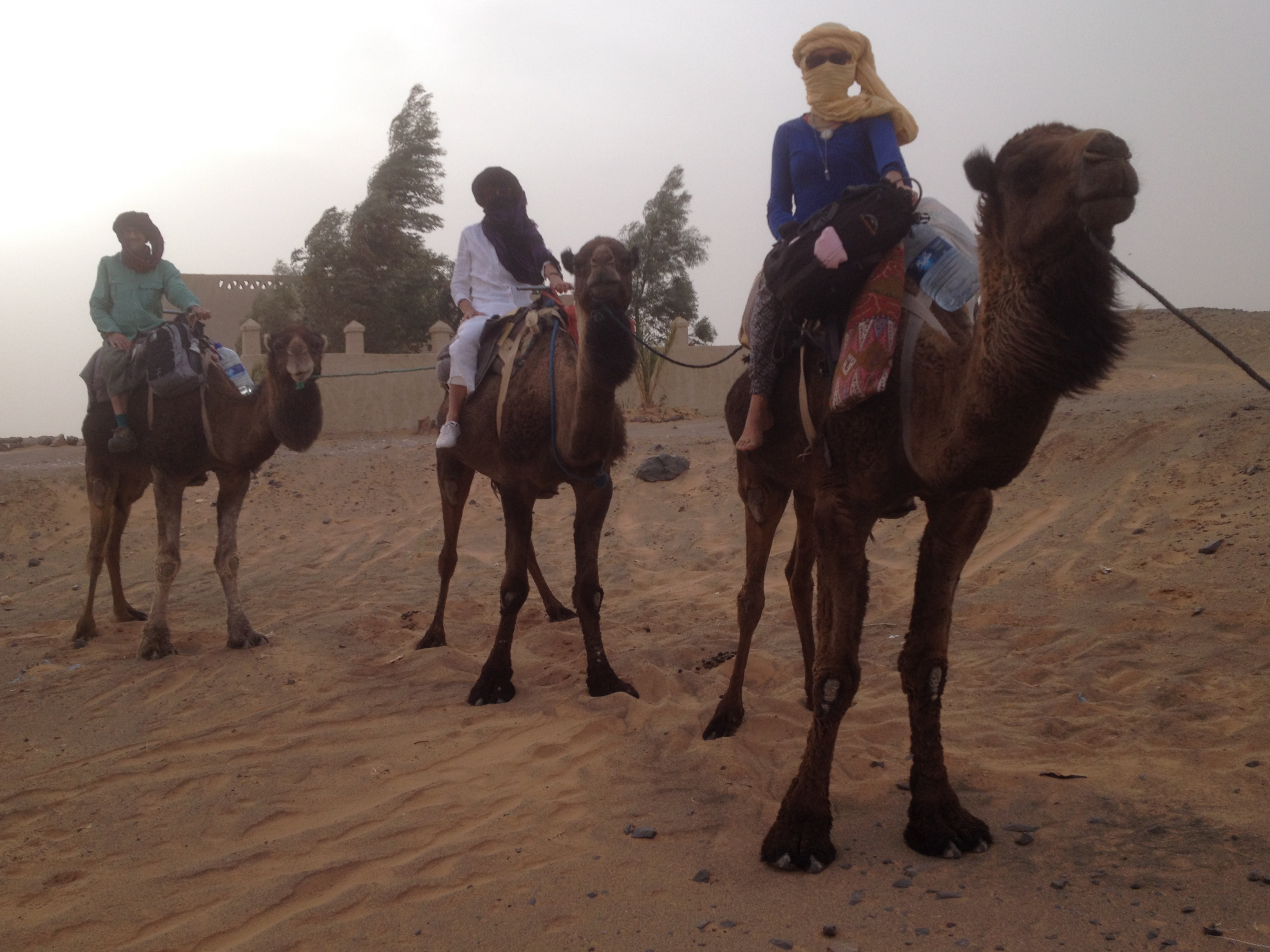
    IMG_1057IMG_1066I adjust to the slow swinging pace of the camels and take in their mix of gentle grace, their unique body shapes and their massive animal presence. I stare at the beauty of the shadows we cast on the sand; the unmistakable camel silhouettes, linked in a caravan of four by their looping rope halters. I hear the intermittent rumbling of a stomach, the grinding of teeth. I notice their sexy eyelashes and delicate lips. My pubic bone grinds on the cloth saddle of my camel, as he lurches me back and forth.

    Dust and sand mist the air. We veil our faces with the free ends of our turbans; turning our faces away from the wind as it gusts from the east. I feel grit between my teeth.

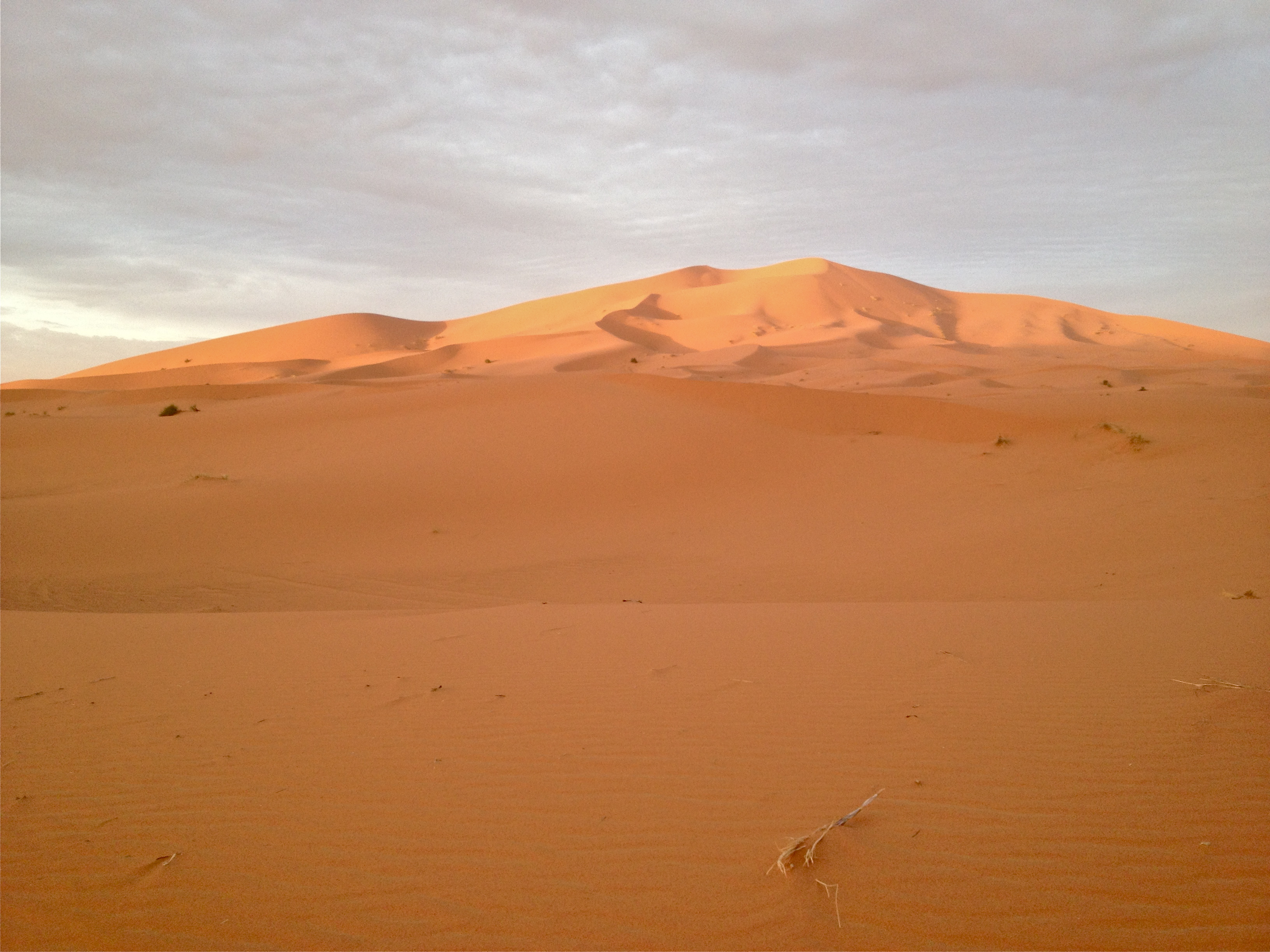
    The mother dune rises high above us, her orange sand muted in the misty light, as the evening draws in. The soft shapes and curves of the hillocks and valleys interlock and swirl around each other with an aesthetic that manmade shapes could never emulate. Nature’s beauty shines here, timeless in these shifting piles of sand.

    Dusk and then dark arrives, as we approach our tented camp. Distant drums beat an african rhythm from a nearby bivouac, creating an aural backdrop to the tranquil scene that awaits us, like a syncopated heartbeat of the earth itself.

    We drop into the shelter of our berber tent, its brown woven camel hair stretched taut over crooked poles. We sip mint tea, sweet and restorative after the journey. Then we lie out on the warm sand staring up at a big sky peppered with stars, as the wind sighs around the tents, sending flurries of sand into our faces to remind us where we are. Dry air, warm wind, smarting nostrils, gritty eyes, bodies surrendered to the earth.

    There are conversations about nomadic life, timeless knowledge, the constant search for water and food for the goats and camels. We are served vegetable tagine and reflect on this tiny taste of another way to live, increasingly jostled and tainted by the modern materialist ways and needs we rely on. Yet the nomads are here, surviving, thriving, holding both worlds. There are Four-by-fours and motorbikes alongside camels; weekly markets, cell phones and solar lighting. Jeans and sports shoes are accompanied by turbans of every colour – still the most practical headdress for the desert.

    We are so disconnected, so out of touch with the simple life, that even one night in a nomad tent is a challenge for us; forcing us to consider all that we take for granted in our world.

    We greet the dawn with wonder and by eight we are mounted and making our way back through the dunes, drinking in the silence and the peace in this orange sunlit sea of sand.

    Gradually we are aware of engines in the distance; motorised vehicles manouvering in the distant dunes. Suddenly a seriously customised car bursts over the hill infront of us, invading our senses in every way. Then we see an overweight man leveling a phallic telephoto lens towards the car. As we approach him, it dawns on us that we are walking through the middle of a car rally. Our moroccan guide shouts ‘Fuck You’! and raises his fist in defiance of this intrusion to our peace.
    The man shouts back to reason with us; “But this is THE Libya Rally!” as if there could be noone on the planet that would fail to be impressed and excited to be involved, while showing his blindness to what we have come to the desert for.

    The clash of patriarchy symbolised by these ultimate in ‘boys‘ toys‘, and our little caravan of camels, hits me with its poignancy in this moment, just as we had dropped into the essence of what we came to Morocco to experience. The camels become nervous, while I feel pain and confusion, as if caught in the crossfire on a battlefield.

    And as we detour around the rally base, with its massive entourage of support trucks, cameras sponsorship banners, and crowds of followers, Sofia reminds us to bring love to the situation and I am suddenly filled with gratitude, as the significance of the moment sinks in.

    Its a gift, that the very day that we decide to experience the desert, looking for a spiritual connection with the place and its people, has coincided with the one day in the year that the Libyan Rally came to this same spot on the planet, with all its noise and razamataz. It has shown me in such graphic terms the clash of two worlds. The paradox that I and so many others are living with.

    I touch into the part of me who could enjoy an opportunity to feel part of this disconnected, frenetic, technically addicted world, and then I move into that bigger part of me who has always been there in the shadow of patriarchy, deeply connected, nature-based, timeless, grounded and still.

    Our little group weaves its way to safety. the rhythm of my camel’s stride rocks and soothes my churned emotions.
    I sit with my dilemmas; how to integrate and live my soul’s journey? How to give my life meaning and purpose? How to dance a new paradigm while surrounded by the old? And how to help others looking for healing and restorative means to deal with the split and disconnection that we are all suffering in the loss of what these berber nomads embody so well?
    This is the gift and the challenge. This is my work. The work we are starting to do in Italy.
  • A Beard Quandary

    I have ‘worn’ a beard my whole adult life apart from one time in the 1980s when I went to India on my own and had the courage to shave it off and see myself ‘naked’. My suspicions were confirmed and I grew it back by the time I got home. The thing is, I (believe I) have a week chin and originally it was a bid to look more of a man, more macho. I have hidden behind my beard ever since; for periods growing it full and bushy, and after some time, usually when life felt good, I would ‘come out’ (a relative term!) by reducing the bush to a neat goatee chin appendage.

    My partners – there have been several – tended to put up with the bristles around my mouth (I have to admit the hairs are more like scratchy pubic hair than head hair) on the condition that kissing was kept to a minimum apart from the occasional moment of animal passion; and as for my looks, I got the impression that they tended to agree with my preference for covering up my chin – what there is of it.

    This week Sofia commented on the fact that I had let my present goatee get rather long – she’s not over keen on the scratchy stuff. We started to talk about my beard, my entrenchment in my needs for one (the vanity and my psychological need). She thinks it unbalances my face and detracts from my main asset, which she describes as my large, smiling, friendly eyes. So I immediately went to the bathroom mirror and experimented with pruning back.

    I haven’t yet had the courage to take it all off, but I am thinking about it. It feels like a huge thing to display my whole face to the world. I am irrationally scared at the thought and yet I am much less concerned about how I look or what people think, than I used to be. But I am embarrassed to admit that my vanity is still that big.

    Maybe IF I do shave it all off, it would be really cathartic and maybe it could be a part of showing myself more fully to the world in lots of other ways – becoming more authentically who I really am. I hope that I am communicating my sense of humour about this as well as my terror. Its a dilemma I will play with for a while and a part of me is saying ‘what’s the big deal, you can always grow the friggin’ thing back again’. True, but its what it symbolises somehow, after all these years.

  • The Art of Making

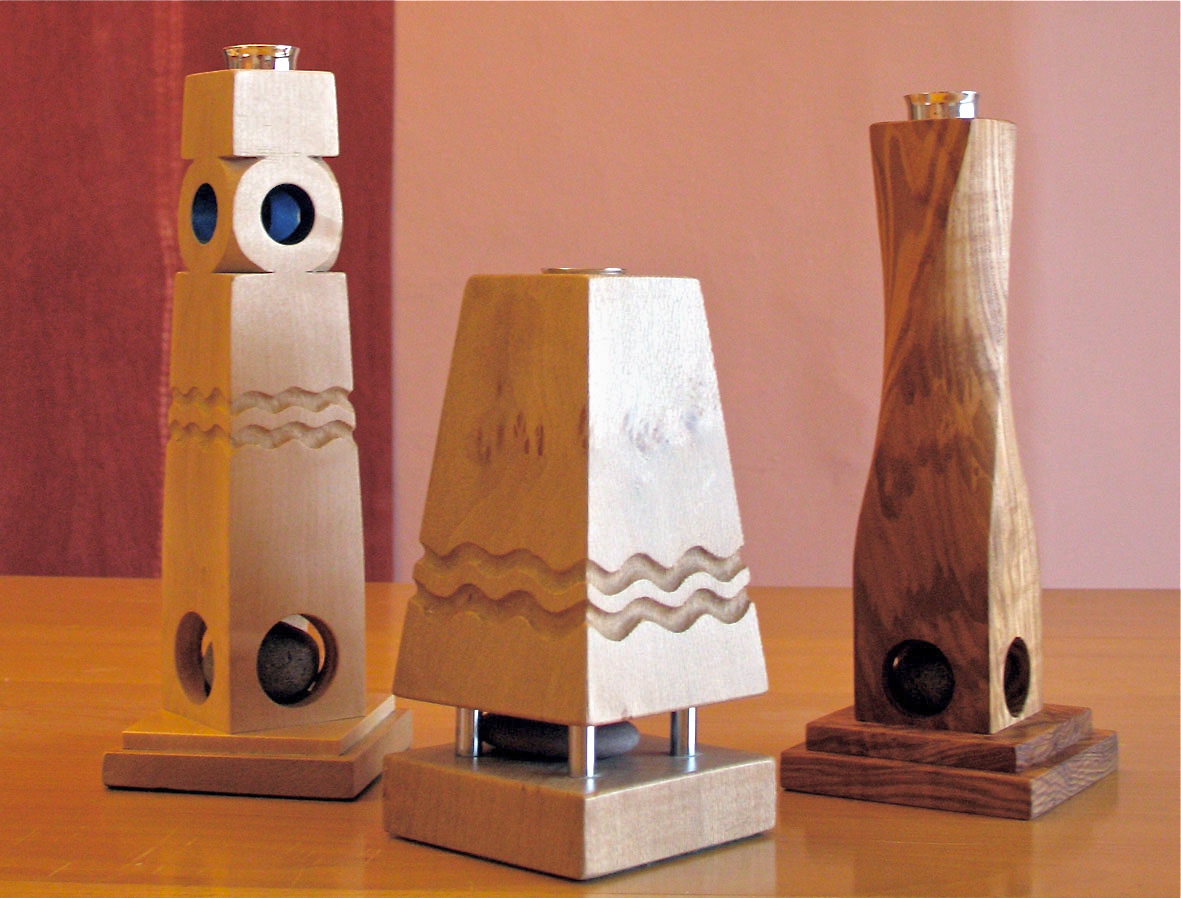
    Handmade candlesticks by Paul Swatridge
    Handmade candlesticks by Paul Swatridge
    In 2011 the Crafts Council marked the Year of Craft. Novelist JEANETTE WINTERSON was invited to write about our special relationship with hand-made objects. I agree with so much of what she wrote and take pleasure in posting it on my blog:
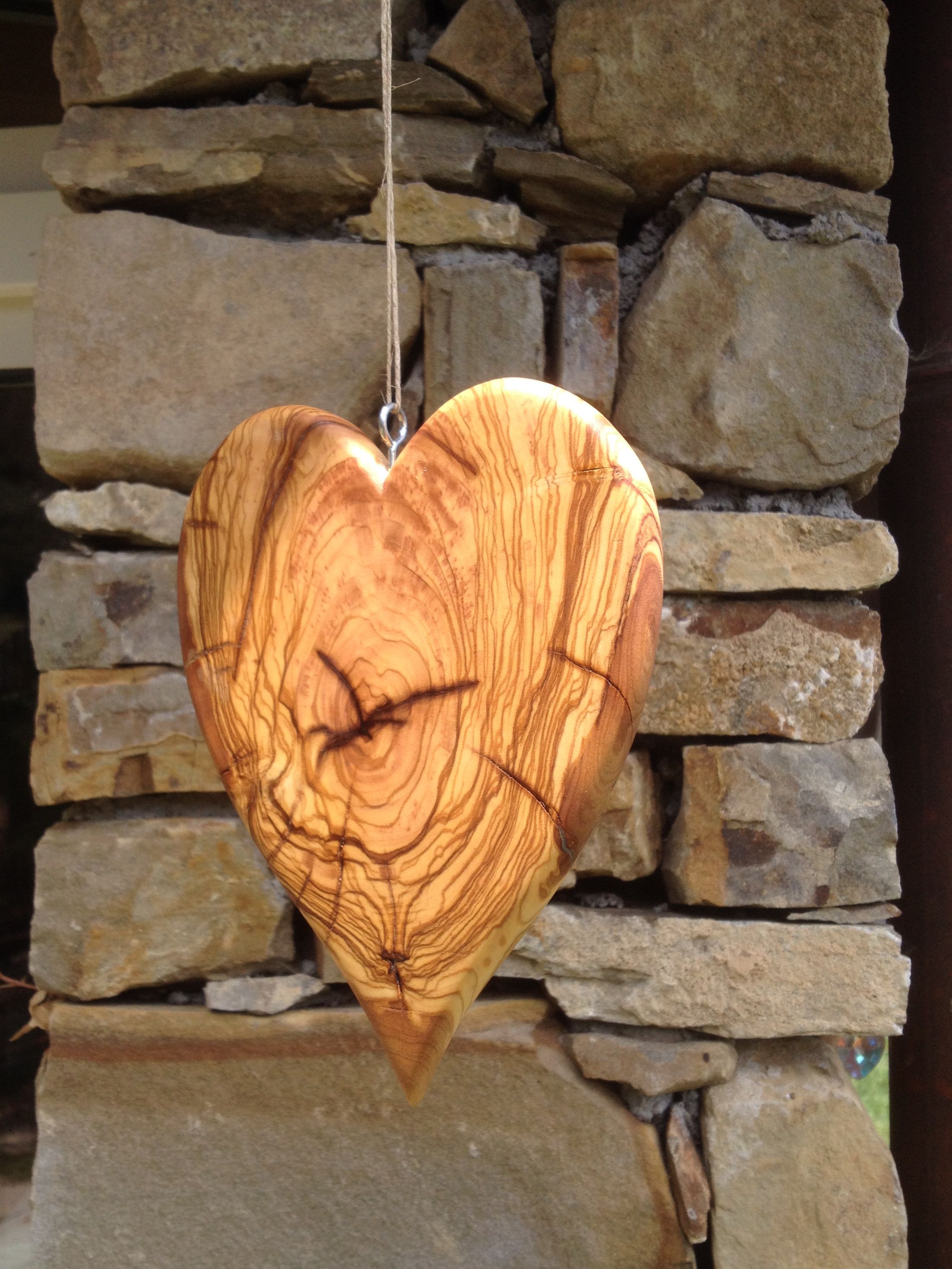
    Olive Wood Heart made as a wedding present by Paul Swatridge
    Olive Wood Heart made as a wedding present by Paul Swatridge

    THE MOST SATISFYING thing a human being can do – and the sexiest – is to make something. Life is about relationships – to each other – and to the material world. Making something is a relationship.
    The verb is the clue. We make love, we make babies, we make dinner, we make sense, we make a difference, we make it up, we make it new . . . True, we sometimes make a mess but creativity never was a factory finish.
    The wrestle with material isn’t about subduing; it is about making a third thing that didn’t exist before. The raw material was there, and you were there, but the relationship that happens between maker and material allows the finished piece to be what it is. And that allows a further relationship to develop between the piece and the viewer or the buyer.
    Both relationships are in every way different from mass production or store-bought objects that, however useful, are dead on arrival. Anyone who makes something finds its life, whether it’s Michelangelo releasing David from 20 tons of Carrara marble, or potter Jane Cox spinning me a plate using the power of her shoulders, the sureness of her hands, the concentration of her mind.
    I have a set of silverware made by an 18th century silverworker called Hester Bateman, one of the very few women working in flatware at that time. When I eat with her spoons, I feel the work and the satisfaction that went into making them – the handle and bowl are in equal balance – and I feel a part of time as it really is, not chopped into little bits, but continuous. She made this beautiful thing, it’s still here, and I am here too, writing my books, eating my soup, two women making things across time.
    I feel connection, respect, delight. And it is just a spoon . . . But the thing about craft, about the making of everyday objects that we can have around us, about the making of objects that are beautiful and/or useful, is that our everyday life is enriched.
    How is it enriched? To make something is to be both conscious and concentrated – it is a fully alert state, but not one of anxious hyper-arousal. We all know the flow we feel when we are absorbed in what we do.
    I find that by having a few things around me that have been made by someone’s hand and eye and imagination working together, I am prevented from passing through my daily life in a kind of blur.
    I have to notice what is in front of me – the table, the vase, the hand-blocked curtains, the thumb prints in the sculpture, the lettering block. I have some lamps made by Marianna Kennedy, and what I switch on is not a bulb on a stem; it is her sense of light. So I am in relationship to the object and in relationship to the maker. This allows me to escape from the anonymity and clutter of the way we live now. Instead of surrounding myself with lots of things I hardly notice, I have a few things that also seem to notice me. No doubt this is a fantasy, but . . . The life of objects is a strange one.
    A maker creates something like a fossil record. She or he is imprinted in the piece. We know that energy is never lost, only that it changes its form, and it seems to me that the maker shape-shifts her/himself into the object. That is why it remains a living thing.
    Of course it is possible to design an object that will be made by others, but that is an extension of the creative relationship, not its antithesis. It is the ceaseless reproduction of meaningless objects that kills creativity for all of us, as producers and consumers. But are producers and consumers who we want to be?
    To make is to do. It is an active verb. Creativity is present in every child ever born. Kids love making things.
    There are different doses and dilutions of creativity, and the force is much stronger in some than in others – but it is there for all of us, and should never have been separated off from life into art.
    I would like to live in a creative continuum that runs from the child’s drawing on the fridge to Lucien Freud, from the coffee cups made by a young ceramicist to Grayson Perry’s pots.
    We don’t need to agonise over the boundaries between “art” and “craft”, any more than we should be separating art and life. The boundary is between the creative exuberance of being human, and the monotony of an existence dependent on mass production – objects, food, values, aspirations.
    Making is personal. Making is shared.
    Making is a celebration of who we are.

  • Every Man Needs a Shed

    I have spent a lifetime building and enjoying sheds. It all stems from my den-building childhood on a farm in the 1950s. Fond memories of secret tunnels in ditches where the weeds were over my head. Spaces under hedges, a posh den in a disused chicken house, with the sign ‘The Club’ over the door. Then there was the tree-house my dad helped me build in a yew tree, from where I could see the whole garden while hiding in the dark green foliage.

    These special secret places were the fuel for rich fantasy and adventure, sometimes with my sister or a friend, but most often on my own. It was in these places that I felt free to really be myself and to be creative without being observed or disturbed, and herein lies the key to my adult shed habit.

    It is no secret that men need a shed; somewhere to go and just be themselves without being observed, away from feminine interference. For me it is somewhere I can be master of my own kingdom, where I can make a mess without criticism. I can make things, repair things, store things that have no place in the house and most importantly it is the place to keep and arrange my tools along with all the jars and boxes that accumulate over time; screws and bolts, brackets and wire and string; offcuts of wood and all the leftover bits from DIY jobs that I can’t bring myself to throw away.  I love to be amongst it all and know that with my hands, my tools and the right materials, I can tackle most DIY jobs.

    But for me its not just the need for a shed to disappear into, its also the fun and labour of creating one. Chalets, garden rooms, dog kennels, goat sheds, retreat huts, compost toilets, store sheds, workshops – I’ve built them all and I’ve enjoyed them all. And what has been the most satisfying thing in their conception and their construction, is that in many cases I have used recycled and ‘found’ materials, letting the design of the structure dictate its form and appearance. Doing it this way creates a quirkiness and individuality that is so much more satisfying than an off-the-shelf shed, although I have nothing against buying a flat-pack shed. They are much quicker and easier to erect of course.

    Although I have been an enthusiast throughout my whole life, I firmly believe that a shed is an essential accoutrement for anyone in their retirement years. Most young men want to use their spare time for sport, for socializing or for getting out and about. For many men the thought of spending hours in the garden or tinkering in a shed has little appeal. But as we get older and particularly following retirement, the whole of each day may involve being at home with the wife or partner for the first time, after years of being in a relationship. This is when a shed becomes an essential and very healthy option for the man of the house as well as for the woman, who may not want him under her feet all day and be happy to see him disappear into his den in the garden.
    And for the man living alone, recovering from illness or depression, there is still great benefit from having a shed, where you can get away from the TV and computer, make and leave mess, learn a new skill, lose yourself in some new hobby, undergo a DIY project, develop a money-making enterprise, or just to do nothing at all and cogitate, dream and watch the world go by.  

    Of course some sheds are really garden rooms, studios, writers’ or artist’s garrets. Whatever they are they are, by my definition, sheds; and in my case they are for seriously practical use on the one hand and they are places of refuge on the other. Although I haven’t actually gone through with it, I have always included an imaginary sign on the door of all my personal sheds, which reads ‘NO GIRLS’, and I have often jokingly shared this fact with friends. There is a part of me that means it of course; my sheds are no place for women. I need to have my refuge, however much I love and get along with the fairer sex – and I do. But in as much as women need to have time away from men, us men need to have our sacred spaces outside of the shared accommodation of the home.  

    A final anecdote about sheds: Some years ago, while living in Herefordshire with my then partner, we became known as the Buddhists who lived on the hill. A friend came by one day when i was building a store shed for our logs and he said in his lilting Scandinavian accent, “Now I know what you buddhists mean when you talk about ‘shedding your worldly goods’; you build sheds to put them in. Ha Ha Ha!” 

    Amongst the variety of shed projects and shed indulgences that I have been responsible for, I have made my living as a wood carver, furniture maker and antique restorer, setting up several professional workshops from which to ply my trade, two of which were homemade sheds. I welcome feedback and personal anecdotes from any shed enthusiasts or tentative shed converts reading this article.

  • Rain Drops

    Rain drops drumming on the roof.
    Do they soothe or do they torment?
    Relentless unanswered questions:
    Safety or risk, bravery or fear,
    Overwhelm, abandonment,
    Blame or shame, love or hate?
    – Who am I?

    A curse of adaptation, or did I arrive like this?
    A missing link, an empty gap, a lost chord.
    Wounded, numb and worn away
    By the drip drip of water on stone
    Till there is only empty grief;
    Soft as the rain, hard as a rock.
    Who am I?

    Amorphous, pervading, the watercourse way
    Powerfully sucks me down with it
    Self pity turns to hopelessness
    For what is irretrievably lost,
    While the drumming on the roof asks
    For acceptance and surrender.
    Who am I?

  • SUN & RAIN – easter 2013

    Mountain View
    Mountain View
    Days of winter wet, overcoat days and duck down nights.
    We wake to analyze the shuttered light, peering through the gloom,
    And listen for the telltale signs: rustling leaves? splattering rain?
    Our blanket moods grown heavy with the wait.

    But this new day is quietly bright and smells of sunlight.
    A sky of bosomy clouds, backed with the azure blue of our longing,
    Lifts the shadows hanging over us to bring new hope –
    Lost parts of us begin to stir, eager for their chance to shine.

    Spring heat enlivens the air, that our slow bodies crave,
    Motivating our bones and quickening our blood.
    It is the first day of summer and the time of equinox,
    New life, spring juice, joy and celebration.

    Terraced olives stand sentinel while the land dries out.
    Indifferent to flood or drought, to mud or dust.
    Plants will soon race to flower and bees will buzz;
    But for now we gladly greet the sun and know its vital force.

    Sun or rain, this is a sacred place where nature rules
    and human feelings change with every kind of sky,
    While deeper down our spirit waits – with endless patience,
    Under the ‘disowned’ blanket we weave to cover it.

    We need the sun inside to reach an inner light,
    But how can we speak of this, the unknowable source?
    That is our truth and yet goes far beyond
    The confines of our small familiar stage.

    And so words fail to say what I can barely sense
    In silence, in nature, in touch with the beloved.
    Where all is one and now is all – come rain or shine.
    The faintest knowing I was born with, lives in the beauty here.

  • The Path To The Sanctuary Of The Soul

    Layers of pink-edged cloud hang limpid in the silent dawn,
    waiting for the autumn sun to dissolve them into a blue expanse of sky.
    One cloud clings to the mountain as if wanting to stay earthbound,
    afraid of losing itself to the vastness above.
    A branch of olive, symbol of peace, hangs heavy with plump fruit.
    They also wait, unaware of how they will be beaten to the ground with sticks.

    From the bed I absorb the day’s first impressions.
    The night before, on the very edge of sleep,
    we woke, shocked in a flash to full alert.
    What in hell was that?
    It was as if a giant had lifted the house and slammed it hard against a cliff face.
    For just a second we and all around us violently shook.
    My first earthquake, ‘so that’s a tremor then’!
    If I had been alone I must have surely dreamt it. But real it was,
    and sleep was far away until my racing fears of what was broken, cracked or bent,
    had had their say and let the sanctuary of my soul reassure me once again.

  • Meeting yourself

    I just came across this beautiful poem on someone else’s blog. The poem:

    LOVE AFTER LOVE by Derek Walcott

    The time will come
    when, with elation,
    you will greet yourself arriving
    at your own door, in your own mirror
    and each will smile at the other’s welcome,
    and say, sit here. Eat.
    You will love again the stranger who was your self.
    Give wine. Give bread. Give back your heart
    to itself, to the stranger who has loved you
    all your life, whom you ignored
    for another, who knows you by heart.
    Take down the love letters from the bookshelf,
    the photographs, the desperate notes,
    peel your own image from the mirror.
    Sit. Feast on your life.

    After reading it, I looked up Derek Walcott and find him to be a very celebrated poet from St Lucia and this poem is a classic. I’m so glad to have stumbled upon it.

    The Blog where I saw a part of the poem seems to be about creativity, healing and finding one’s soul path through self expression. I feel very drawn to it and the way the author writes, so I want to promote it/her here:

    http://www.expressiveartworkshops.com/

  • Step by Step – by Paul Swatridge

    Walking from Swyre to the sea with Guido 2011

    Grey dawn, walking
    step by step
    on wet grass.

    Swish and sigh
    of soft breeze
    through tired leaves.

    Conscious breath,
    reciting His name,
    sensing the essence.

    Deep longing
    of the lover
    to merge into oneness.

    The gentle touch
    of His damp breath
    fresh from the sea.

    Sky meets water
    and beneath lies hidden
    secrets of oceanic bliss.

  • poem by ryokan

    Without a jot of ambition left
    I let my nature flow where it will
    There are ten days of rice in my bag
    And, by the hearth, a bundle of firewood.
    Who prattles of illusion of Nirvana?
    Forgetting the equal dusts of name and fortune,
    Listening to the night rain on the roof of my hut,
    I sit at ease, both legs stretched out.

    Ryokan