The Glory
Edward Thomas

The glory of the beauty of the morning,
-The cuckoo crying over the untouched dew;
The blackbird that has found it, and the dove
That tempts me on to something sweeter than love;
White clouds ranged even and fair as new-mown hay;
The heat, the stir, the sublime vacancy
Of sky and meadow and forest and my own heart:
-The glory invites me, yet it leaves me S
Scorning all I can ever do, all I can be,
Beside the lovely of motion, shape, and hue.
The happiness I fancy fit to dwell
In beauty's presence. Shall I now this day
Begin to seek as far as heaven, as hell,
Wisdom or strength to match this beauty, start
And tread the pale dust pitted with small dark drops,
In hope to find whatever it is I seek,
Hearkening to short-lived happy-seeming things
That we know naught of, in the hazel copse?
Or must I be content with discontent
As larks and swallows are perhaps with wings?
And shall I ask at the day's end once more
What beauty is, and what I can have meant
By happiness? And shall I let all go,Glad, weary, or both? Or shall I perhaps know
That I was happy oft and oft before,
Awhile forgetting how I am fast pent,
How dreary-swift, with naught to travel to,
Is Time?
I cannot bite the day to the core.
Author: Inner Ventures
-
The Glory
-
Breathing into God – Sept ’26
I am listening in the silence,
the ever pregnant space,
longing for Christ’s presence
to enter me.
And yet knowing he never left.
It is I who have fallen away
my rational separate mind,
breaking the bond of truth;
of God’s benificent gift.
This ever-available shift
to the separate linear ‘me’.
My insatiable appetite,
to consume, waste and pollute,
reducing nature’s bounty
to a disposable resource
to be plundered without thought.
These collective iniquities, now
THE challenge of our time.
I weep into the forgiving silence
broken by the flutter of songbirds,
and the rustle of falling leaves.
Life and death – inevitable;
the cycle of seasons
Jehovah created for us,
His gifts testing our faith.
Can I surrender all to Him
through my breathing and listening?
-
The Glory by Edward Thomas
The glory of the beauty of the morning,
The cuckoo crying over the untouched dew;
The blackbird that has found it, and the dove
That tempts me on to something sweeter than love;
White clouds ranged even and fair as new-mown hay;
The heat, the stir, the sublime vacancy
Of sky and meadow and forest and my own heart:
The glory invites me, yet it leaves me scorning
All I can ever do, all I can be,
Beside the lovely of motion, shape, and hue,
The happiness I fancy fit to dwell
In beauty’s presence. Shall I now this day
Begin to seek as far as heaven, as hell,
Wisdom or strength to match this beauty, start
And tread the pale dust pitted with small dark drops,
In hope to find whatever it is I seek,
Hearkening to short-lived happy-seeming things
That we know naught of, in the hazel copse?
Or must I be content with discontent
As larks and swallows are perhaps with wings?
And shall I ask at the day’s end once more
What beauty is, and what I can have meant
By happiness? And shall I let all go,
Glad, weary, or both? Or shall I perhaps know
That I was happy oft and oft before,
Awhile forgetting how I am fast pent,
How dreary-swift, with naught to travel to,
Is Time? I cannot bite the day to the core.
-
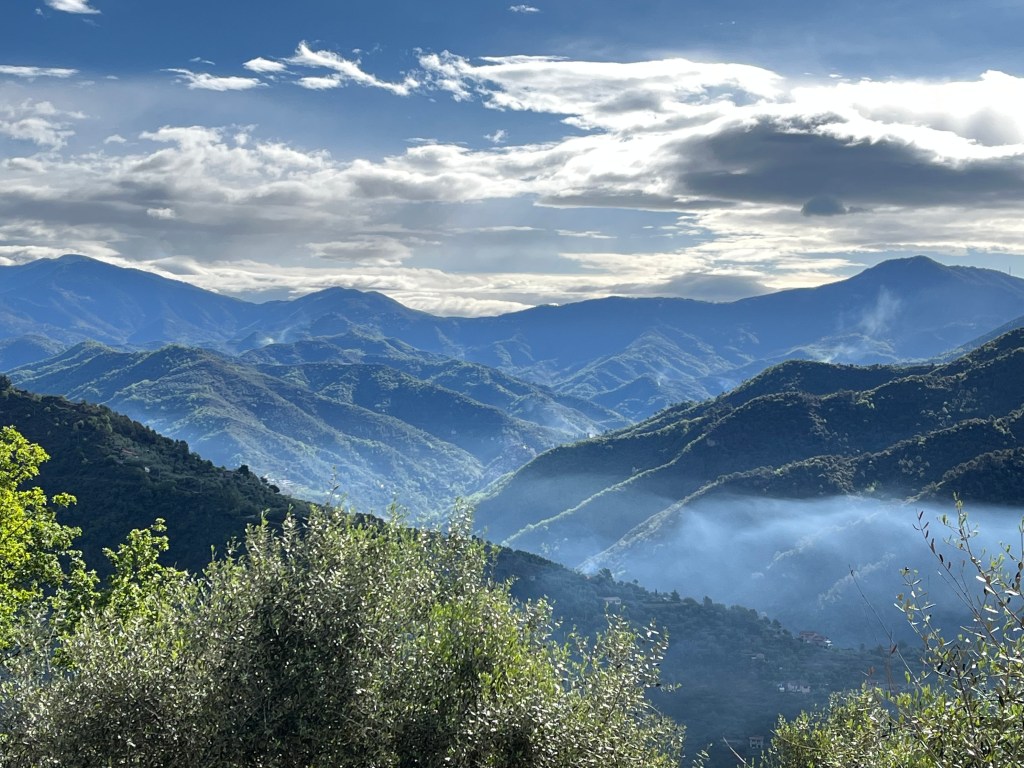
Wind Fire & Earth Liguria Italy
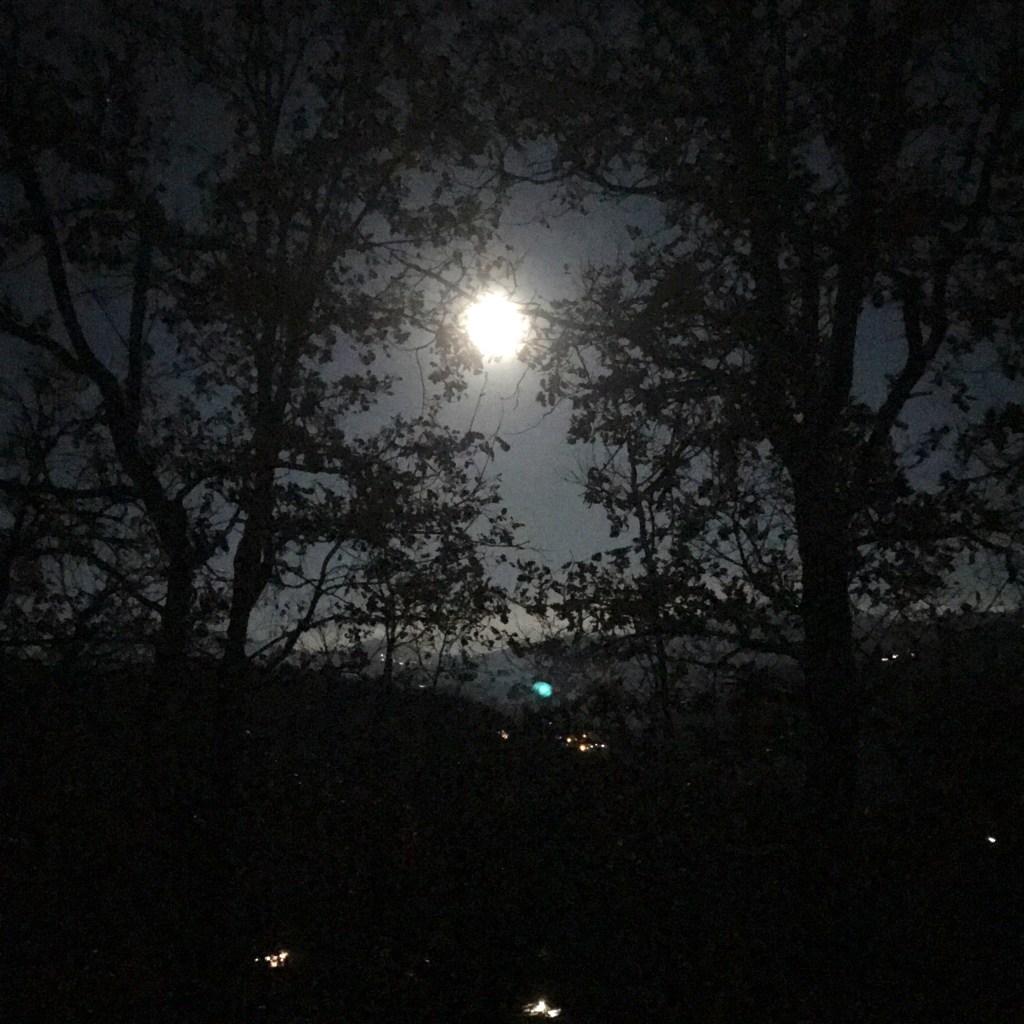
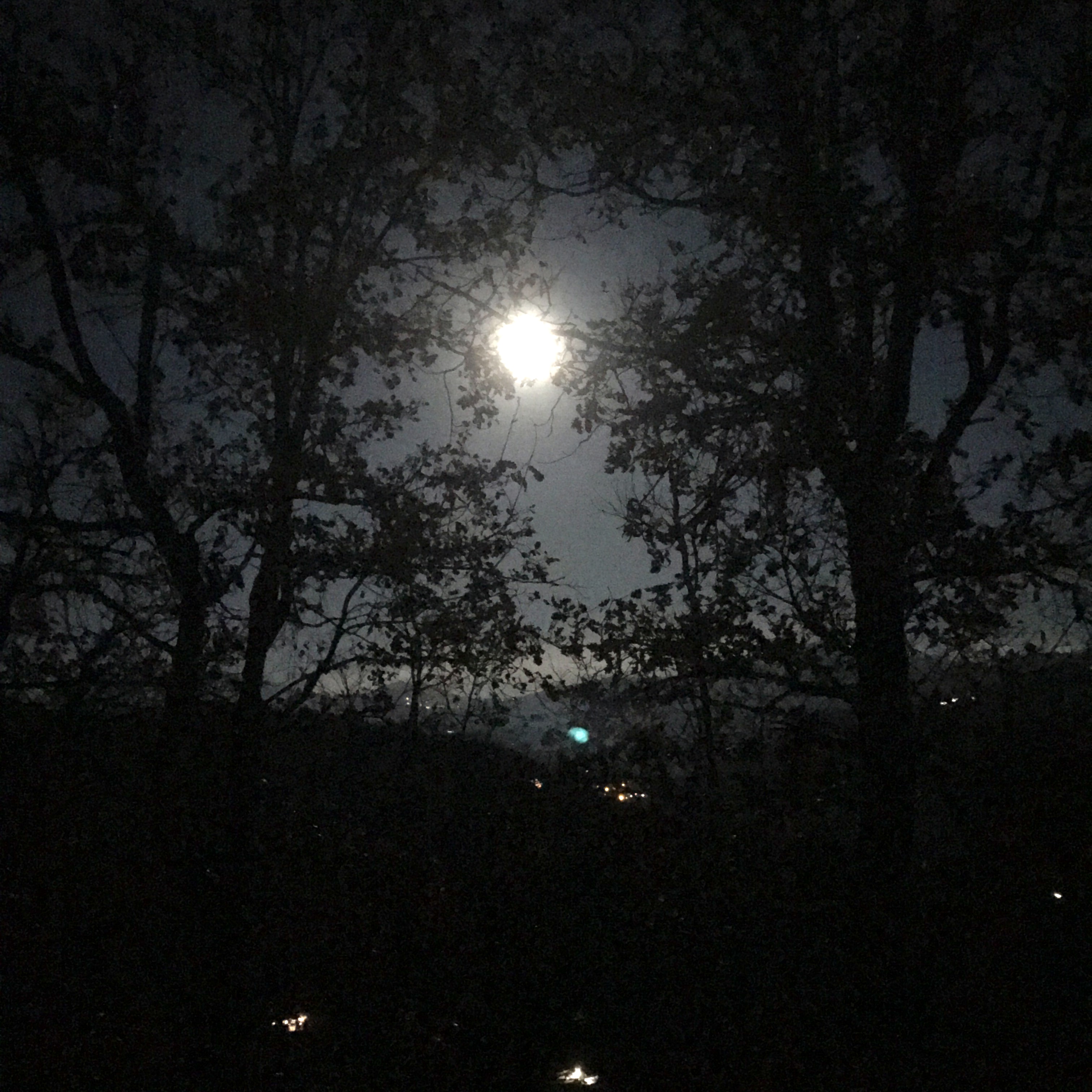
Walking from artificial light
into a moonlit night
of monotoned obscurity,
I am drawn by the sound
of a soft wind swaying
the shadowy trees.
They whisper secrets
into my willing ear.The effect is poignant
and wraps around me,
like a warm embrace
consoling me to meet
my momentary need.
But then a darker sound –
a gust inviting questions
which reach beyond the now.I search the distant hills,
where flickering points of light
could be the nightly campfires
from peoples of the past.
Lives in cyclic time,
unbroken lineages still,
back to Roman times,
bold and earthly wise.The ancients worked this land
with rugged pride
for survival of their tribe.
These days freedom blows
on winds of change;
family ties grow loose
The young now look away,
for livelihoods in town.Many terraces are lost
swallowed by a creeping wilderness,
walls of stone collapsed,
the grapes and olives gone.
Whatever future waits
for these steep hills;
I find a stillness here
Outside of any time. -
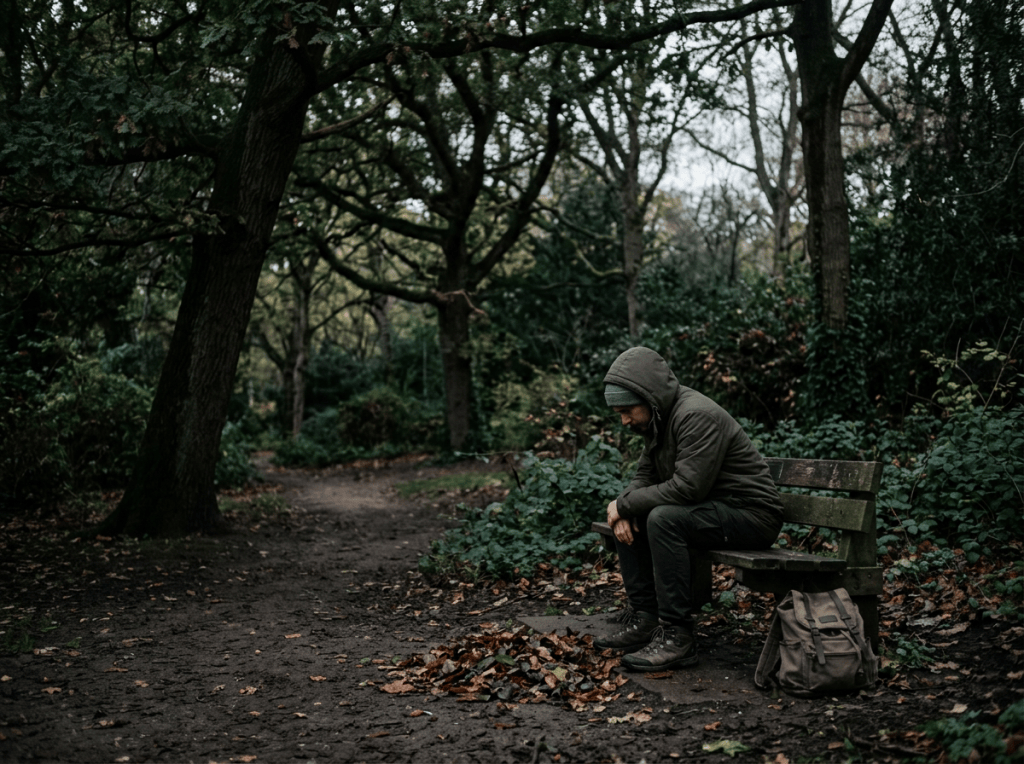
Willing to Experience Aloneness by Jennifer Wellwood
Willing to experience aloneness
I discover connection everywhere.
Turning to face my fear
I meet the warrior who lives within.
Opening to my loss
I gain the embrace of the universe.
Surrendering into emptiness
I find fullness without end.
Each condition I flee from pursues me.
Each condition I welcome transforms me
And becomes itself transformed
Into its radiant jewel-like essence.
I bow to the one who has made it so,
Who has crafted this master game.
To play it is purest delight.
To honour its form – true devotion. -
START CLOSE IN
Start close in,
don’t take the second step
or the third,
start with the first
thing
close in,
the step you don’t want to take.
Start with
the ground
you know,
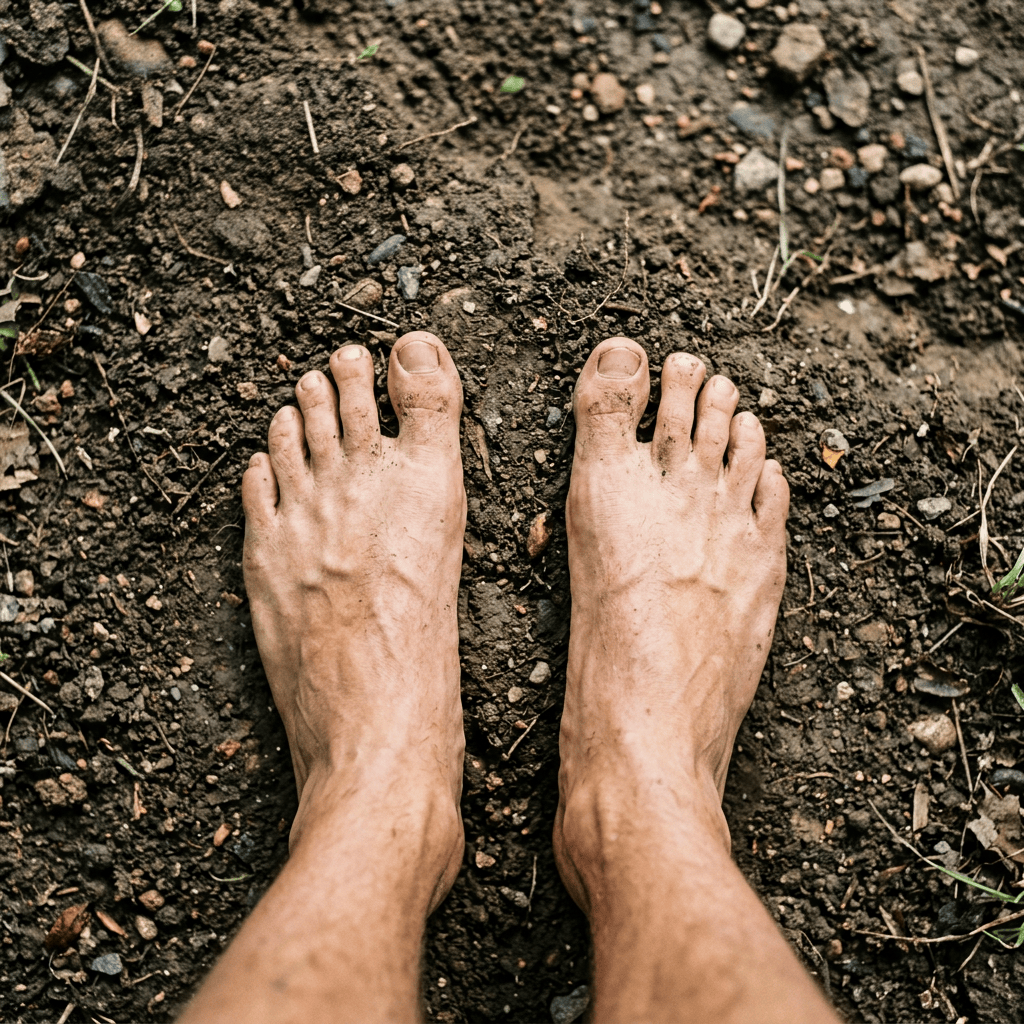
the pale ground
beneath your feet,
your own
way of starting
the conversation.
Start with your own
question,
give up on other
people’s questions,
don’t let them
smother something
simple.
To find
another’s voice
follow
your own voice,
wait until
that voice
becomes a
private ear
listening
to another.
Start right now
take a small step
you can call your own
don’t follow
someone else’s
heroics, be humble
and focused,
start close in,
don’t mistake
that other
for your own.
Start close in,
don’t take the second step
or the third,
start with the first
thing
close in,
the step you don’t want to take.~ David Whyte ~
(from River Flow: New and Selected Poems) -
Sketches of a 1950s Childhood
The following is an excerpt from the book I am currently writing titled: It’s Been A Long Time Coming
Rooks nesting in the elm trees soar in the wind above me as I roam freely round the farm. My Dad reaches me across the fields as he whistles his favourite tunes while he works. There is the familiar sound of a steam train puffing past two fields away, as they do half a dozen times a day, answering the sign to “whistle” as they shoot under the road bridge to warn the next station of their imminent arrival. Sometimes my sister and I walk or cycle down our lane, out onto the road and a short way along so we can stand on the bridge to watch a train go shooting past under our feet. Clouds of steam and coal smoke stinging our noses with its pungent smell.
A chicken that my dad dispatched with his farmer’s efficient dispassion, hangs by its feet in our pantry. My mum takes it down and sits outside the backdoor to pluck it. She tells me how she doesn’t like handling feathery things and hates this job, though it has to be done. Then I watch with fascination as she guts it, plunging her bare hand inside its back end and explaining the innards to my enquiring mind. All the preparations for a Sunday roast.
Saliva flows in my mouth as the sweet smell of Mum’s cooking wafts through the kitchen door to where I sit on the hall floor with paper and pencils drawing horses. I am obsessed with horses, trying to draw them mostly; repeating my attempts over and over to try to capture their elegant and graceful shapes. Never quite feeling satisfied with what is a very difficult subject for a child artist. But it keeps me absorbed for a good many hours on rainy days.
I love assembling round the family table to eat the produce from our land, with laughter that turns order and formality into family fun. We visit our grandparents often. Pop Swat, as we call him, never speaks much. He sits in his armchair with a cigarette hanging from his lower lip, while Nona (she didn’t like being called grandma), will be busy in the kitchen until we all sit down to eat roast beef with vegetables from her kitchen garden. Even the horseradish sauce is homemade from the roots she has dug up, washed and prepared before we arrived. Her leathery hands and dirty fingernails are proof of her many hours in her beloved garden. A farmer’s daughter, she always seems healthy and strong, her cheeks flushed and her forehead tanned from hours in the fresh air. Every time we visit there seems to be some new treat in stall for us. Fresh picked peas in their pods, or strawberries in season or hot fruit pie and custard, with apples from her Bramley tree.
I am sculpting tunnels and hills in my sandpit; the innocent joy of absorption as imaginary worlds unfold in every moment of play. I surround myself with toys on my bedroom floor, and with a bit of input from Mum, my sister and I play monopoly or card games like cribbage, that our other granny taught us. But more than anything I love to create dens built in ditches or hedges, for hiding from grown-ups or other imaginary threats; spying from my treehouse in the secret shady boughs of the yew tree that oversees the vegetable garden.
All this held in nature’s generous tapestry or in the holding boundary of our home. Even those boredom times when nothing captures my interest..
I remember cycling to the country village with sixpence in my pocket for those colourful sweets stored in big glass jars on high shelves above the soup tins and cigarettes. The impossible choice whether to risk something new or to stick with penny chews and sherbet lemons that are my favourites. Sugary treats all served with patience by the aproned lady behind the wooden counter.
Tottering about on Christmas roller skates with my sister. Laughter and bruises. Taking her for granted as my mentor and sometimes my tormentor too. She is willing and kind towards her younger brother, but sometimes I do test her patience so that games turn into arguments or occasional tussles over the ownership of toys; but nothing serious that our mother can’t help us resolve.
Stormy nights with rain spattering the glass and wind that creeps through the leaky casement windows, shifting the curtains to raise my fears of the dark where danger lurks, driving me deeper under the weight and safety of those all woollen blankets in my own familiar bed next to the paper-patterned wall.
And when sleep won’t come the grandfather clock in the hall cuts the stillness of those lonely small hours with its quarterly call for attention, groaning its tired mechanism to life with chimes that reach up the stairs, counting my family safely through the night.
My sister and I spend hours playing in the small river that borders our farm; not that it seems small to us. Being born a Pisces fish, water is my element and I can lose myself for hours, building pebble dams in the shallows, fishing with jam jars for sticklebacks or floating the raft I made with two oil drums and some wooden planks.
I often wake early to the sound of Dad banging the back door shut for the first milking of the day. Cows wait their turn in line, swollen udders bulge and swing as they shuffle into place for their twice daily routine. I dress myself and go out to move among them with confidence, dwarfed by their gentle heaving shapes; steam rising in the early morning air; hot grassy breath spilling from their wet noses.
I am standing quietly in the corner of one of the cow sheds watching the birth of new life as my dad hauls on two slimy legs that are sticking out of the back end of a very fat cow. I am in mild shock as he pulls and sends verbal encouragement to the mum. A limp body slowly emerges and then flops on to the soft straw in a heap. My Dad pokes a strand of straw up its nostrils and what seemed inert miraculously comes to life with a jerk. We stand back as the mother turns instinctively to lick and massage her calf. Within a few minutes the newborn struggles up onto its spindly legs and lurches forward looking for a teat for its first drink of colostrum.
My feelings turn from disgust to wonder, witnessing the start of a new cycle of life, something timeless, universal and yet so intimate. It’s an early taste of what will be a pivotal point in my life when my own daughter is born, twenty five years later. Not much is said. My Dad is relieved at the safe arrival of the new calf and happy that his job is done. It’s all part of farm work and the farming year, which I take for granted on one level, as it is the only reality I know.
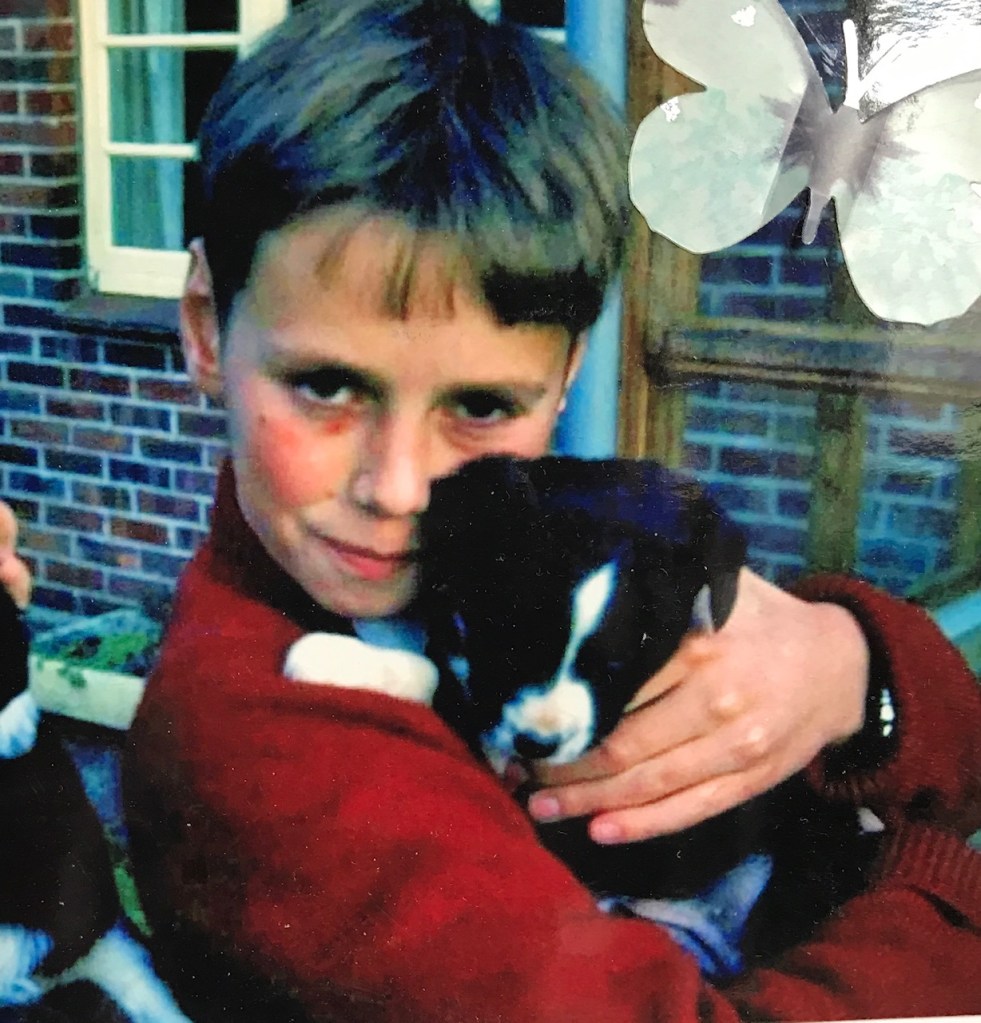
Ruth, a friend of our Mum’s, lives in a cottage up the road. She and mum met at teacher training college and having no children of her own, Ruth invites us to visit for the day sometimes. I sense her mystical nature, she is creative and artistic, introducing us to things beyond the world I know at home.
One birthday she gives me a little homemade booklet depicting the story of St Francis in words and pictures she has put together herself out of her own love for the saint. This is my first conscious memory of connecting religion and the sacred with nature. I find it very inspiring and have kept the booklet all through my life as a treasured memento of how Ruth opened me to the divine.
There were other things Ruth taught me, and I don’t know if she ever realised how much she influenced my early development. When she discovered I was crazy about boats, (more on this later) she gave me a stamp collection, comprising two meticulously presented albums that she had inherited from her uncle. He had been a sailor in the merchant navy and had specialised in stamps depicting ships and sailing boats, mostly from Caribbean Islands, Cape Verde, Mauritius; the exotic places he had travelled to, no doubt. I loved these little images of beautiful schooners and other merchant ships in full sail. So exciting and romantic to my young mind.
When I was in my early teens Ruth gave me a thick hardback volume she must have found second hand; five hundred pages depicting traditional art and crafts from all the countries of Asia. What a gift! I fell in love with oriental art and particularly Japanese woodcut prints which I would later study in more depth at art college. Recalling all this now, I am realising Ruth’s generosity and foresight. She was always poor of pocket and poor in health, humble in her wisdom, an amateur astrologer, primary school teacher, nature lover, hedge-witch in the best sense of the word, spiritually imbued and a good friend to my mother, who loved to be stretched by Ruth’s depth and wisdom, but who could never quite hold those qualities in her own being.
I feel very sad looking back that I rarely visited Ruth in my adult years. I never showed her the appreciation she deserved before hearing one day from mum that she had died and it was too late to let her know how much she had gifted me. One of many regrets that I began to see as I got older and more aware of my shortcomings. I have my explanation for becoming numb and disconnected when I had to live through experiences which blunted my ability to empathise and express gratitude for the gifts of those early years.
So many early experiences that wove my childhood world together with stitches of safety and security, but then suddenly was whisked from under me to become just memories; images in my mind that I sought to cling to from far away at english boarding school where feelings were out of bounds and homesickness was a thing of shame to hide and struggle through in silent misery…..
-
Love as a verb
By Nimue Brown
One of the ideas that Pagan author Halo Quin has brought into my life recently is the notion of love as a verb. She’s been talking about this around self care especially. Many of us find the idea of self-love disconcerting at best. If it feels really alien as an idea it can be impossible to work with. However, when the focus is on what you can do rather than how you feel, it becomes easier to think about.
It’s worth asking what we can do to take better care of ourselves. What do I need right now? What would help me? What does my body need? What would help my heart? What does my soul require? It’s good to check in with yourself regularly and to think about these things and then act on them. Self care as something we do, rather than as an idea, is a good deal more effective.
‘Love’ as a word is easy to bandy about. I’ve had a few people in my life who liked to say extravagant things but never really followed through on it. When love is a feeling that lives inside you, that can be lovely, but if it isn’t expressed through actions, it’s of limited use to anyone else.
This is definitely also an issue around religions. The idea of the love of God is something quite a lot of people like to talk about – especially right wing politicians. Without the actuality of putting that love into the world, it isn’t of any use to anyone. It may in fact be more about self delusion and hypocrisy.
For Pagans, I think the most important question around spiritual love is whether we love nature as an idea, or whether we’re doing anything with that love.
When you love actively, you build through action. In any context, turning love into deeds has the impact of putting your love into the world in ways that will make a difference. If the love that lives in your heart doesn’t inspire you into action, that’s worth thinking about. It may be a consequence of a worldview that divides soul things from the physical world. We exist as physical beings, and if love does not flow from us to inform what we do, then what are we doing with our lives?
-
Filling The Hole – by Ardhan Swatridge, Nov 2022
“We spend our beautiful, utterly singular lives on making more money, to buy more things that feed but never satisfy. It is the Windigo way that tricks us into believing that belongings will fill our hunger, when it is belonging that we crave.”
Robin Kimmerer from her book ‘Braiding Sweetgrass’Entering this world as a new born, we are squeezed down our mother’s birth canal to arrive, as if through a portal, into a shockingly foreign environment at the start of a relentless journey towards individuation. True individuation can take many years, even given an ideal childhood. Yet individuation is only a stage towards reaching another reality and discovering a deeper truth about ourselves.
Our arrival into the world involves something so challenging, because I believe that where we had just come from is an ocean of universal consciousness in which we enjoyed what has been termed ‘oceanic bliss’. Of course we don’t normally have any memory of this, just as we don’t have conscious memory of the birthing process we went through either, because, for most of us, the process of growing up is a process of forgetting where we have come from while learning to adapt to and negotiate the physical dualistic realities of human life.
So what about this so-called bliss state which I am proposing is from where we have come, and how can I assert this? I’ve read about it in books. I learned the term ‘oceanic bliss’ during my training in Psychosynthesis (Psychology with a Soul). It is conveyed in the deep spiritual traditions of the East and, more personally, I have a subtle knowing which sits mysteriously somewhere inside me, like a bodily knowing. I am not alone in this. I meet people who speak of an innate knowing about where they have come from, and parents, especially mothers, can witness something of this looking into the eyes of their newborn babies. My experience of this, as father of my newborn daughter, moved me to tears in a way that defies words to describe or explain it.
I am proposing this here, because I experience it myself; that the loss of this state of oceanic bliss is huge and painful. It leaves a hole; a hole of deep longing and disconnection that is begging to be filled. But first we have our mother connection, whose love and constant care postpones the loss of oneness we come in with. We are symbiotic at first, while she provides all our needs, enabling us to make the transition into human life bearable through this vital relationship of co-dependency.

But as we start to separate from our mother and learn about ourselves as individuals, this sense of a hole inside us, which causes feelings of loss, aloneness and even alienation, can begin to impact our lives. A kind of existential loneliness which we are very unlikely to have cognitive awareness of, because it operates at such a core level of our being. The writer and teacher Lissa Rankin MD describes this feeling of loss or lack as ‘The God Hole’. I knew it so well and know it still.
It is a hole I have tried to fill in so many different ways; with practical activities and achievements, with new material things – clothes or gadgets, for example, – with friendships, with sex, with food and other forms of nourishment, with less wholesome things like drugs, alcohol and gambling. Most of us are caught up in this hamster wheel in some way or another, and all of these activities are subject to becoming addictions in our desperation to fill that hole and stop the pain that emanates from it. Dr. Gabor Mate, a leading specialist who works with trauma and addiction, uses the description for addictive behaviour as ‘Ritualised Compulsive Comfort Seeking’, which is a more compassionate way of describing our strategies for survival in the face of painful distress.
The hole is not a physical thing, of course. It cannot be found in the body, or detected on a scan. It may be experienced more as a restlessness, an itch that cannot be scratched, a longing that is described so powerfully in the many writings of the 13th century poet Rumi. It accounts for the growth of our society’s need and dependence on material comforts. It is a vulnerability that marketing experts and advertisers have exploited with ever greater sophistication, to persuade us into believing that if we just buy this one special thing, all our hopes and desires will be met. Shiny objects that are dangled in front of us, trying to convince us that finally, at last, our hole will be properly filled and life will become more meaningful than we could ever hope for. I am also proposing here that this hole and its effects on us, account for the ubiquitous levels of stress, depression and mental disorders that are a phenomenon of modern society.
If we are lucky enough or learn enough wisdom through life experience, and after all other avenues have been explored, our searches can lead us to a realisation that this nagging sense of loss, this yearning and longing can only be met and eased at a spiritual level, by connection to source; by reconnecting with The ‘Ground of Being’, with God and God’s love – all of which are also ways of describing that universal consciousness we were experiencing before we began this life. I have been studying and learning about this for 30 years on a winding spiritual path, yet only now am I working seriously to shed the more stubborn onion layers of my dysfunctional ego-structure, to gently dissolve the numbing and the armouring I built around me, for safety in my early years, so I can stop trying to fill my hole in all the wrong ways.
Only in this way – and this is important – can we get to experience unconditional love. It is what we wanted and needed all along. It is what we expected from our mother, but could never quite get, because our mothers are humans too, with all their personal wounds and limitations, their anxiety, their loneliness – their own separation from source, preoccupied and tortured by their own ‘God hole’.
What I mistakenly felt all these years to be a hole or lack within my individual bag of skin, is actually not a hole but the vastness of pure awareness in which we are all held, like the sky of limitless space in which clouds come and go, storms happen, our sun, moon and all the planets are constantly moving. We think we are objects within that space, constantly changing. But our true nature is the space itself, which is pure awareness, not a ‘thing’ at all. It is no-thing and yet everything. It is constant, outside of time and in that sense we are not born and we never die.
Is this too much to grasp? In some ways it is laughably simple. It is our ego mind that clouds the truth. This has been my endeavour, which according to my own cosmology is my journey ‘from mother to Mother’. As I describe it here, it is actually from Source, to mother with a small ‘m’ and on to The Great Mother Goddess, Gaia Sofia – The sacred feminine who is the source of all life. To put it yet another way, from Ocean and back to Ocean. It is my personal endeavour in search of freedom. A journey that can take lifetimes or no time at all. It is not a journey towards anywhere, because it is already who we are when our ego is allowed to loosen its relentless need for grasping and rejecting, for separating and naming. I’ll say it again to help my True Self: Our ego is not who we truly are.
When there is no longer a seer but only seeing, our ‘hole’ is full-filled and we become free. But of course we have to consider ‘The Pre-Trans Trap’, coined by Ken Wilbur and very relevant to the above. But I will leave that to a future post.
-
The Meaningful World – by Charles Eisenstein, Nov 2022
Hi readers, I’d like to share some excerpts from an interview I did with Tam Hunt. Full interview here. I really appreciated Tam’s questions; some of them got me to speak of things I rarely touch in most interviews. It was a written interview but I recorded some parts in case you want to listen instead.
Tam Hunt: Why do you focus on beauty as such an important aspect of life, and of what’s missing in our modern world, with its “uglification” and industrialization of so much around us?
Charles Eisenstein: Beauty is one of those things we cannot quantify, and therefore which fits poorly into conventional economic thinking. Money logic is good at maximizing efficiency, which is actually maximizing something measurable. For example, it produces large buildings cheaply.
I focus on beauty a lot because it offers such a clear example of our poverty. The beauty lens makes it obvious that financial thinking, and quantitative thinking generally, is incapable of producing certain things that the human soul requires. What does the world need most right now? Is it more?
How much does your fluency in another language and culture, quite different than US culture, influence your thinking and willingness to propose ideas that are radically different than the mainstream?
Well, there are certainly plenty of multilingual people around, and not all of them are creative thinkers. But I think in my case, immersing in a radically different language and culture prevented my intellectual programming from calcifying. I was introduced to entirely new categories of thought before the old ones had fully formed.
I also have to credit psychedelic medicines for exposing the narrowness and artificiality of what I’d until then accepted as real. They helped open my mind to different ways of conceiving and perceiving the world that local traditions of Buddhism and Taoism offered. I never studied either deeply, but they suffused the cultural atmosphere and influenced me profoundly, particularly Taoism.
One influence I can say that Chinese has had on my later work is that it helped me work more comfortably with paradox. It is in many ways a less precise language than English; the same is true of the various Taoist sciences. You don’t start with basic definitions and first principles and work your way up from those. Taoism applies a more holistic logic and employs more teleological thinking. To some extent, this is embodied in the Chinese language too. Grammar is more fluid, words can morph from one part of speech to another, and the “atoms” of the language are semantic and not alphabetic. Aphabetic languages offer a model of reality in which meaning is an illusion. Just as meaningful words are composed of meaningless letters, so also is the meaningful world composed of meaningless protons, neutrons, and electrons. Chinese is not like that: meaning in Chinese is elemental. Perhaps these feature of the Chinese language primed me to explore non-reductionistic thinking and the relationship between story and reality in my later work.
Were you always comfortable with being considered a radical? In my own experience studying various fields and finding myself coming to very different conclusions than the mainstream I’ve realized that there must be significant other factors than logic or evidence influencing whatever ideas or theories are most prominent — because so many of them just don’t make sense under scrutiny. I’ve thus found myself comfortable with being in many ways “on the fringe” but it’s not something I sought out. Have you experienced a similar dynamic in your intellectual meanderings?
I have long and frequently felt a bit of an alien here. Until recently, that has mostly meant being ignored and dismissed, a mostly benign neglect outside the corner of the culture that comprises my readers. That changed with the pandemic, when ideas that I’ve written about for years all of a sudden attracted much more attention, much of it hostile. For example, in The Ascent of Humanity there is a section titled “The War on Germs,” in which I located conventional medicine within larger paradigms of conquest and offered quite specific critique of certain medical practices. But it was only in the last two years that such views drew public denunciation and cancellation — including by the very publisher who now carries that book. If I may flatter myself to say that my views are true, I can only hope that they exemplify Schopenhauer’s adage: “All truth passes through three stages. First it is ridiculed. Second, it is violently opposed. Third, it is accepted as being self-evident.”
Is it practical to suggest that performing mundane acts like laundry, yard work, or changing diapers should be viewed as sacred tasks, as ways of creating a more beautiful world, as you suggest in your work?
Well, our society little celebrates such activities, and our economy hardly rewards them. Yet, they require a lot of patience and humility. We need people to do such things with care and devotion, at least as much as we need people to invent new machines and build new organizations. Neither is more sacred than the other. However, I’m not suggesting that some people should spend their whole lives changing diapers and doing laundry. Calling such activities “sacred” is not a way to justify an unfair, exploitative division of labor. It is rather the opposite. If we as a society hold those activities as worthy, then no one will believe themselves to be above such things.
Ultimately, I am advocating a reversal of an age-old prejudice, which values the abstract over the concrete, the spirit over the flesh, and the spiritual over the material. This anti-materialism has caused tremendous harm to materiality; that is, to nature. Part of recovering from the spell of money (which is itself an abstraction of value) is to re-value the material, the soil, the flesh, the living, and the human.
You paint a nuanced view of technology, highlighting its ability (already realized in so many ways) to make problems worse through unwise “technofixes,” but also suggesting that there may indeed be “technologies of Reunion” that may bring us more quickly into the Age of Reunion you call for. Can you offer some rules of thumb on how to make this key kind of discernment about the role of new technologies in our lives?
The key differentiating principle is that Technologies of Reunion are not based on control. What we call technology today is a system for applying force to matter with ever greater precision. The dream is that if we could only control every atom in the world, in our own bodies and brains, etc., if we could only quantify and manipulate everything in the material and social world, we could engineer paradise. Well, no matter how far we develop our ability to control the world, paradise remains on the horizon, as far away as ever. (The same is true on the personal level when we try to control other people in our lives.) In contrast, Technologies of Reunion draw on an understanding that the world is alive, that there are intelligences beyond the human, and that by participating in these intelligences we can co-achieve miraculous results. For example, technologies of control try to perfect agricultural yields by precisely controlling every component of the soil, eliminating weeds and pests, and so forth. Technologies of Reunion seek to support the aliveness of the soil, listening and observing it as a living being, asking what it needs, trusting that its thriving is connected to our own.