Author: Inner Ventures

  • We need to Grieve – by Jo Confino

    Is it possible to hold all the grief in the world and not get crushed by it?
    I ask this question because our failure to deal with the collective and individual pain generated as a result of our destructive economic system is blocking us from reaching out for the solutions that can help us to find another direction.

    Our decision to value above all else comfort, convenience and a superficial view of happiness, has led to feelings of disassociation and numbness and as a result we bury our grief deep within our subconscious.
    The consequence is not only a compulsion to consume even more in an attempt to hide our guilt but also a projection of our hidden pain onto the world around us and at the deepest level, the Earth itself.

    Just take the recent news from WWF and the Zoological Society of London that we have decimated half of all creatures across land, rivers and the seas over the past 40 years.
    We read this and perhaps shake our heads in dismay, and then consume the next news story. The question we should all be asking is why aren’t we on the floor doubled up in pain at our capacity for industrial scale genocide of the world’s species.

    The same is true of the human blood and tears that have flowed in continents such as Africa over hundreds of years as a result of our system of economic and cultural exploitation.
    It’s time to stop searching for reasons why we are failing to act over the imminent dangers of climate change and other sustainability challenges.
    The answer is obvious. We don’t need more scientific data or superficial behaviour change initiatives but to engage individuals at a deep emotional, psychological and spiritual level.

    As the mythologist Joseph Campbell pointed out: “It is not society that is to guide and save the creative hero, but precisely the reverse. And so every one of us shares the supreme ordeal – carries the cross of the redeemer – not in the bright moments of his tribe’s great victories, but in the silences of his personal despair.” In particular we need to grieve for the destruction we have wrought so that we have a chance to heal ourselves.

    I have just experienced this by taking part in a moving grief ceremony conducted by indigenous people from Africa, North America, Latin America and Australia as part of a conference at Findhorn in Scotland, aimed at creating a narrative of how to transition to a new economy based on social and ecological justice.
    The point of recalling the rape, pillage and desecration of communities as well as the destruction of ecosystems and biodiversity is not to get stuck in anger and hopelessness, but to transcend them through the power of compassion and forgiveness.

    Patricia McCabe from the Dineh Nation of New Mexico and Arizona, who helped lead the ceremony, says the truth and reconciliation commission in South Africa set up in the wake of apartheid, and the justice and reconciliation process in Rwanda after the genocide, serve as proof that expressing grief can lead to a new beginning.
    She says: “Humanity has developed a very deep ability to push devastating information about the impacts of our actions into our subconscious and this is a danger. We are numbing ourselves to this life going out.
    “Expressing grief has always been a cathartic experience and a rebalancing mechanism, and I believe it is a part of building the foundation for any new story we might want to tell.”

    McCabe believes the techniques used for helping people recover from shocks should be used more widely within communities. While indigenous peoples still suffer terribly from the impacts of past exploitation, McCabe says they can help the world because they still hold a deep and close connection to the land and because they understand the power of ceremony to create transformation.
    “Many indigenous peoples have a pact with mother Earth that said we would hold on to the principles of thriving life, and that one day the world would turn back and come to us again,” she says. “To be ready for that, we must also go through our grief in order to truly be able to come back into alignment of our mind, body and spirit.”

    This article first appeared in The Guardian Sustainable Business section under the name:
    ‘Grieving could offer a pathway out of a destructive economic system’

  • After the drought

    longrainbow
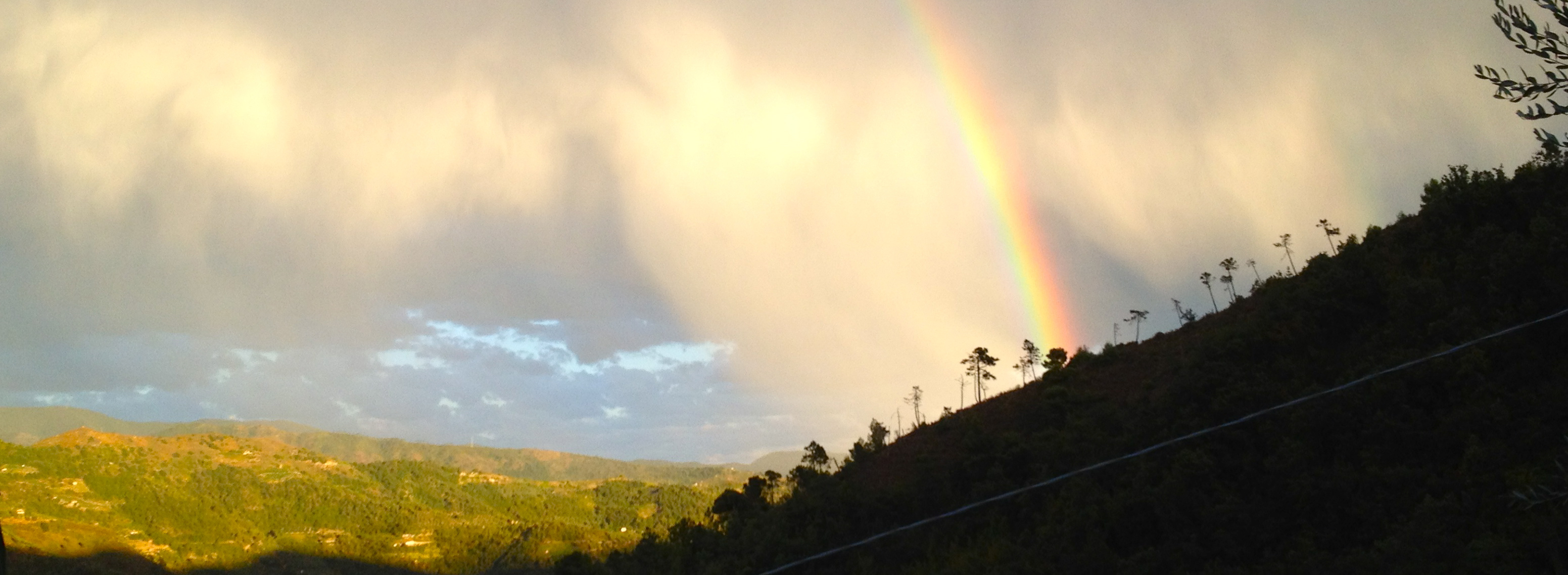
    A darkening northern sky, mountains rumbled
    to break the deadlock of drought,
    but only a dribble fell that day.
    It barely wetted the dusty earth,
    leaving us hot, fractious, heavy-legged.
    The next day dawned with black smoldering clouds
    and then with a bang real rain finally came.
    Down it poured, so we danced and sang
    to celebrate relief for all that lives and breathes;
    cool drops glistening on naked skin
    leather-brown from months of sun & sweat.
    The air cut fresh in our nostrils then
    as we shivered and pulled on jumpers
    unworn for many months.
    And the thirsty land smiled, drinking its fill.
    A musty smell of moistening earth
    contrasted with the sweetly perfumed air
    as all of nature breathed in gratitude.

    May the dessicated clay of my heart
    be softened by this vital element
    to melt and become pliable again,
    so that I may now love life to the full.

  • Surviving Boarding School – part 2

    cricketteam Forres
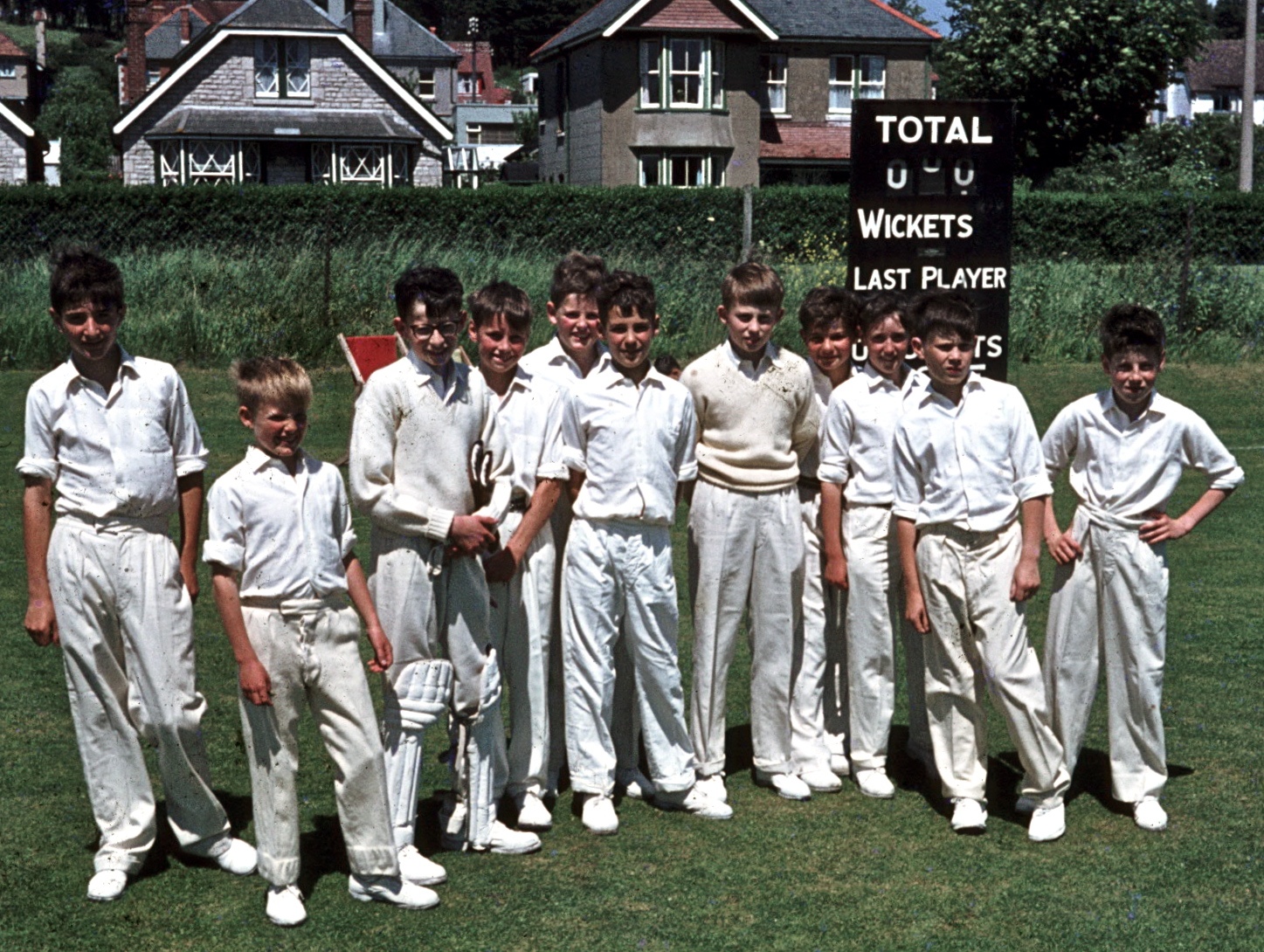
    School cricket team. I am 4th from the left at the back, age 10 or 11.

    I was eight when I arrived at Boarding School (see my article describing this, dated March 2015).
    At some point in those early days, seeded by that first lonely night away from home, I made a massive but unconscious decision that would have far-reaching effects for the rest of my life. But first I need to describe a little more of my story and some of the psychological awareness I have subsequently been able to bring to it.

    I left my family home, mother, father, sister, pet dog and two cats, plus all the animals on the small farm that was my world since the age of two. I left the fields, the trees, the hedges and ditches, the ponds and streams, the sheds and agricultural machinery, the nearby village with my primary school and the little village shop, where I spent my pocket money on sweets and lucozade. I left the friends I made at primary school and the adventure games my sister and I played on our farm in rural Dorset.

    The stark reality I faced was the loss of all that. I was thrust suddenly out of the only world I knew into another alien world, where all the boys spoke with an upper class twang. I did not know it, but I arrived at the school with a west country accent. Not a strong one, I don’t remember being teased about it, but when I went home for the four days of half term after seven weeks away, my father teased me about the new ‘posh‘ accent I had acquired.

    In order to fit in and feel that I belonged at school, I was unconsciously emulating the style of the other boys who were mainly sons of lawyers and other professionals or from the ruling class, with fathers overseas governing what remained of the British Empire.

    I found myself stranded between two worlds. The world of my parents, was modest and narrow, yet it had afforded me security and a sense of who I was. Returning to it from this point on was never quite the same. Returning for the holidays I began to feel like a ‘visitor’ in my family home.

    At school I pined for the familiarity, warmth and security I had known at home. I later found that being at home on the farm for the holidays was a wonderful release from the prison-like routines and regulations, a time to let down my guard, replenish my sensitive soul and just be me, away from the relentless proximity of male bodies and the constant striving for achievement. But from the day I left for boarding school, I never again felt fully a part of my family and I lost the spontaneous innocence and openness of my early childhood. I don’t know if this showed. In our family we were all good at keeping up appearances.

    However harsh and alien my new world seemed, it was also a more privileged and monied one. I knew I had to find ways to try to belong there. It became embedded in my nature to adapt and fit in and, as if it was familiar to me from a past life, I quickly emulated the ways of these posh boys and passed myself off as one of them. But my parents weren’t of the same background as those of my new peers, and my father’s teasing joke about my acquired accent, augmented the painful feeling that I didn’t properly belong in either camp.

    The money for my expensive education, by the way, came from a trust fund set up by our great aunt. It was all spent on me, because apparently my sister was doing well at the local school and was considered too shy to manage away from home, whereas I wasn’t progressing well at the village school, my teacher found me disruptive and my parents thought I would benefit from the extra discipline of a private school. They had sat me down and asked me if I wanted to go to boarding school as if I, age eight, could know what that was. I think I probably did say yes, without any idea of the implications. How could I have?

    But back to my memories of those formative years and the events that so effectively set me up to create the conditions I experienced in my adult life.

    The school had a cruel but effective policy for ‘breaking in’ new boys. We weren’t allowed to see our parents for the first three weeks, at the end of which we had an ‘exeat’, the name for the sundays when our parents could come and collect us and take us out for the day. That first three weeks seemed endlessly long. Some boys showed obvious signs of homesickness, and the plaintive sobs from some of the beds after lights out continued on and off during that time.

    Once a week we were given writing paper and instructed to write a letter to our parents. It was carried out in the classroom with a master supervising. My only clear recollection of this was of the deputy headmaster’s wife supervising us. She was one of only four female figures in the school. the other three being Matron, her younger assistant and the wife of our latin teacher, who lived in a house in the school grounds; but she had young children and rarely came into school.

    As we sat contemplating this written contact with our parents and home, we were given ideas as to what we might say about our week and then we could add our own thoughts, like asking, in my case, how George my cat was doing? When we thought we had finished we had to show it to the supervisor to be checked. If there were glaring spelling mistakes or crossings out we might be made to do it again, or advised to change something we had said. We had to learn how to address an envelope and then it was posted for us.

    I imagine this thinly veiled censorship was also a way of assessing if any boys were particularly homesick or disturbed about anything. I found the whole process tedious and upsetting, realising at some level that thinking about home had the potential to bring unwanted feelings to the surface.

    My mother managed to write to me regularly, trying her best to keep me connected to what was going on at home. I looked forward to those letters but they mainly contained facts, with little on an emotional level; not enough to fill the hole I felt inside. She undoubtedly had to distance herself to manage her end of our loss.

    My sister wrote sometimes, which was lovely. We had bickered a lot before I went away to school but I soon began to appreciate her and value her as a sister once I was away from home. I think I was a bit jealous that she was getting all the attention and advantages of being at home (she continued her schooling in the state system). I imagined her getting all the love perhaps. But years later she told me that she too found our parents lacking in their physical expressions of love. This was quite a shock to me and shattered a projection I had been carrying for decades.
    And my Dad? He wrote very occasionally. He tended to stay in the background and left most of the parenting to my mother.

    The amazing thing is, that in spite of all the challenges and distress that I found myself facing at that time, I made remarkable academic progress in my first term. I had been placed, as a result of my entrance exam, ninth in the class out of twelve new boys. I faced the reality of being three places from the lowest, smallest and dimmest boy in the whole school. They made sure with their publicly displayed charts that we all knew our place!

    But I must have buckled down with a determination to prove that I was better than this. They must have inspired or perhaps scared me into trying to prove them wrong. By the end of that first term I was top of the class and during the next term they moved me up a class. The teaching style and disciplined regime must have suited me in this sense.

    I have little memory of those times, other than a sense of learning to respond to what was expected of me, of wanting to please everybody and prove myself to be the successful achiever that we were all being groomed to become. And most of all, I see now that I was striving with the belief that to gain the love and approval of my parents, who had abandoned me and thrown me out of the nest, I had to show myself worthy of the perceived financial and emotional sacrifice that they made to ‘allow‘ me to be at this expensive privileged private school.

    In other words I must have come to believe, to my detriment, that love was entirely conditional, and so I conducted my life on the basis that if I failed at school I would be letting my parents and teachers down, I would suffer humiliating shame, further rejection by my parents and teachers, and therefore lose the (conditional) love that I could allow myself to feel. Not a recipe for childhood happiness; and this was just the first of ten years in a boarding school environment.

    To be continued soon.
    In the next episode: ‘Toughening us up’, the emotional effects on me, on my family and for intimate relationships in my adult life.
  • A Map to the Next World – by Joy Harjo

    In the last days of the fourth world I wished to make a map
    for those who would climb through the hole in the sky.

    My only tools were the desires of humans as they emerged from the killing fields,
    from the bedrooms and the kitchens.

    For the soul is a wanderer with many hands and feet.

    The map must be of sand and can’t be read by ordinary light.
    It must carry fire to the next tribal town, for renewal of spirit.

    In the legend are instructions on the language of the land,
    how it was we forgot to acknowledge the gift, as if we were not in it or of it.

    Take note of the proliferation of supermarkets and malls, the altars of money.
    They best describe the detour from grace.

    Keep track of the errors of our forgetfulness; a fog steals our children while we sleep.

    Flowers of rage spring up in the depression, the monsters are born there of nuclear anger.

    Trees of ashes wave good-bye to good-bye and the map appears to disappear.

    IMG_0003

    We no longer know the names of the birds here,
    how to speak to them by their personal names.

    Once we knew everything in this lush promise.

    What I am telling you is real and is printed in a warning on the map.
    Our forgetfulness stalks us, walks the earth behind us,
    leaving a trail of paper diapers, needles and wasted blood.

    An imperfect map will have to do little one.

    The place of entry is the sea of your mother’s blood,
    your father’s small death as he longs to know himself in another.

    There is no exit.

    The map can be interpreted through the wall of the intestine —
    a spiral on the road of knowledge.

    You will travel through the membrane of death,
    smell cooking from the encampment where our relatives make a feast
    of fresh deer meat and corn soup, in the Milky Way.

    They have never left us; we abandoned them for science.

    And when you take your next breath as we enter the fifth world there will be no X,
    no guide book with words you can carry.

    You will have to navigate by your mother’s voice, renew the song she is singing.

    Fresh courage glimmers from planets.

    And lights the map printed with the blood of history,
    a map you will have to know by your intention, by the language of suns.

    When you emerge note the tracks of the monster slayers
    where they entered the cities of artificial light and killed what was killing us.

    You will see red cliffs. They are the heart, contain the ladder.

    A white deer will come to greet you when the last human climbs from the destruction.

    Remember the hole of our shame marking the act of abandoning our tribal grounds.

    We were never perfect.

    Yet, the journey we make together is perfect on this earth
    who was once a star and made the same mistakes as humans.

    We might make them again, she said.

    Crucial to finding the way is this: there is no beginning or end.

    You must make your own map.

    ~ Joy Harjo ~

  • Migraine Free

    I am celebrating: Almost 5 months without a migraine after 20 years of being at the mercy of them, sometimes twice a week, and often having to sleep them off for 24 hours each time.
    So what has been the key to my cure?

    A GLUTEN FREE DIET.
    My partner had been trying to persuade me to give up wheat for two years and I tried but could never go all the way. Here in Italy we are surrounded by pizzas of every delicious kind, on every street corner; and of course every meal for our Italian friends has to include pasta. Every restaurant meal involves being tempted with a basket of fresh, often warm, bread, not to speak of the tiramisu and the endless range of yummy cakes and biscuits on offer everywhere.
    I have had to learn to turn a blind eye to all this and find, with a great deal of effort and ingenuity, alternatives that give me a sense of having bread I can eat and cakes that are gluten free.

    Luckily for me, my wobbly self-discipline is stiffened and fortified by Sofia, who has been eating gluten free for some years now for her own health reasons. It is so much easier doing it together.

    I have also cut my consumption of dairy down to a small amount of kefir, recognising that I probably had some intolerance to dairy products all my life, inspite of, or perhaps because I grew up on a dairy farm.

    We both believe that MANY people, like me, have developed an intolerance to modern wheat and/or to dairy, but don’t know it and put up with symptoms that remain the undiagnosed result.

    The numbers of gluten free products in the shops are growing all the time, which is an indicator of demand and therefore of need. But this could just be the tip of the iceberg.

    As a ‘fast metabolizer’ of food I have been stuffing in the carbs to try to keep my energy and my weight up all my life, only to find that I now have ‘leaky gut’ syndrome, which can only be healed by changing to a low carb, high protein, meat-based diet with lots of good oils and fats. I was vegetarian for some of my adult life and it appears this only made things worse. I tended to become hypo-glycemic with not enough protein and that, combined with the damage to my gut lining from taking strong migraine drugs for 20 years, has led to my condition now.

    This is getting long, but it feels important to share with my friends, to spread the word about the dangers of wheat and dairy; and sugar of course, all three of which tend to be in the foods we all love so much and on which our western diet is based. It isn’t healthy and for some of us, it needs to be looked at seriously.

    I am so glad to have found a route back to health without drugs, all credit and thanks to my carina Sofia, I am migraine-free and I feel so much more vital, alive and open to the world inspite of the gut issues I am still dealing with.

    Its hard to take all this in after 20 years. So I am celebrating today.

    Sofia is just taking a tray of delicious muffins out of the oven – gluten/dairy/sugar free, high protein muffins, of course. so I must now sign off to let my taste buds join my olfactory organs!

    I will post the MUFFIN RECIPE in my next post and will send it to anyone who contacts me for the details.

  • The Great Bell Chant

    I was first given this beautiful chant and prayer by Thich Nhat Hanh while involved with a local group in the UK, part of the Community of Interbeing. Before that I was connected to an international Tibetan Buddhist organisation founded by Lama Yeshe, who died many years ago now and I never had the privilege of meeting him.

    TNH’s prayer came back to me this morning via The Lama Yeshe Wisdom Archive and my Facebook page. I listened with great joy along with my precious memories of the people and places I shared during my times with those two communities.

    The chant and the beautiful film footage has also moved me close to tears – of sadness for the planet and of longing for The More Beautiful World our Hearts Know is Possible.

    I want to share The Great Bell Chant with you now:

  • Magic at Milking Time

    I look back through the six decades of my life to recall a memory, clear and resonant.
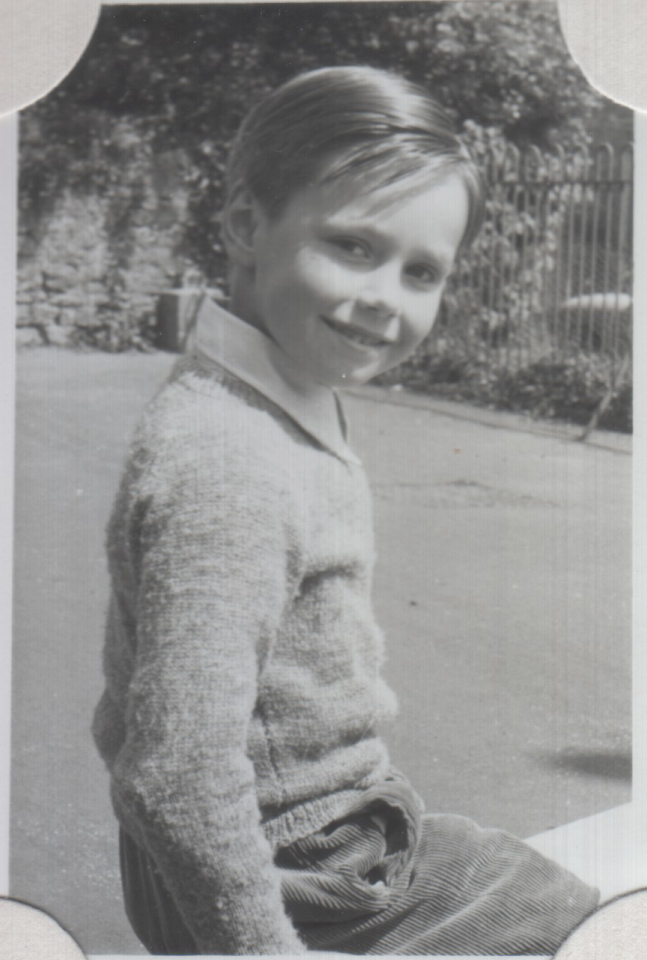
    A little boy moving among my father’s cows as they assembled in the concrete yard of our small farm waiting to be milked.
    mepicprimaryschool
    Fearless and totally trusting, I loved to move among them, experiencing their huge bodies towering over me, the feel of their thick coats, silky smooth in one direction and rough against my little hands in the other, as I stroked their flanks and nuzzled into their soft necks, using their animal heat for warmth against the early morning cold.

    I remember becoming mesmerized by their gleaming wet noses, their breath billowing from their nostrils in rhythmic spurts of steam, carrying the sweet smell of the damp hay they were chewing patiently, as they waited, their full udders swinging heavily between their legs as they moved and jostled to line up for their turn in the milking parlour. Sometimes they were so ready to drop their milk that little streams of the creamy white liquid would squirt from a teat, making rivulets of pure white on the muddy concrete.

    The cows‘ feet and legs were always caked in mud where they had to enter the yard through the field gate. My father regularly tried to fill the area with hardcore to combat the effect of the cows‘ daily convergence. The tramping of dozens of cloven hooves of these heavy beasts created a deep mud soup that smeared their legs up to their shins all winter, and was impossible for us children to cross without losing a welly boot or keeping us entirely stuck , screaming for parental rescue.

    Cows have an air of contentment, almost stillness, with their slow ponderous bodies and their patient chewing of the cud, that fascinated me at that time and since. My memory of all this, but more particularly my sense of how I seemed to merge with the cows at the young age of 5 or 6, comes back to me now as hugely significant, reminding me of the power of those early experiences on the farm, in nature, at one with the animals.

    I can remember looking up into a cow’s eye as she stared back at me; the wild non-human otherness I saw in it, while I could sense the gentle reassurance of a mother to a child.
    After all, these cows were all mothers. I had already seen them giving birth out in the field. The wonder and magic of watching a slimy limp and leggy object sliding to the ground in a lifeless heap; the mother turning to lick and nuzzle her newborn, bringing it to life, so that within a few minutes the flimsy creature, struggling against the forces of nature, would miraculously rise to its feet, stagger about and quickly find its way to its mother’s teats for its first taste of strengthening milk.

    Once he was reassured of the calf’s ability to drink and the mother’s instincts to care for her young, my father would lead me away to let nature take its course. For my father these
    must have been anxious events. The husbanding of his herd and the regular production of healthy progeny, was the key to the survival of his farming business at that time. But for me it was the only world I knew and on one level it was familiar routine for my dad too. And yet there was a beauty and sense of wonder that shone through, informing me at a soul level, giving me a sense of deep interconnection with the rhythms of life and the laws of nature.

    Our father never spoke of it this way. He was a sensitive man but pragmatic and if he felt these things he never shared them . Our mother, a school teacher, took us on nature walks, teaching us the names of wild flowers and birds, talking about the animals that lived around our farm. This was a gift to my sister and I in giving a factual base to our world. But the feeling of interbeing that I was open and receptive to, as I spent time with the cows, was something that must have been innate in me as a little boy. That innocent, intuitive, immanent sense of embodied oneness was educated out of me by ten years at a boys’ boarding school, through rational, paternalistic grooming – not lost but pushed deeper into my psyche for me to retrieve later.
    mepic4
    But before that stage of my childhood began, I came running into the kitchen one morning with blood pouring from my mouth. My mother told me later she was panicked to see me and I was whisked off to the doctor, where it became clear, through examination and what I was able to describe, that a cow had inadvertently whipped its head around (probably not realising I was standing at her side) and the tip of her horn had caught the corner of my mouth, tearing my upper lip, a part of the body that bleeds profusely. It was decided not to stitch the wound but to let it heal naturally and to this day I have a small scar as a record of that unfortunate moment.

    I can’t recall if I was frightened of the cows after that, but my parents pointed out to me the horn could have taken my eye out or worse. They warned me not to walk among them any more and my father had all their beautiful horns cut off. They were what is now a rare breed of dairy cattle called Short Horns. I wasn’t there when the man came to carry out the dehorning, but I do remember a huge and gruesome pile of those emblems of bovine splendor left to slowly rot in a ditch behind one of the outbuildings. I understand now my father’s decision, but at the time I felt terribly sad to come across this graveyard, for which I felt somehow to blame.

    I ask myself: was my childhood experience any less profound than communicating with white lions in africa or living in the dreamtime in the australian outback? I have only been able to grasp the significance of those non-dual moments of my childhood through my adult years. But now I am coming full circle, through a combination of conscious spiritual practice over many years, and a gradual surrender to the divine feminine, in which I can consciously evoke something of that original natural beauty and wonder of existence that my soul longs for – coming home to my original innocence.

  • Marriage

    IMG_0059

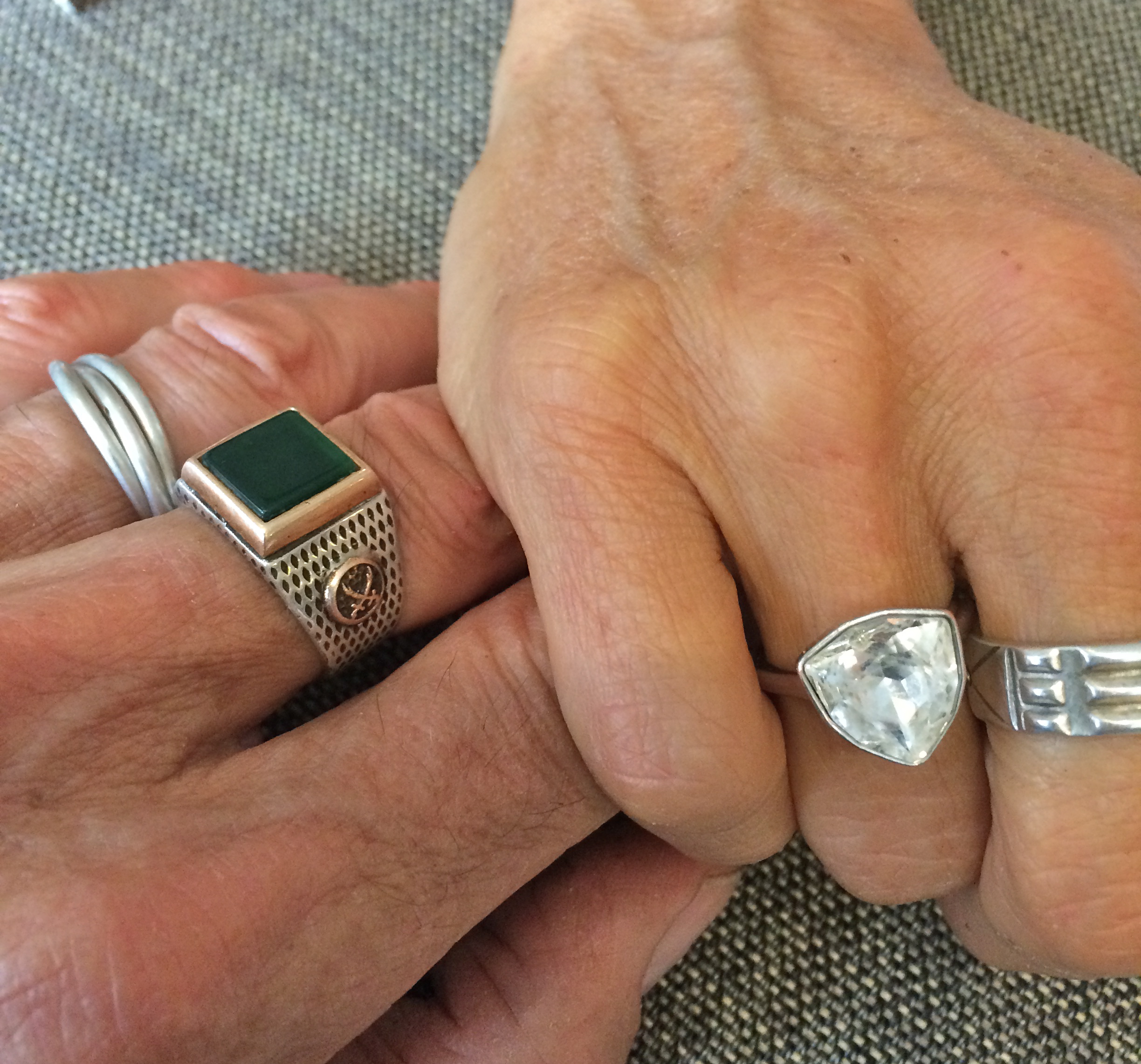
    My partner and I have bought rings.
    We are not marrying each other,
    we are marrying ourselves!

    The more we awaken to ourselves,
    The more our relationship deepens,
    This is our priority now,
    to commit to ourselves first.

    We declared our intentions
    and started to look for rings
    that would symbolize this
    as a gift to ourselves,
    as a reminder of our troth.

    Sofia found hers first.
    It is bright and sparkly clear.
    It reflects her avowed intentions.
    I looked on line for ideas
    but nothing I saw felt right.
    Then, a couple of weeks ago
    we passed an antique market.
    I felt the urge to look
    and I walked past many stalls,
    drawn to one at the back
    with dozens of rings on show.

    My eyes went straight to a men’s ring
    with a rich green stone set in a gold square
    (well – polished brass probably)
    set on a silver ring – see photo.
    It fitted perfectly.
    I dithered over another choice,
    similar but with a red stone.
    Then I knew my first intuition was right.

    It looks bold and ethnic,
    The rich jade stone mysteriously appealing. *
    There are little roundels of crossed swords
    on the decorated silver sides
    and the effect of the whole
    just feels right.
    I want to remind myself
    of my lifelong ‘green’ values,
    of my love of aesthetics,
    refined but slightly exotic.
    The square and the circle
    are strong symbols for
    the masculine and feminine qualities
    that I embody and cherish.
    The swords cut through ignorance
    in service to truth.

    I fiercely commit to love myself,
    to honour and obey my truth;
    to stay true to my beliefs,
    to my values, my souls longings –
    especially when opposed or blocked.

    We have yet to create a ceremony
    worthy of our marriages.
    But that will come
    when the time is right.
    As partners together we notice,
    the more we are intimate with ourselves
    the more we are intimately connected.

    I know that I shall fall short
    of my vows many times.
    But I wish to make this commitment
    with a clear intention for myself
    and no-one else,
    based on love and acceptance
    of my shadow as well as my light.

    And so it shall be, till death do us part.

    * Jade symbolism: Dream Stone,” revered in ancient cultures, as well as today, to access the spiritual world, gain insight into ritualistic knowledge, encourage creativity, and dream-solve. [Melody,341][Raphaell,161] It is cherished as a protective talisman, assuring long life and a peaceful death, and is considered a powerful healing stone. [Mella,87] An amulet of good luck and friendship, Jade signifies wisdom gathered in tranquility, dispelling negative and encouraging one to see oneself as they really are. [Hall,152]

  • The Place Beyond Words

    IMG_1622
    In the white swan space
    of thin mountain air
    Truth comes
    as light
    pure
    unseen
    flowing – bathing
    illuminating entire worlds

    Who am I
    beyond words
    beyond thoughts
    beyond ideas
    beyond memories
    beyond emotions
    what am I really
    beneath it all

    No answer I can hear
    in that place
    beyond words
    stillness – silence
    the deep silence
    the source of speech
    out of which
    all creativity comes