Author: Inner Ventures

  • The Great Taboo: Patriarchy Begins At Home.

    Reposted from Womb of Light – by Bethany Webster.

    There’s a reason why it’s been really hard for us to find solutions to our current global challenges. There’s a reason why feminism, with all its gains, has made only limited sustainable momentum for women. There’s a reason why we’re seeing regressive movements and a rise in authoritarianism around the world. It’s due to a huge taboo that we haven’t been willing to face as a collective.

    We have a short window of time to make significant changes before we’re on an irreversible course of climate change, which will impact the earth and humanity in staggering and unforeseen ways. Species are dying off at an unprecedented rate. All things female or representing “femaleness” are under attack: women and our right to reproductive choice, female children, our oceans, animal species, air quality, loss of farmable agricultural land, just to name a few. The violence perpetrated by men and groups of men is being revealed to be more brazen and psychopathic than we had imagined.

    Patriarchy and the Mother Wound: An Urgent Call to Look Within

    One could say that our global situation is a projection of the devastation of our inner landscapes, mirroring something that we must urgently look at within ourselves.

    The Stigma of Victimhood

    A major hurdle to confronting our taboo is that there’s a strong bias against victims in our culture. No one wants to feel like a victim. No one wants to appear as a victim to others. The problem is that this anti-victim bias is precisely what keeps us perpetually stuck in a victimhood.

    Not wanting to be a victim keeps us stuck in victimhood.

    We all bear a mark of victimhood that we are deeply defended against acknowledging because we’ve learned to equate being victim with weakness and defend against it. There’s a deep memory of powerlessness of early childhood that we want to avoid. Our avoidance keeps us in a cycle of replicating the wound over and over again personally and collectively.

    The Family is Patriarchy’s Chief Institution

    The family is patriarchy’s chief institution, as Kate Millet said back in the 70’s. We can name all the atrocities we see out in the world, feel outraged, start initiatives, create organizations, etc. We may become “activists.” But if we haven’t grappled with how we personally have been force-fed patriarchy’s anti-life, anti-female, anti-feeling philosophy as small, helpless children, we can’t move beyond it. As a species, we may not even make it. We have to get to the root first.

    The Mother Wound is the social condition, rooted in patriarchy, which manifests on the personal, cultural, spiritual and planetary level. 

    The Mother Wound is the result of patriarchy’s damaging impact on human development, by way of the systematic oppression of women through hundreds of generations, thus crippling humanity and leading to unprecedented death and destruction on our planet.

    Do you want to learn more about the Mother Wound and how it may be impacting you? Click here to download the new ebook: What is the Mother Wound? An Essential Guide for Women.

    We Know Patriarchy is an Issue. Why Hasn’t More Been Done? 

    Patriarchy values competition, domination, maleness, and a mode of “winning at all costs.” This isn’t just a cultural atmosphere that we get a whiff of every now and then. It’s flowing through our veins and is present in our brain’s neural-circuitry. It got locked into place by the time we were 7 years old.

    Humanity is locked in survival mode, a place of reactivity, flight, flight, freeze or fawn. We are a traumatized species creating more trauma around us. 

    The beliefs, patterns and behaviors we internalized in order to survive in patriarchy are all inside us, and because our families were ground zero for this cultural transfer to take place, they got mixed with our basic human needs of love, safety and belonging. This has compromised our trajectory. Like an invisible fence, we unconsciously stay within certain confines of thinking, feeling and behaving and stay away from others, all while heading off a cliff of collective destruction.

    Childhood Trauma is Normalized

    The majority of us grew up in emotional warzones that were our childhood homes. We have to confront the emotional magnitude of how we suffered as children as a result of the passing along of patriarchal values and norms. None of us have fully escaped this. The reason we keep avoiding this is because this requires emotional resilience and openness to pain, empathy and care, the very things that patriarchy has deemed taboo. As children we were alone with our pain. It’s like a black hole we avoid but subsconsiously it’s controlling our choices and keeping us stuck. We like to think that as adults, we’ve moved beyond childhood simply because we’re older, but in reality we are stuck there emotionally.

    Being with our pain isn’t victimhood. It’s the epitome of personal responsibility and a mark of emotional maturity. 

    Moving through this pain can only happen through being with the pain, through having a loving, empathic inner witness alongside it, what I call an “Inner Mother”. This shift in consciousness is a bridge we must cross psychologically if we are to evolve as a species.

    False Narratives Keep Us in Denial: “It wasn’t that bad.”

    I’ll never forget watching helplessly as my father tormented my little brother. Any time he cried, my father would tell him to “take the pain” and sadistically not allow him to cry. Often he would come home and start hitting him for no reason. I would scream to get him to stop. When I got older, I recall hearing about how my grandfather would beat my father as young as 2 years old, sometimes throwing him against a wall, beating him almost to the point of passing out.

    Our standards for humanity are really low when progress looks like each subsequent generation is slightly less suicidal and desperate than the next.

    I recall how terrifying it was as a little girl, to long to hold my mother for comfort, but instead I sensed her emotional desperation and had no choice but to endure her focus on me as a kind of surrogate mother to the motherless child within her. I disassociated, thought about suicide at 11 years old, and withdrew into spirituality as a cocoon from the pain of emotional neglect. I found out later that my mother had been threatening suicide to my brother when he was a teen. A big secret in her family was that her mother was drunk for much of her childhood and threatened to commit suicide to her as well.

    Our everyday problems are constantly showing us symptoms of the deeper wounds that are potential entry points for insight and healing.

    These may sound like extreme examples to some, but my family looked like a perfect family from the outside. Up until college, I idealized my family and was in complete denial of any pain I went through. What I learned is that the everyday surface problems that we experience are “cover stories” for the real story beneath. We are in deep denial of the old narrative running in the background. We don’t have to go “digging” in our past, it’s all present just beneath the surface.

    The Taboo of the Mother Wound

    The great taboo is that Patriarchy is a traumatizing culture and we all suffer from the Mother Wound to some degree as a result. We’ve been traumatized personally in our families, in the culture at large, spiritually through a sense of being subject to a judgmental male god, and on planetary level by feeling disconnected from the earth.

    We are at an existential crisis point in which our survival depends on integrating the female/mother aspect of humanity we’ve been denying. 

    This unresolved trauma we experienced privately at home was doubly reinforced by our experiences with education, the state, media, entertainment, religion, etc. The Mother Wound is the “center of the wheel of suffering” that impacts every area of our lives, from our relationships, to careers, to parenting, to relationships to our bodies and more. Admitting this is not being a victim or powerless; it’s a sign of intelligence and hope for our species. The most potent access points to healing is looking at how the Mother Wound shows up in our personal lives. When enough of us doing this our culture can be transformed. As we heal, we evolve and humanity moves forward.

    White Male Privilege and Spiritual Bypassing

    Our collective denial is so strong that most doctors, many therapists, and scores of spiritual teachers and coaches, are active purveyors of this great denial of childhood trauma. It’s as though there’s an overlay that blinds us to it and also blinds us to the reality that we’re blind to it.

    I was watching a talk recently between Gabor Mate and Adyashanti, two authors I admire. Towards the end of the talk, the topics of trauma and spiritual bypassing were finally broached. Both agreed that trauma is extremely prevalent in their students and how in recent years dozens of highly regarded spiritual teachers were exposed for sexual assault and improprieties. Adyashanti said “You should not expect your spiritual teacher to be an expert on trauma.” My question is why not? If the vast majority of your students and followers suffer from some form of trauma (as they mentioned) then why not make your teachings and resources inclusive of that?

    True integrity demands that every spiritual teacher or leader of any kind be experts on their own trauma at the very least. And they should consider themselves to be ongoing students of trauma, deepening their understanding of how it affects human potential. One can’t have grounded spirituality without acknowledging how trauma shapes us and blocks us from knowing our true nature.

    Any legitimate form of activism, spirituality or healing should always go hand in hand with an understanding that our personal trauma is always playing a role in how we show up. 

    Without this acknowledgement, our initiatives and movements will continue to be superficial, unsustainable, prone to conflict or unethical. In other words, some virulent thread of patriarchy will always remain and our efforts will be deeply limited.

    We need to be experts on how we were traumatized in our families and how it impacts our lives. This should no longer be a taboo. We need to make healing the Mother Wound a badge of honor and integrity. This isn’t blame, it’s generational responsibility. Patriarchy, and the trauma it creates, has blinded us to the depth and complexity of ourselves and each other. It’s time to raise the standard.

    At another point in the talk, Gabor expressed surprise that Adyashanti’s zen teacher was not some great man, but rather, an active mother of 5 children. I found it interesting that there was a marked lack of curiosity about her life or how she reached such heights of wisdom; no curiosity about how the fact of her being a mother may have factored into her spiritual advancement.

    Through objectification and commodification of female human life, we are a shadow of our collective potential and now a menace to life on earth. 

    Racism, homophobia, and sexism appear more rampant and escalated than ever. Our “othering” of certain humans based on race or sex is an echo of how we learned to “other” the traumatized child within us. It all emanates from there.

    Women are Closer to the Truth (and the Pain) 

    Through my teaching and coaching women, I’ve seen that working through your own Mother Wound begins to inoculate you from feeling like a victim and replicating those early wounds with others. The sense of victimhood greatly diminishes as it’s no longer a default setting running in the background. With the foggy glaze of denial dissolving around your own vision, you are better able to see reality as it is and able to be more honest with yourself.

    You are likely to feel more empowered and at choice in situations where you may have felt trapped in reactivity in the past.

    You feel more like an adult and less like a victimized child. Thus, you elevate the people and spaces around you by simply being who you are, unapologetically and undefensively. Part of our collective healing is supporting one another on this path.

    Both Men and Women Have Anti-Female Feelings

    We have to confront our anti-female feelings. We learned “anti-femaleness” through the cognitive dissonance of early childhood, in which our mothers were the most important, significant person in our lives. Yet, they were also the most denigrated, disempowered and disrespected in our own homes and in every aspect of the world.

    Ultimately, both men and women are suffering from a form of self-abandonment that occurred early in life, a splitting off from feelings, empathy, care, process, depth, presence; things that “Mother” represented and was defiled for.

    All kinds of dysfunction, pain and trauma flowed from there, for all of us, to varying degrees. These are the very qualities we have to birth in ourselves to move beyond patriarchy.

    Reckoning With the Taboo of the Mother Wound

    Reckoning with this great taboo is the ground zero for creating a new earth, a new era for humanity. Healing the Mother Wound widens the gap between stimulus and response so that we’re less often in a state of reactivity and fight, flight, freeze or fawn. Through that widened space, more human potential can be realized and solutions to our most pressing global problems can be found.

    Here’s a sample of what we recover through healing the Mother Wound: 

    1. Resensitize Yourself to Life: 

    Life gets re-animated. Instead of seeing things through a lens of deadening labels and an overlay of trauma, we can more easily perceive the visceral beauty, depth and the preciousness of life all around us.

    2. Integrate Instead of Compartmentalize: 

    We are more able to see life as an integrated whole and our self-awareness increases. We see connections more than differences. The differences feel less threatening. We are more open to feedback.

    3. Redefine Triggers as Opportunities: 

    Our reactivity is a teacher showing us what is next for us to heal from our past. Each trigger is an opportunity to make new choices that we couldn’t as kids.

    4. Reclaim Embodied Ways of Knowing:

    Felt experience becomes a source of wisdom and information. We act on our own self-knowledge and learn to trust it. Reclaiming ourselves as the authority of our experience. Learning to trust our observations and intuitions.

    5. Anoint Being Over Doing: 

    Trusting our need for rest, silence, for space, for time without feeling like something terrible is going to happen unless we’re productive.

    6. De-Objectify the World Around You: 

    As we become emotionally available for the traumatized child within us, we become emotionally available for other people, we feel empathy more deeply, we feel more connected to non-human species and the earth itself.

    7. Value the Vulnerable: 

    As we get in touch with the scope and magnitude of how much we suffered emotionally as children, we see value in things like grief, sadness, disappointment, welcoming them rather than judging or shaming ourselves for them. We look forward to the renewal and regeneration they offer and the clarity that always follows in their wake.

    Do you want to learn more about the Mother Wound and how it may be impacting you? Click here to download What is the Mother Wound? An Essential Guide for Women.

    Questions for Reflection: Patriarchy as a Culture of Trauma that begins in our childhood homes

    • How did patriarchy play out in your family of origin?
    • How were patriarchal values transmitted and reinforced?
    • What was that like for you emotionally?
    • How did you adapt or cope with that environment?
    • What challenges do you have in your current life that are rooted in those early experiences?
    • What are some ways you can be present to that child within you?
    • What resources or support do you need in our daily life to make this happen?

    Healing the Mother Wound is not a quick, glamorous or easy path. But it is the authentic path to inter-generational healing and transformation that we must undertake. Through this work, we create a better world for ourselves, our families, our children, and the earth.

    I invite you to join me to learn more:

    If you want to join a group of women focused on emerging from patriarchy, check out Emergence Now. If you want to dive deeper into your own personal healing work, check out the Mother Wound Online Course. If you have any questions reach out to my team at support@motherwound.com. Thank you for being here!

    Copyright 2019 Bethany Webster. All Rights Reserved.


  • Cracking Open Anger

    ANGER IS BEAUTIFUL…
    How does that above heading make you feel? Why do we fear our anger so deeply? We call it bad, wrong, damaging, lo vibration, crazy, insane, ugly, tormenting. Yet through religion, and revenge, people are killing each other daily with war and domestic violence. Using God as a reason to justify the murderous acts. War has been at the hands of men since the beginning of time. What if the end of War and Murder, is the courageous act of understanding our anger? Then there are those that are victim to anger in submission.. The reason for out of control anger is complex and we are only tipping the ice berg at how to manage anger.
    POWERLESS ANGER
    1. Blame
    2. Submission
    3. Unbalanced silence
    4. Matre
    5. Perfectionism
    6. Self-blame
    7. Undisciplined
    8. Drug and alcohol addiction
    9. Lack of purpose
    10. Numbness
    11. Confusion
    12. Anxiety
    POWERFUL ANGER
    1. Self-responsibility
    2. integrative
    3. Wholeness
    4. Clarity
    5. Action
    6. Justice
    7. Calm expression
    8. Will
    9. Passion
    10. Peace
    11. Sacred Activism
    Throughout history we have tried to ‘deal’, with anger. Please do not give me this, ‘you are fine smile and the land of unicorns and butterfly’s’. That kind of attitude cannot even walk down the street of people whom are in helplessness and in addiction without being disgusted with noses pointed up in the air. A shock to the system when someone is even acting out of anger. Thinking that the option and solution is to run away from anger. I am not referring to discernment nor allowing people into your life whom are projecting anger at you, through abuse. .But people are seriously immensely suffering underneath when they are in anger that is not managed. Letting go has its place with self-preservation and values. I am talking about the core attitude in relation to unconditional love. Unicorn’s cannot even deal with and environment of people whom are deeply vulnerable, without thinking in their minds of wanting to change everyone in the room. That is not true compassion.
    Joy, that is not linked to power and passion, is dissociated, dysfunctional and dangerous to the world, and those kind of people run from suffering, get exhausted by those suffering, and even laugh at those suffering. Well, the new age is moving into community and you can have the choice to move away from drama or not attract it in your life, there is a way to move with anger.
    I have worked in Palliative care for over six years and every emotion that you have not faced and integrated will arise at the point of death. I have rarely witnessed a death that has not done so, unless you are very drugged up with morphine. So why not open all spaces in you that is truth? No one is asking you to tell everyone you are angry, get some help, there is so many modalities and beautiful body work professionals whom would gladly hold space whilst you process this beautiful energy. I have met a few myself. There is also a Yoga practice by Chakra Evolution who would gladly allow you to process anger.
    I do also know how it feels to be in total anxiety around anger.
    If this is the case? There is help and support.
    The very moment we blame someone and ourselves for anything in that case, relationships, jobs, money, health, weather…………we are stepping out of our power. It is easy, I know, to blame because we don’t want to feel the anger within us, we are deeply afraid of the anger. Of what we can do and capable of if we just for a moment allow the anger to be present in every aspect of ourselves.
    In the seventies we spat out anger all over the joint, with wars and abuse and riots without any social empathy. It was a stage of revolution. Then we hit apathy in the eighties and nineties, with the fear of being attacked and vulnerable. We are now viewing the consequences of both extremes of anger, destruction. Destruction of nature, destruction of ourselves, allowing systems to take advantage of the people, no regard for the health and values of the public as a whole, wider poverty and suffering of children on a grand scale.
    Thousands of child trafficking and we ignore it because we feel helpless. This helplessness is actually repressed anger. We are more powerful than we actually think we are.
    It takes patience, persistence, pratice and discipline to re calibrate the mind to be in powerful anger. So please it is not that you are not allowed to blame initially, because this can turn to self blame if not projected, it is the awareness of the possibility to take your power back.
    So why do we have anger in the first place?
    In childhood
    ❖ Your inner child was exposed to abuse. (verbal, emotional, physical and psychological)
    ❖ You were not supported in your emotions in a healthy way.
    ❖ Abandonment.
    ❖ Parents whom had fear around anger (both internally and externally).
    ❖ Shame
    ❖ You were told and informed that how you felt was wrong.
    ❖ You were not guided to manage anger.
    ❖ Children exposed to control crying.
    ❖ Hyper vigilant parents. (shame)
    ❖ Media (TV)
    ❖ Lack of creativity
    ❖ Lack of security
    ❖ Lack of free thinking
    ❖ Sinned
    ❖ Belief of Hell
    ❖ God Fearing
    ❖ Lack of Routine
    ❖ Inequality between siblings
    ❖ Parent’s whom had an expectation of ‘making’ children responsible for their joy.
    ❖ Sacrificial
    ❖ Hopelessness
    ❖ Helplessness
    ❖ Being Blamed
    All of those have not seen the light of day and loved back into your tender heart if you have not felt the anger that is masking the fire.
    Please go back and check the first list, Powerless Anger, if you truly believe that you do not have anger, in one form or another.
    Shame is the shield that protects Powerless Anger (see above for this).
    SHAME is a feeling of being wrong, or intrinsically bad, hiding, silently suffering, not good enough, externally seeking happiness, grandiose ideologies, self-importance, Lack of empathy, feeling of smallness, lack of trust and faith in self and God, an emotional attachment of others changing.
    Shame needs to be acknowledged, felt, held and seen for what it is without pushing, pulling and forcing.
    Shame in its fullness; feels like a skin crawling sensation. Triple that sensation if you have been exposed to child sexual trauma. This is why we are in denial, because it takes such great courage and will to feel these nervous system responses that is hidden in the amygdala of fight or flight.
    In Powerless Anger we are limited in the ability to manifest and achieve goals.
    THEY DO NOT WANT YOU TO KNOW THAT ANGER IS THE MASK OF POWER AND PASSION< THE FIRE THAT MANIFESTS YOUR LIFE TO MAKE YOUR LIFE MOVE.
    Are you terrified of your anger?
    It is because you have not been shown that anger is healthy.
    Under the influence of drugs and alcohol, anger can NOT be effectively calibrated and the mind is altered. This is one aspect of anger being acted out in dysfunctional ways, such as violence. Cases such as Autism and schizophrenia, needs attention more than just feeling through the emotion. There is another component to anger that is violent and that is when anger is attached to extreme internalized shame. The other side of the coin is that healthy shame and guilt towards anger helps us to be under some kind of control whilst in processing anger.
    Your power house and center for manifesting is not through the heart alone, as the heart is a space of holding, compassion and nurturing. The center of the fire that burns a flame inside, is the engine to move and change your life. Fire transmutes and transforms and gets us out of depression. In most cases those that are deeply depressed are in fear of anger both from the external and internalized.
    If you are not accessing powerful anger, then you are not effectively moving into power and manifestation. Individuals that mistaken overwhelm with true trauma triggering of the amygdala (fight or flight organ)? The clinical symptoms of true overwhelm in the midst of emotional process? …..
    • Sudden unexplained headaches • a feeling of absence and not fully present to the outer world, like unable to recognize objects in the room • memory loss • unable to hear what others are saying • unable to retain information • outward physical projected anger that is violent • sudden tiredness and lethargy, that is not an onset of hard work and a needing of rest • dreamy absence or day dreaming.
    So in order to recognize any of this beginning to happen, there would be symptoms, such as a sudden onset of a headache that is not the usual case for you, dizziness and a dreamy absence, as soon as these come on, you just stop. Train your body and mind consistently and then take a deep breath, and come back into your body by focusing on your feet, tapping on your legs, grab a pillow to hug, focus on objects in the room and the present. Physical associations and body work is a huge one for this to be integrated effectively. If not nature helps. You can ask nature herself to help ground you into your body.
    If you feel there is a modality that can assist with the sensitivity and you find it challenging to embody anger effectively? Then please this is not an attachment to what your choices are, it is just a psychotherapy perspective of honoring the anger, instead of having fear around anger. A greater detail into understanding anger.
    ANGER MANAGEMENT
    • experienced body work trauma specialist
    • chakra evolution yoga
    • physical contact with others that you trust
    • holding soft fabrics and pillows
    • a psychotherapist whom can guide you through anger by mirroring and establishing calibrated anger (see above)
    • stop communicating when anger arises
    • take a deep breath
    • acknowledge anger as being a positive energy
    • allow
    • feel
    • release
    BODY LANGUAGE
    Powerless Anger
    • feels cold and sharp
    • muscles clenched tight and inwards
    • shallow quick spurts of anger
    • shoulders shrugged inwards and up
    • abdomen held tightly inward
    • clammy
    • heart racing
    powerful anger
    • chest expanded
    • muscles stretched outwards
    • heat sensation
    • deep breathing
    • palms open

    Sacred Activism
    At a recent retreat in Bali, three men were allowed to process anger in a functional non destructive way. I had never felt so safe around men my entire life. So much so that my womb opened in a swirl of yummy organic aliveness.
    ANGER: THE EXTRAORDINARY FIRE INSIDE
    Anger is not dark. Anger is not dangerous. Anger is not unspiritual. Anger is not ‘bad’. Anger is not a sign of our lack of evolution. Or our failure. Or our lack of insight, peace, enlightenment, maturity, health. Anything. Anger is simply fire. Fire can burn. Fire can cleanse. Fire can illuminate. Fire can heal. Anger is a real and valid emotion, billions of years old, intelligently rising in the body to protect us from a real or imaginary threat. Wanting to set boundaries. Ready to say no. Willing to stand up for our values. Yearning to be heard. Anger is not the problem. Anger is not inherently violent. It is in our REACTION to our anger – that is where the violence begins. When we repress and reject our anger-power, when we stuff it down, refuse to feel it or even acknowledge it, hide it in order to be ‘nice’ and please and impress and protect others. When we attack and hurt others in order to find relief from our anger. When we judge and shame and rage and manipulate and try to control others – what they think, what they feel, what they desire or do not. Try to make them feel bad. Punish them. That is where the ‘darkness’ lies. In the reaction to our anger. In our search for discharge. In our running. In our disembodiment. Not in the anger itself. Anger is only energy, fierce and powerful energy arising in the body, not a sin or an ‘unspiritual’ force to be eradicated, but a creative and fiery expression of life itself. Anger is simply a raw part of us asking to be met. With understanding. With compassion. With love. With slowness. With breath. Some of the most violent people I have ever met have been (on the surface) the most ‘spiritual’ ones – the enlightened ones, the gurus, the perfect ones, the ones who ‘never get angry’, the ones who are ‘always peaceful and calm and in a state of perfect love and equanimity’, the ones who ‘dwell in pure Awareness’. Yeah, right. For there is no true love without love for our anger, when it comes to visit. True light is willing and able to enlighten the shadow, and bless the mess. Anger is not inherently dark. Anger is not dangerous. Anger is not unspiritual. Anger is not ‘bad’. Or shameful. Or sinful. All these outdated beliefs stem from a profound fear and misunderstanding and distrust of the body. We can undo the conditioning: Next time anger surges, as it will, can you slow down, connect, breathe, feel, breathe again, and get curious about the fire inside? Underneath your anger, you may just discover, a tender, fragile, frightened heart, a beautiful vulnerability, and a self-protective power, billions of years in the making. – Jeff Foster
    copyright January 2019
    Thankyou to those who inspired this article.
    Collette Oonah Corcoran
    Jeff Foster
  • Evolutionary Relationships: The Seven Requirements Of Love

    By Andrew Harvey

    An Excerpt From “Evolutionary Love Relationships: Passion, Authenticity,and Activism“

    It is critical to remember that this crisis we are facing is a crisis in which the sacred powers of love in the human soul are being diverted by distraction, by greed, by ignorance, by the pursuit of power, so that they never irrigate the world and transform it. What is needed is a vision of evolutionary relationship as a relationship that helps us come into the real, take responsibility for it, and enact our sacred purpose with a partner, and for the world: when two lovers come together in this dynamic love consciousness, they create a transformative field of sacred energy, from which both can feed to inspire their work in reality.

    There are seven requirements necessary, I believe, for this tremendously potent vision of evolutionary love to emerge in the world.

    The first requirement is that both beings need to be plunged individually into a deep and passionate devotion of the Beloved, by whatever name they know the Beloved, because without both beings centering their life in God, the relationship will never be able to escape the private circle. From the very beginning it must be centered in the Divine. It must be a relationship that is undertaken in the conscious presence of the Divine for the Divine’s great work in the Universe. Only a relationship that is centered in God, and that has God as the prime actor in the relationship, will be able to bear the vicissitudes of authentic love, of dealing with the challenges of life and service in the world.

    The second requirement for an evolutionary love is that both beings must develop a mastery of solitude. In his Letters to a Young Poet, Rilke wrote:

    “Authentic love is where two solitudes border, protect, and salute each other.”

    They “border” each other, they don’t infiltrate each other’s domain. They “protect” because they realize that the solitude that each one has is the source of inner wealth and inner revelation; they “salute” because they understand that the work of solitude, the work that goes into solitude, the heart work, the yearning, the longing, the deep contemplation of one’s gifts and one’s faults, is a sacred work that is the secret foundation of healthy relationship. In too many relationships in our current narcissistic model, what threatens the person most is the solitude of the other. In a true evolutionary relationship, what can exhilarate one person the most is the other’s solitude, because they know that solitude has the potential to make them a billionaire of generosity, of insight, and of creativity.

    The third requirement is that in a true evolutionary relationship there is an equality of power, and that equality is born out of a profound experience of the sacredness and dignity of the other person’s soul. This new relationship that is trying to be given to us by the Mother is what I call the beloved-beloved relationship. One person isn’t the beloved and the other only the lover. Both partners recognize in each other the unique face that God is turning to them in order to bring them the essence of divine truth, which is embodied love. From that recognition of each other as the Beloved flows a natural movement of passionate honoring and service of the other’s life. This gives each person the freedom and the energy and the joy that they need to go out into the world and fulfill their destiny. This is crucial because in the past there has been a vision of inequality of power.

    The male has often had the power and the female hasn’t. Dominant and submissive roles between two people have been seen as inevitable.

    Now what’s emerging is the mutual recognition of holiness and sacredness expressed in tantric rapture, in an adoration and worship of the other in the core of life.

    The fourth requirement follows on from the third: if you are going to have a beloved-beloved relationship, you have to center your whole being and work and evolution in God. You have to be a master of your own solitude so that you can work on what is necessary to deepen that sacred relationship of the Divine. You must also bring the sacred practice of prayer and meditation into the very core of your life, so that the whole relationship can be enfolded in a mutually shared sacred enterprise.

    The fifth requirement is that both lovers completely abandon any Hollywood sentimentality about what relationships actually are. As love becomes more evolutionary and conscious, so does each lover’s understanding of each other’s shadow. One of the essential roles of this new love is to make each person in the relationship the safe-guarder of the other’s shadow—not the judge of the other’s shadow, not the denier of the other’s shadow, but someone who recognizes where the other has been wounded, and safeguards and protects them with unconditional compassion without allowing themselves to be mauled or manipulated by the other. This takes an immense effort, because it takes an immense effort to understand your own shadow, and an even greater effort to face and comprehend, without illusion, denial or repulsion, the shadow of the other.

    The sixth requirement is that if you are going to enter into the evolutionary process, you have to accept that it never ends, never stops unfolding.

    There is no end to transformation, because divine love is infinite.

    Evolution is fundamentally a death/rebirth cycle that repeats itself in higher and higher dimensions, and any authentic evolutionary relationship must have the courage to go through the deaths that engender the rebirths. Marion Woodman, the great Jungian analyst and pioneer of the sacred feminine, said to me, “I have had four marriages with my husband, and at the end of each marriage there was a crisis that we had to make the commitment to go through, a projection that had to die. But we stuck at it and we went through it, and the love that we know now in our eighties is the greatest and deepest love we have experienced.”

    The seventh principle requirement is that from the very beginning of this adventure into evolutionary love you must make the commitment for it not to be just a personal orgy, a cultivation of an oasis of private pleasure. You must engage consciously in this relationship to make you stronger, to serve the planet, to recognize that it is a relationship not only grounded in God, not only infused by sacred practice, but it is from the very beginning dedicated to making both people more powerful, more reflective, more passionately engaged with the only serious truth of our time: The world is dying, and we need a major revolution of the heart to empower everyone to step forward and start doing the work of reconstruction and re-creation that is now desperately needed.

    Andrew is the author of The Hope, Play Life More Beautifully and Evolutionary Love Relationships: Passion, Authenticity,and Activism.

  • Masculinity Is Not Our Enemy

    Challenging mischaracterizations of masculinity will help us raise healthy boys.

    Taken from a blog post, Jan 24 2019 in Psychology Today

    Something has happened to our academic culture–the culture that teaches educators how to teach, therapists how to counsel, and parents how to parent–and it is both very satisfying and somewhat frightening.  Satisfying is that our academic culture is waking up to the fact that boys and men in America need our love and support.   Child advocates like myself who are parents of daughters have been saying for years,  “We can’t do much more for our daughters if we don’t help their future husbands–our nation’s sons–too.”   Many people like you have been asking representatives of national organizations such as the National Education Association, American Psychological Association, and American Medical Association to see what is going on with boys and men.

    As I pointed out in Saving Our Sons (2017), despite that there are many powerful men at the top of society, there is also no American demographic group in which males in that group are doing better than females in the aggregate.  While subsections of females are doing worse than males, there are equal or more subsections of males doing worse than females.  Even the World Health Organization made this point in 2015.  White females, for instance, have better health than white males and more access to health resources; they have better aggregate grades, test scores, college graduation rates, post-secondary education; they are safer at home and in school than white males. The list is very long, and the same holds true for comparisons of African American, Native American, Latino American, and Asian American males and females.

    When the American Psychological Association put out its Guidelines for Practice with Boys and Men in January 2019, I was delighted to see its clarity in pointing out male privation–from high suicide rates to depression, anxiety, addiction, and violence.  These are diseases that need treatment, and the APA acknowledged it.  But from the first sentences of the Guidelines, the APA did what so many other organizations do:  fall back on the soft science of “masculinity is the cause of men’s problems” and “removing masculinity is the solution.”  This last couple weeks, I’ve been asked to publicly respond to the APA report.  What follows here is introductory analysis and then one of my responses.  My basic point is this: even by the APA’s definition, “masculinity,” which they suggest therapists help us remove from males, is actually a good thing.

    Masculinity is characterized, according to the APA, by strength, stoicism, aggression, and power.   Like our academic institutions in general today, the APA presents these aspects of masculinity as our nation’s largest male problem.  In reality, however, if boys are to survive and thrive in a complex world, they must work to be strong (resilient, empowered, able to perform, and at appropriate times, stoic in the face of enemies and hardship), aggressive (assertive, motivated, and able to battle against bullies, as well as help us fight our wars both abroad and at home), powerful (successful in work, in life, in leadership, and, when needed, in follower-ship to leaders who are morally sound).   These qualities are intertwined with tenderness, kindness, compassion, spiritual vitality, empathy, fortitude, character, and fatherhood.  We are able to have compassion because we are strong; we are able to live from a position of kindness because we have the power to do so.

    As profiles of school shooters have shown us, the most dangerous male is not one who is strong, aggressive, and successful; the most dangerous male is one who is depressed, unable to partner or raise children successfully, unable to earn a living, unable to care for his children.  The most dangerous man is not one with power but one who feels powerless.  Our culture has focused its media on the million or so males who have a lot of power at the top but, for the most part, forgotten the millions who don’t; these millions live in inner cities and rural farms, gentrified suburbs and city lofts, corner bars and cardboard boxes, gang crash pads and parents’ basements.  They are in constant fight or flight mode in a culture that has abandoned them, and every decade we see their withdrawal from and violence against society, and themselves, increase.

    In The Wonder of Boys (1996), I argued that masculinity is, at its heart, a “husbanding” vision of strength, purpose, honor, power, and compassion that culminates in the art of building a strong enough male self to be able to give that self to others in love and marriage, in parenting and mentoring, in work and life.   Few people were more masculine than Martin Luther King, John F. Kennedy, Franklin Delano Roosevelt, Thurgood Marshall–you name it, the men who help us most are each in their own way quite masculine.  If we are going to solve issues faced by everyone today–boys, girls, women, men, and everyone on the gender spectrum–we must challenge academic culture to go deeper into who boys are, and what most people in America see very clearly:  boys need more masculinity, not less; more fathering, not less; more healthy manhood, not less.

    And we must respond when people exploit narrow definitions of masculinity for their own ends.  Gillette did this recently in their now famous 2 minute add (check on You Tube for “The Best a Man Can Get”).  The ad presented men and masculinity in a basically negative light, and presented normal masculine rough housing as part of toxic masculinity when, in fact, rough housing is a crucial tool in brain development.  Interestingly, when Dove and similar companies have created commercials that approach girls’ and women’s lives from a clearly political lens, they have done so by seeking to find the beauty in girls and women, rather than leading with and ending with basically negative portrayals of girls and women.  In taking the opposite course, Gillette asked men to be accountable for bad behavior:  that part of the ad is admirable, and useful; but, like the APA, Gillette does not understand how important masculine development is to human development and survival.  They especially do not understand that above all else, males who seek to be masculine will not countenance violence against women or children.  Masculinity is a protective force against violence, not an invitation to commit violence.

    Masculinity and “masculine norms” can handle academic and social dialogue.  As social forces, they can handle very useful calls for expansion beyond some stereotype of self.   But masculinity is fragile, too, as millions of failing males prove.  It is too fragile to be accused by our nation’s smartest people of crimes it has not committed.  And our sons are too fragile to survive and thrive if those who ostensibly care for them–from academics to businesses to schools to communities–suggest our sons’ biggest crime is their very existence.  As McGill University researcher and co-author of Replacing Misandry Paul Nathanson has pointed out:  This will lead to self-hatred in boys and men, which is very dangerous, indeed.

    Bad men do bad things and some men never grow beyond a small self.  To pretend masculinity has caused these social and personal conditions is to distract ourselves from huge areas of real pain all around us.   Let’s stop treating masculinity as our enemy:  let’s start helping boys to grow into the good men their own personal character and drive want them to be.

    Response to the American Psychological Association Guidelines on Practice with Boys and Men

    Tony was a 14-year-old boy who walked into my counseling office with a lot of issues.  Short for his age and not yet visibly pubescent, he had been diagnosed with ADHD and his parents felt he might be depressed.  He was like hundreds of boys and men I’ve seen in my clinical practice:  if the counselor knew how to work with him as a young male, Tony would work with me; if the counselor didn’t, he wouldn’t.

    After normal intake, the first thing we did together was walk outside, talking shoulder-to-shoulder.  Because the male brain is often cerebellum dependent (it often needs physical movement) in order to connect words to feelings and memories, we sat down only after our walk finished.  By then, a great deal had happened for Tony.

    Once in our chairs, we talked with a ball in hand, tossing it back and forth, like fathers often do with children.  This cerebellum and spatial involvement help the male brain move neuro-transmission between limbic system and frontal lobe (where word centers are). We also used visual images, including video games, to trigger emotion centers, and we discussed manhood and masculinity a great deal, since Tony and every boy yearns for mentoring in the human ontology of how to be a man.

    I’ve seen hundreds of girls and women in my therapy practice.  Few of them needed walking, physical movement, and visual-spatial stimulation to help access memories, emotions, and feelings because most girls are better able to access words-for-feelings than boys and men while sitting still:  girls and women have language centers on both sides of the brain connected to memory, emotion, and sensorial centers while the male brain mainly has these word centers in the left.

    Without our realizing it over the last fifty years, we’ve set up counseling and psychological services for girls and women.  “Come into my office,” we say kindly.  “Sit down.  Tell me how you feel/felt.”  Boys and men fail out of counseling and therapy because we have not taught our psychologists and therapists about the male and female brain.  Only 15% of new counselors are male, leaving 85% female.  Clients in therapy skew almost 80% female—males are dragged in by moms or spouses, but generally leave an environment unequipped for the nature of males.

    Male nature, the male brain, the need to contextualize boyhood into an important masculine journey to manhood are missing from the new American Psychological Association’s Guidelines for Practice with Boys and Men (www.apa.org/about/policy/boys-men-practice-guidelines.pdf.)  While the document calls attention to male developmental needs and crises in our culture, which I celebrate as a researcher and practitioner in the field, it then falls into an ideological swamp.

    Males, we are told, are born with dominion created by their inherent privilege; females (and males) are victims of this male privilege.  The authors go further to discuss what they see as the main problem facing males—too much masculinity; they call it the root of all or most male issues from suicide to early death to depression to substance abuse to reason for family break ups to school failure to violence.  They claim that fewer males than females seek out therapy or stay in therapy and health services because of “masculinity.”  Never is the skewed female-friendly mental health environment discussed.  The assumption that all systems skew in favor of males, not females, is so deeply entrenched in our culture today, the APA never has to prove it.

    Perhaps most worrisome:  the APA should be a science-based organization, but its guidelines lack hard science.  Ruben and Raquel Gur, Tracey Shors, Louanne Brizendine, Sandra Witelson, Daniel Amen, and the hundreds of scientists worldwide who use brain scan technology to understand male/female brain difference do not appear in the Guidelines.  Practitioners like myself and Leonard Sax, M.D., Ph.D., who have conducted multiple studies in science-based practical application of neuroscience to male nurturance in schools, homes, and communities are not included.

    Included are mainly socio-psychologists who push the idea that maleness is basically socialized into “masculinities” that destroy male development.  Stephanie Pappas on the APA website sums up the APA’s enemy:  “Traditional masculinity — marked by stoicism, competitiveness, dominance, and aggression — is, on the whole, harmful.”  Our job as therapists is, the authors teach, to remove all but the ideologically sound “masculinities” from boys and men, and specifically remove masculinities that involve competition, aggression, strength, and power.

    How much longer can our society and its professionals pretend we are developing a saner society by condemning the very parts of males that help them succeed, heal, and grow?  In the same way that it is misogynistic to claim femininity is inherently flawed, it is misandrist to claim that masculinity is also thus.

    I am an example:  I was a sexual abuse victim in my boyhood, and a very sensitive boy.  My ten years of healing from the abuse came as much from tapping into masculine strength as it did by expanding my sense of self in the 1970s toward the feminine.  Both are good; neither is zero-sum, but I could not have healed without masculinity.

    Part of the problem with the APA guidelines is that, from a neuro-science point of view, masculinity is not as limited as Pappas’ assessment.  Masculinity is an amalgam of nature, nurture, and culture.  Masculinity—including traditional masculinity–is an ontology in which a male of any race, creed, ethnicity, or kind commits to developing and exercising strength, perseverance, hard work, love, compassion, responsibility for others, service to the disadvantaged, and self-sacrifice.

    What professional in the psychology field would not want to embolden these characteristics?  Most fathers and mothers would want counselors to embolden them because, despite the APA authors’ lip-service to fathering in the document, fathering and mentoring boys in masculine development has been proven one of the most important determinants in child safety, school success, and emotional and physical health.

    Not the erasure of masculinity but the accomplishment of it is required—including inside the counseling office and while walking along the street—if we are to save our sons from the crises outlined in the APA guidelines.  Without counselors and parents understanding how to raise and protect masculine development and the male brain, boys like Tony drift in and out of video games, depression, substances, half-love, and, often, violence.

    The masculine journey is not perfect and expanding what “masculine” and “man” mean to a given family and self is a point well made by the APA authors and an important one.  But trying to hook mental health professionals into the ideological trinity of ideas–

    *masculinity is the problem

    *males do not need nurturing in male-specific ways because men have it all in our society anyway; and

    *manhood is not an ontology, a way of healthy being, but a form of oppression,

    –ignores one of the primary reasons for the existence of our psychology profession—not just to help girls, women, and everyone on the gender spectrum be empowered and find themselves, but also to help boys and men find their strength, their purpose, and their success in what will be, for them, a complex male journey through an increasing difficult lifespan.

    References

    Michael Gurian, How do I Help Him: A Practitioner’s Guide for Working with Boys and Men in Therapeutic Settings (2011) https://www.michaelgurian.com/products/how-do-i-help-him/.

    Amen, D.G., et.al., “Women Have More Active Brains Than Men. August 7, 2017 Journal of Alzheimer’s Disease. https://www.j-alz.com/content/women-have-more-active-brains-men.

    Halpern, D.F., et.al., “The Science of Sex Differences in Science and Mathematics.”  Psychological Science in the Public Interest.  August 8, 2007.  https://www.ncbi.nlm.nih.gov/pubmed/25530726.

    Michael Gurian, Saving Our Sons:  A New Path to Raising Healthy and Resilient Boys (2017).  https://www.michaelgurian.com/products/saving-our-sons/.

    Burman, D., et.al., “Sex Differences in Neural Processing of Language Among Children.” March 2007. Neuropsychologia, http://dx.doi.org/10.1016/j.neuropsychologia.2007.12.021.

    Benedict Carey, “Need Therapy:  A Good Man Is Hard to Find.”  New York Times.  May 21,2011.  https://www.nytimes.com/2011/05/22/health/22therapists.html.

    Guidelines for Psychological Practice With Boys and Men http://www.apa.org/about/policy/boys-men-practice-guidelines.pdf.

    Stephanie Pappas, “APA issues first-ever guidelines for practice with men and boys.”  APA Monitor.  January 2019. https://www.apa.org/monitor/2019/01/ce-corner.aspx.

    For studies on Fathering, see the Coalition to Create a White House Council on Boys and Men’s meta-study, co-authored by W. Farrell., M. Gurian, M. Nemko, and P. Moore and 34 other scholars, updated, 2017, at http://whitehouseboysmen.org/the-proposal.

    *A version of the second part of this blog was published in The Federalist on 1/13/19.

  • Rainer Maria Rilke – The last Sonnet To Orpheus

    Transcribed from a reading by Joanna Macy

    This poem holds all the gifts of uncertainty, pain and suffering. Yes gifts!

    Quiet friend who has come so far,
    Feel how your breathing makes more space around you.
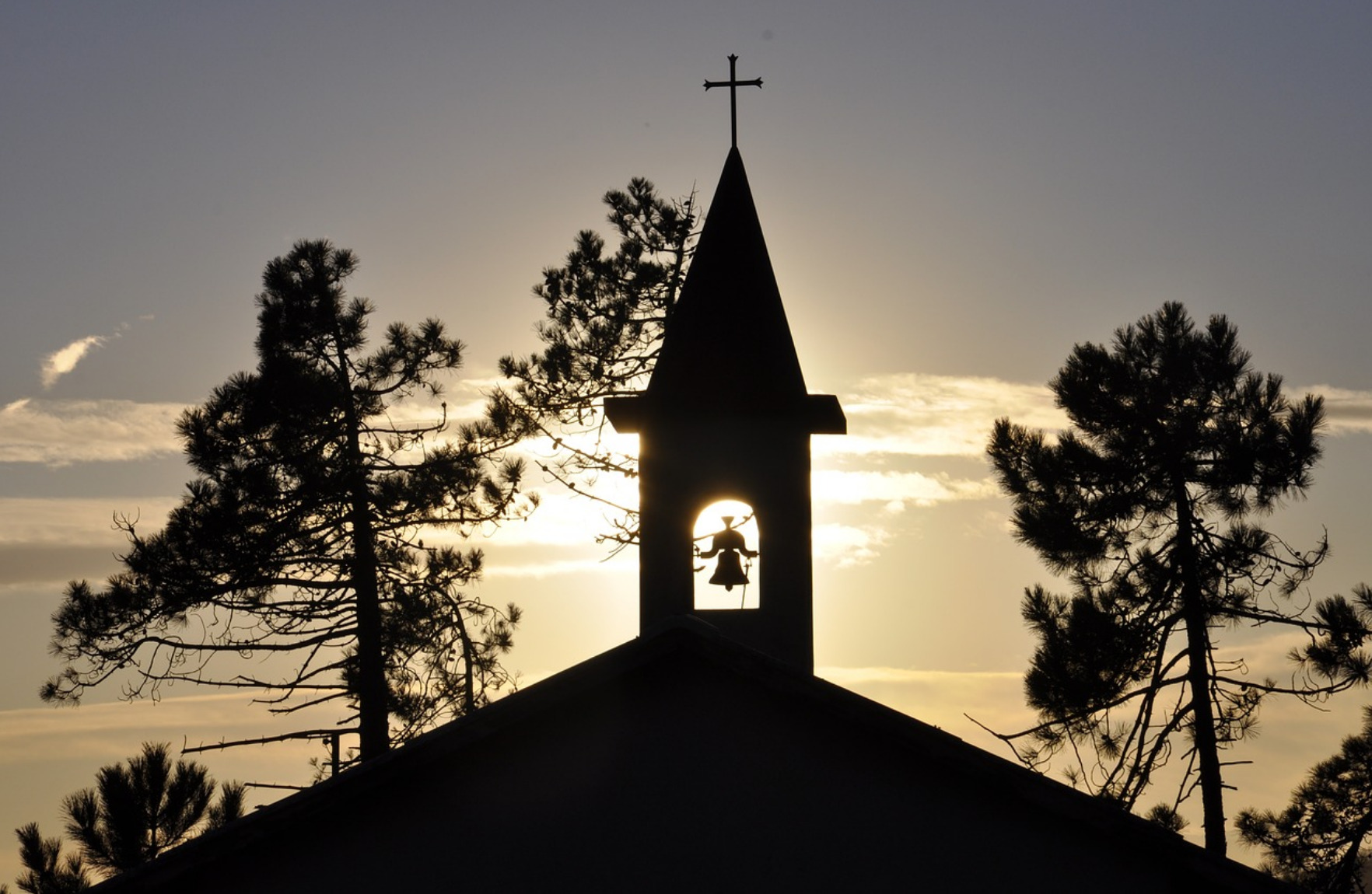
    Let this darkness be a bell tower and you the bell;
    And as you ring, what batters you becomes your strength,
    Swaying back and forth into the change.

    What’s it like, this intensity of pain?
    If the drink is bitter, turn yourself to wine.
    In this uncontainable darkness,
    Be the mystery at the crossroads of your senses –
    The meaning discovered there.

    And if the world has ceased to hear you,
    Say to the silent earth,
    I flow;
    And to the rushing waters speak
    I AM!

  • Teenage Trauma of a pretty ‘Bum Boy’.

    Teenage Trauma of a pretty ‘Bum Boy’.

    It has taken me fifty years to reach a point in my life where I feel ready to talk openly about some of my teenage boarding school experiences. Since my late thirties I have tried to address the most painful aspects of those years, seeking therapeutic approaches whenever my life’s challenges seemed to point to my early wounds as their source. But out of denial and a habitual stiff-upper-lip,I have kept my story close to my chest. The psychotherapeutic help I have received has been only partially successful.
    I have recently lowered my armour enough to accept the levels of trauma and shame that I have been carrying from those school years, because whenever I have found myself paralysed with fear and unable to speak out, I failed to see the extent to which my ‘weakness’ as a man, as I saw it, led straight back to the terror of the small boy from my childhood. I have been hard on myself all this time and minimised in my mind, the effect of those school years, through the numbing and dis-association that my system employed to get me through that time, and which became my unconscious response for creating safety when under pressure or threat in my adult life.
    It was skilful means for a small boy, but life limiting for the man ever since.
    I hope by revealing what I have kept hidden from all but my closest partners along the way till now, my account will serve to lighten the load for other men and women who have struggled through their lives with a heavy weight on their shoulders. I do not claim that the challenges I lived through during my school years were worse than those of any others who became victims of abuse, whether mental, emotional or physical. There are thousands of people out there who are carrying burdens much bigger and more damaging than mine. But I offer my story in service to those people, in all walks of life, who are longing to find ways to heal old wounds and make peace with themselves.
    The way it happened to me was like the drip-drip-drip of water on stone:
    I arrived at my secondary boarding school, on the strength of my Common Entrance exam, age thirteen. We were based in a Victorian brick mansion nestling in a large area of woodland a mile and a half away from the main school. At thirteen we were there for just one year before moving permanently up to the main school, although in that first year most of our lessons and other activities involved walking through the woods each morning, and into the village, to reach the school for our daytime studies.
    For the first two months, September and October, we could make the journey back to our night-time base in broad daylight, having our evening meal there and our period of prep before bed. But as the nights drew in, the walk back through the woods in twilight conditions and then in complete darkness, was at best an eerie experience. I remember becoming terrified of this nightly ordeal. I think I had always had a childhood fear of the dark and of dark woods particularly, but I had specific reasons for this being heightened for me, as the days and months passed.
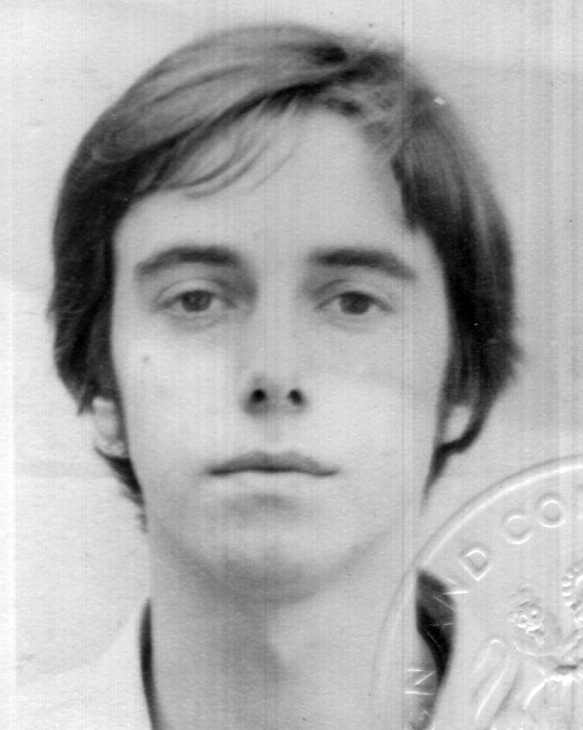
    I had not been at this school long when I became aware of older boys taking an interest in me. These boys were attracted to my soft girl-like features and, being an all-boys school, there were one or two poor souls each year who were picked out as the ‘pretty boys’ to become the focus of all the pubescent testosterone and unexpressed sexual energy raging through the school, which was of course a virtual prison.
    This sexual energy had nowhere to go except towards those of us who were forced to become surrogate females, in service to the relief of that pressure valve in the system. The sexual aspect of this was the dominant factor, for in fact we were known as ‘bum boys’ (a name that still triggers me); but I can see now, that having been separated from our mothers, many of us since the age of eight when we were packed off to our first boarding school, we craved contact with any female energy, and more sinisterly for us ‘pretty boys’, we faced the disowned anger of sons abandoned by their mothers. I can now see how this explains the edginess of the attention I drew towards myself; all that anger wrapped up in the abusive tone of the words used towards and against me, that I had to learn to face and endure on a daily basis, as the designated ‘female’ in our year.
    I found it scary to be noticed by older boys, especially fifth and sixth formers, who seemed like grown men to me. Taunting comments came more regularly from the year above me and gradually, as ‘gorgeous’ became my nickname (virtually everyone had a nickname of some kind), boys in my own year joined in and tended to treat me the same way. I quickly learned not to react, trying to deflect all forms of attention, whether abusive jibes, or more appreciative and harmless ones. Soon it all became a relentless daily nightmare for me, continuing for the next three years, during which time all teachers and staff seemed completely blind to or oblivious of my predicament. I never once tried to seek help from my so-called guardians after two experiences where teachers witnessed sexualised comments towards me and just sniggered knowingly, rather than making some effort to stop what was happening.
    I felt like I was seen only as an objectified female; there for everyone’s pleasure; there to allow a release of everyone’s frustrated sexuality, sexual confusion, along with all the new-found feelings of adolescence that needed to be explored, including their repressed anger towards their mothers; none of which had a legitimate outlet for expression.
    Usually I could tell if boys were just using me to let off steam with no personal attachment to me or to an outcome; for whom this was just a phase they would work through and then move on into a more mature heterosexuality. But I became aware that there were a few boys who showed an interest in me that was more personal and targeted. This could be out of their own neediness, or because they had already secretly identified their permanent homosexual orientation.
    My first experience of this was in my first year when Jones, a boy one year older than me, accosted me in the school grounds, making it clear he liked me and inviting me into the woods with him. He was mildly intimidating, and I was scared, although my memory has become vague about the details. I seem to remember he wrestled me to the ground and started to fondle me, but I must have managed to stop him going further and I got away. He never tried this again, though it was months before my fear of him relaxed, realising Jones had lost interest and moved on.
    For the next four years I held resentment towards him for what he had tried to do, and it showed me how I needed to guard against putting myself at risk in this way. I never knew if Jones was genuinely feeling a sexual attraction to me or whether he was just trying to overcome his own sense of vulnerability by showing off his power and ingratiating himself with his friends, because he had started his ‘hit’ on me in a very public way. A lot of that went on.
    So that painful encounter with Jones, age thirteen, and other particularly personal and threatening verbal exchanges, put me in a constant state of alert for my safety and wellbeing. In my first year, those nightly walks back through the woods, with a minimum of electric lighting to show the way along the path, became an ordeal for me. If I was with class mates I felt safe, so I tried to engineer this each day. But there were evenings, when I had been doing some extra activity, I had to return later than the main body of boys, and so faced the prospect of making the journey alone. I was always terrified that an older boy would follow me, or would be hiding in the bushes, waiting to grab me when I came past.
    Thankfully, nothing serious did happen, but I was never free of the threat of it in my mind. I was being accosted with verbal reminders of who or rather ‘what’ I was in the eyes of the school, many times each day, so I was never allowed to forget I was the fancied ‘gorgeous’ object of attention.
    It was a traumatising time for me, something I have only recently come to accept fully, as I have looked deeply into the damaging effects on my adult life. There was worse to come but first I need to add that there was another side to this coin and other aspects of my circumstances that complicated my overall experience of boarding school. I had already been boarding for five years at my prep school. I had already established that I told my parents virtually nothing of my troubles, only the positives. I was often lonely, I was isolated and I was seriously lacking affection and physical contact. This was the cruel nature of boarding school.
    So given all this, there was an aspect of the attention I was getting which affirmed that I was an attractive person. It was feeding a need in me to be seen, appreciated and liked. A natural and necessary need in all young people. So perversely, I often enjoyed the attention I got; and yet, as with all victims of harassment or abuse, I could not risk showing that I enjoyed it. It was a painful double bind, which only led me to feel more lonely and isolated, trapped by my own fear of what might happen if I encouraged it.
    My fear of being ‘hit on’ homosexually was a drip-feed of torture. In the face of this I returned to the saying that I had adopted earlier as my mantra:
    “Sticks and stones may break my bones, but words alone can’t hurt me.”
    This helped to numb the pain, while giving me a childish sense of victory over my situation and over the boys who taunted me. If I avoided physical violence I could appear indifferent. I was able to never show they could get to me, that they couldn’t hurt me with their nicknames and sexualised comments. I must have held fury deep inside that I also withheld from my perpetrators and in the end I paid a big price for my determination to rise above their games. Through my reactions, or lack of them, I was becoming trapped by my own stubbornness and self-righteous pride so that eventually they wanted their revenge. I will come to that.
    The fact is that while my tactics allowed me to look strong and resilient on the outside, I was hurting and often screaming on the inside; living in a state of alertness and fear for my physical and psychological safety. It left me with exhausted adrenal glands which has affected my health in later life. It must have taken its toll on me even then. I found myself slipping behind some of the brighter kids with our academic work, although I did sit and pass 10 ‘0’ levels age sixteen, so in spite of my situation, I not only managed to keep my troubles from my parents, I was able to impress them with my achievements and do justice to the ‘privileged’ education they were affording me. Ironic as it may seem, I was still stuck in the naive belief, that if I didn’t achieve and do well, my parents wouldn’t love me.
    If you, the reader are thinking at this point, “why the hell didn’t you tell your parents and ask to leave? After all you sound way too sensitive a child to be placed in a boarding school environment for ten years.” You would be right, But the fact is it never once occurred to me that I could get help to escape or change my situation. We children didn’t have a sense of our needs and rights in the way that most young people have today.
    Even now I recognise a childlike belief that sits deep in my system and has played out in my life over and over again in negative ways. The belief that I am stuck in the grip of the situation I find myself in, with no right or ability to question or challenge it, however difficult, painful or destructive it is for me. I feel powerless to do anything about it. There seems no point in speaking out or sharing my problems. I just have to silently accept my situation and get on with it, alone, adapting myself around other people, letting them have their way, with no sense of my own power. This belief has kept me tied to people in unhealthy relationships and in one instance, it took a psychotherapist to shock me into action by saying to me: ‘you have to get out of this relationship or you will die!’ It is not difficult to see where this stubborn belief originated, a victim identity that as a mature man, has been a major source of shame.
    My saving grace at school perhaps, was that I showed myself to be a skilled and plucky player on the sports field. In fact my forte was squash and I played for the school at various levels for this as well as for hockey, cricket and tennis, gaining genuine respect and kudos with parents, teachers and the boys around me. In this forum at least, I could prove myself to be a man.
    By the time I got to the fifth form, I realised I was literally the only boy in my year who had an interest in art. This set me apart in yet another way, which was both good and bad. I found peace and solace in the art room, away from the rough and tumble of my peers. I even expressed some of my angst in my paintings and sculptures. I had sensibilities and feminine qualities, which I rarely felt safe enough to express, but here was one of the few places where I had an outlet during those years. It felt wonderful to have my art teacher quietly supporting and affirming my sensitivity and creativity.
    I was invited to get involved with painting scenery for a theatre production, and through this opportunity I discovered a further escape from my lot in mainstream school. I began to spend all my free time behind the stage, and was enrolled as one of the ‘stage staff’. I made new friends there, people who seemed to accept and respect me as a human being instead of seeing me as a sexual object. This was refreshing, comforting and very healing. I was able to start showing myself more, expressing my feelings. I could breathe and share creative time with these people.
    My class mates on the other hand took great exception to my involvement with the stage. In their eyes (probably their parents’ eyes actually) all actors and anyone connected with the theatre were ‘queers and poofs’. In their eyes I had become one of ‘them’ and this confirmed that I was and always had been a faggot, a level up (or down) from just being a ‘pretty boy’. I had by then matured too, my voice had fully broken, and although I still looked young and fresh-faced, other younger boys had arrived at the school to take over from my given role, and become the next generation of ‘bum boys’.
    The upshot of this new dynamic between me, as a member of the stage staff, and the rest of my year, was a vicious period of taunting and bullying. They seemed to resent my success in finding ways to live outside of their control, sidestepping the feminine role they were used to me playing for them. I was feeling safer and strong enough to rebuff their taunts. This only made them more angry and, unbeknown to me, they began to plot a way to teach me a lesson.

    Continued in my post: Sexual Abuse and Trauma Relived – parts one and two.

  • We Need To Grieve – by Toko-pa

    As we enter the Full Moon in Pisces, maybe you can feel that subtle tug, a pulling away from the demands of extraversion, towards the inner life again.
    These last couple of weeks on the West Coast, living in the thick of wildfire smoke has been really difficult. Physically, obviously, but also emotionally. As we are deprived of clean air to breathe, and as our forests are burning down, it is bringing up so much conversation in our community about the “slow apocalypse” that is encroaching upon us.

    Whether by way of flooding, wildfire, scarcity, or social chaos, we are all being asked to face the destructive nature of our species.
    Yes, humans are astonishingly lovely and creative, but we also seem to be in a stunted adolescence of our evolution. We see the consequences of our behaviours, and yet we repeat them, as if narcoleptic; perpetually falling unconscious on a stark reality.
    We find ourselves wondering about the future we will need to endure. What are our priorities, when despair sets in? When our career status, our prestige, our troves of wealth become meaningless? Of what use can we be?
    Having given it a lot of thought, my priorities come down to 3 things. Wild water, seeds (& the ability to grow food), and a community upon which to rely when things get hard. As long as we have access to these things, we can hope to endure.

    Though I have always wrestled with the validity of my writing poetry in a time when there are so many battles to fight, I believe in my heart of hearts that we need every form of activism. Anything that is working to reconnect, rather than to disconnect us. We need the frontline fighters, we need the mothers, we need the farmers, we need the poets. And when I begin to feel despair about the insufficiency of our efforts, I remember that despair is what happens to us when we can’t grieve properly. It’s the grief that has no welcoming container, no place to express itself.

    I think we need to have more conversations in our families and communities about this threshold we’re on together.
    There is a driving force in us which wants to step in and make something useful of it all, turn it into fuel for transformation! But another, quieter voice says says stop. Don’t commodify this loss. Don’t be so hasty to write a new story, in which the events of heartbreak are made meaningful, before the magnitude of what’s been destroyed can be witnessed in its entirety.
    Yes, there will be a new world forming from the rubble. Yes, there is something valuable to take from this, I’m sure. But please, let us not turn this heartbreak into something useful just yet. If we do, we will be tempted to walk inour old ways. We will rely on tired words. We will make memes of ourselves.
    Is there a way instead to really bear witness? To let the fog of uncertainty obscure our clarity. To not know where or how we’ll live. To be fumbling and full of grief, because what we always counted on has been struck from our horizon. We may never be so magnificent again.

    I hope you have some good strategies for navigating the grief that you may feel. And if not, I recommend Martin Prechtel’s jewel of a book, The Smell of Rain on Dust, or listen to Clare Dubois and Joanna Macy speak on Grit, Grief and Grace.

    In the meantime, let us turn towards to the unknown in the hopes that what we find there will help us to learn how to walk in a new way, for a new world.

    Much love,
    Toko-pa

  • Abuse vs Honoring: Degrading Another Person’s Being is Never a Consensual Act

    Consent, even when properly understood and communicated, is never enough to establish a meaningful, trusting, healthy relationship. What exactly do I give you permission to do when I “consent”? I do not give you the right to use or abuse me. I do not sign myself over to you for whatever fantasies come across your mind and project upon my body, mind, heart, and soul. I do not offer myself as a giver to you as a taker. Healthy relationship requires mutual sovereignty, vulnerability, respect, learning, and a keen commitment to “learn into” another person’s energy without projecting one’s own assumptions or needs.

    In Chapter 6 of my newly released book, The Spiritually Confident Man, I talk about “Raising Men and Boys; Opening to Women and Girls.” In relations between the sexes and between adult and child, you do not see much in the way of mutual honoring. It’s as if we don’t know how, even if we’re intending to be respectful. How do I express myself to this different other in a way that is not simply imposing my will, but instead welcoming their will? How do I become truly co-creative? How do we work together in a dance where the innocence of the other is an invitations to my own joy and innocence rather than a signal to dominate or manipulate to meet some lack?

    This is virgin territory, quite literally and metaphorically. We largely don’t know how to consent to co-creation. We don’t know how to co-create. We have been taught in the language of contract—“I’ll scratch your back, then you have to scratch mine.” This is imposition, expectation, soft or hard coercion. This promotes brutishness, not beauty, predation, rather than appreciation. How can we come together to meaningfully discuss healthy consent and what it means to honor and co-create with another person?

    My wife and television journalist, Regina Meredith, recently interviewed a former seminarian with a M.Div. degree named Wieslaw Walawender. He is Polish by origin and committed his life to God, and was raped by his direct male supervisor on the cusp of his ordination. I will direct people to the interview to get the full story, but Wies’s words leapt out at me: “Why do they (abusers) do what they do?” Too many of us, horrified by the subject of sexual abuse unintentionally create a silence around the issue by representing abuse as twistedness or a confirming sign of evil meant to be exterminated or quarantined away from civilized people.

    Yet sexual abuse is epidemic. In the psychology class I teach on motivation and emotion, roughly a third of my students admit to being sexually abused, usually in the form of incest and usually from fathers, uncles, and grandfathers to young girls. Many told their mothers, only to be told to keep quiet. A 2013 Atlantic Monthly article by Mia Fontaine entitled, “American Has an Incest Problem” states that: “One in three-to-four girls, and one in five-to-seven boys are sexually abused before they turn 18, an overwhelming incidence of which happens within the family… and this is a notoriously underreported crime.”

    Fontaine goes on to say that the entire society would unravel is sexual abuse was actively investigated and prosecuted, as families would be split up, work disrupted, and society placed into a truthful but destabilizing turmoil. Perhaps this is why so many of the abused keep silent and others who suspect keep it far from their consciences. It’s ugly, ugly stuff. It is traumatic to think about, much less experience, yet each of us has a duty to think about it, discuss it, and advocate for the dignity of innocents abused, because the damage is overwhelming in terms of the spirit, mind, heart, and body of an individual and the very soul of the community they live within.

    What can we do about it?

    Walawender was somewhat pessimistic on the current approaches. He finds that psychotherapy does not work, and most programs are too “in the head” to reach the violence done to a person’s spirit by sexual abuse. Walawender himself was healed of his abuse by a Native American tribe, the Hualapai, who live on the rim of the Grand Canyon, through process that included prayer, chanting, incense, dancing, and even sleeping (without sex) with a virgin female to help heal, rebalance, realign and integrate his sexual orientation and foundational energies back into a state of health. The reverse is also true: Those whose orientations are LGBT as a matter of nature should not be bullied into pretending otherwise. The fundamental authentic state of a person’s sexual identity should not be abused, so that any person can grow into awareness and experience by their own choices and connections and not through some damaged reaction to someone else imposing their will and sexual identity upon him or her.

    There do seem to be some ways forward though:

    • Walawender spoke of arranging meeting whereby the perpetrator of a sexual crime sincerely admitted wrongdoing and asked for forgiveness.
    • We cannot all find a Native American shaman to realign our energies around abuse, but perhaps we could take the notion of sexual polarity seriously as I do in my book, The Spiritually Confident Man, so that we recognize and explore how distinct female and male energies can balance and inform each other as energies and not simply as gender roles and expectations.
    • We could explore the development of positive, healthy touch as an antidote to negative, using touch. I found that if I allow positive masculine giving energy to pour through my being, and sensuality and healing, rather than sexuality to be the point in massage, I was able to make advances in healing a female friend who had been sexually abused.
    • More exploration and research has to be done on what effects duration of abuse, when abuse happened in the development of a person, and when intervention occurred (that is, how long after abuse before silence was broken and healing attempted).
    • It is a scary notion that abuse can “implant” a desire contrary to your spirit or soul, kind of like a possession, without your say, even to the point of altering your sexual orientation, as it did with Mr. Walawender. So the notion of sovereignty comes up as a significant point of discussion, and as a way to challenge false New Age notions that we “choose” our abuse as a learning opportunity of to settle some karmic score.
    • We need a serious and open discussion on “consent” that embraces a piercing look at the knowledge and intention of people involved in “consent.” As I said in my book, the exact same act, putting one’s hands on another’s shoulders, could be congratulatory and welcome or predatory and unwelcome, simple with a micro-ounce extra of pressure communicating a covetous desire. “Consent” also has to be discussed from a psychospiritual and emotional level and not simply from a contractual level.
    • We need to openly discuss what being “gender fluid” means and where it comes from. Some who call themselves “gender fluid” are rejecting the straitjackets of conventional roles and expectations they feel to be oppressive to their genuinely diverse sexual orientation. Others, have learned to be “gender fluid” possibly from damage they experienced from abuse. This, I think was the case for the tragic pop star Whitney Houston, who had allegedly been sexually abused by her aunt, singer Dee Dee Warwick, as revealed in the recently released film, Whitney.
    • We must begin to understand sexual energy, not just an animal impulse, but a psychic energy involving deep bonding, feelings of pleasure, love, fear, and pain, as well as a spiritual one involving potently creative forces which mix primordial energy and identity.
    • We have to investigate and recognize the damage is not just of the physical sort and that a child cannot developmentally know enough about what themselves and what they are consenting too to give sexual consent. When an adult seeks to legitimate his or her sexual abuse of child through the notion of consent and mutual pleasure (“Hey, I’m not hurting them physically and they seem to like it; what’s wrong with that?”), two things need to come up: 1) The damage to this child is to this child’s emotional, psychic, and spiritual fields, not just to his or her body, and 2) children cannot give meaningful sexual consent with an adult because they are not developmentally aware of the consequences of such an alleged consent. That’s why pedophilia is illegal.
    • I think we need to admit to ourselves that we keep silent on incest and sexual abuse because we experience even the thought or discussion of it as traumatic, nausea-inducing, and low frequency. This should never be an excuse for us to leave our children and other victims unprotected. On the positive side, we need to build with young people, in particular, positive and healthy ways to exchange touch and aspiration that does not involve mindless sex and consumed, manipulated images of who we are and who we ought to be.
    • We need to call out predators for what they are, sick in the diseased sense of the word. Predators have fallen to a psychospiritual disease and addiction with devastating effects to all of whom it touches including the perpetrator. This disease, as a say in my book, is vampire-like in its expression, sucking the spiritual innocence and energy and vitality from a usually younger, uncertain person. The predator learns to substitute his or her will for another. This emphasis on the disease allows for a compassionate and firm response, vs. attempts to simply marginalize predators by calling them twisted, low-lifes.

    After hearing Wieslaw Walawender’s story, I was struck by how little success he had with experiencing or even imagining some constructive ways forward to dealing with the problem of sexual abuse from a positive, effective, and psychospiritual healing orientation.

  • Sexual Abuse & Trauma relived – Part two

    My defences against verbal abuse are strong; walled-off and defended after years of boarding school life, away from the relative safety and protection of family and home. I am numbed, emotionally starved, often lonely and miserable, having been relentlessly taunted and harassed in a sexual way that has reduced me inwardly to a confused, fearful victim, in spite of my personal motto: “Sticks and stones may break my bones, but words alone can’t hurt me.”

    Somehow my 5th Form peers know that now. They planned a different kind of lesson for my impregnable defences. They conceived a humiliation to break through all my psychological defences to expose the softest, most precious and purest part of me; under the nose of authority, but hidden from its judicial and often conveniently averted eyes. The weeks of ongoing threat became a kind of personal torture.

    So this is how the attack came about. The assault – the rape. I now realise that my lingering terror is not so much about what has actually happened, as about the imposition of power and control over me, my helplessness, my anticipatory fear of what they might next do to me; all in the macabre silence of the dormitory that had, till that moment, given me some sense of nightly security and escape from the clamour of school life with the daily abuse that infected me. Now I am not even feeling safe at night.

    I have learned that it is so often the case that rape is carried out by people close to us and who know us. The very people we might expect and need to trust.

    I sleep very little that night, shivering for hours with fear and after-shocks; hating these boys who lie in their beds around me. Yet I stay silent. Silent in my bed in stubborn refusal to let ‘them’ have the satisfaction of evidencing my pain, of sealing their victory. My old motto now becomes redundant, as I determine to prove to them that even sticks and stones can’t hurt me.

    The figure has power, but is only aware of his vulnerability & shame.

    I know I have to hide my shame above everything. I also decide that I will not report this to my House Master. I will tell no one. I learned years before that you never squeal on your peers. The potential reprisals are just too big to contemplate, and I want to show them my courage, that I can stand up to them on my own.

    The next morning I will get up as usual and carry on as if nothing has happened. I will not even show a sign of resentment, let alone victimised hurt. I will hold my head high and carry my pain so deep inside that this incident will be forgotten within a week and purged from my memory within a month.

    How wrong I am about this!

    Looking back I won’t remember any detail of sleepless nights or nightmares following the attack. I won’t have clear recall of what inner pains I went through. But I will remember continuing as usual the next day and for the rest of that term; and I will find, much to my surprise, that a boil has been burst, the oppressors have taken their pound of flesh, I am seen to have been punished whether I show remorse or not. In the aftermath, I believe I gain their respect for being able to carry on without attempting to report them, without wanting an eye-for-an -eye or a tooth-for-a-tooth, or without breaking down in any outward way.

    I have a renewed yet subtle sense that a benign force greater than I can imagine is lifting me up; has always been there, even in the darkest of times. He or She cannot protect me from experiencing life, but if I could only trust the faith, I will know deep in my heart that I am being held in a loving way, by something universal and ultimately beyond normal comprehension. It is not specifically a Christ figure or a Being of any kind, I will struggle to name it God, but the subtle energy is real, when I look for support and tune into it.

    I have no intention of giving up my links with the Stage Staff and come the following year, as rehearsals for the opera require the leading ladies to arrive on our stage several evenings a week, I will find myself attracting the attention of my first love in the form of Marian, who saves my life, confirms my heterosexuality (though we never actually lose our virginity together), and will provide me with a hugely healing distraction from my past struggles.

    In those last two years of school, I and my classmates will grow into a new level of maturity, creating fresh and positive relationships together, with mutual respect born of the stresses of ‘A’-level studies and the pressures of the much-anticipated university applications, on which our futures will depend. I say ‘we’, but I alone among my peers apply for a place at Art School, attend an interview and am accepted on the basis of my portfolio with the condition of only modest A Level results. This gives me yet another privilege as the stress of revision and exam-sitting begin to loom. Everyone else is having to buckle down to make their A and B passes, while I can relax and enjoy the best of the A level english and history classes with teachers I like, and with plenty of hours free in the Art Department.

    Only much later will I fully acknowledge the trauma of boarding school. Much later will I learn to see how over-forgiving I am by nature, preferring the passive route to any form of outrage that would honour violations of my boundaries and change a lifelong tendency to let others take advantage of me.

    The sun shines and as we move into summer and our final months together at school, I can feel the warm healing strokes of creativity and freedom, that are the hallmarks of Art school life, reaching out to me with the 4 years to come. No rush to throw off the heavy brown school uniform, or to don the colourful t-shirts and loons which become the emblems of my coming-of-age time, 1969 – 1973; with Flower Power, the Beatles, The Rolling Stones, Bob Dylan. Though actually my more gentle music of taste will be Joni Mitchell, Donovan, the Beach Boys and Crosby Stills Nash & Young.

    In these days and in these ways, I will leave the dark days of school behind, with happy memories of the Sixth Form, of just a few friends from that time, of a first love, of starting to address the complex questions of what it means to be a man in the atomic age, the arrival of feminism, freed from the rules of a dying victorian worldview, with everything new and fresh to look forward to.

    I have learned to detest hypocrisy and yet I will carry the hidden chains of Patriarchy deep inside my system for the rest of my life. The lack of confidence and self-belief that these early influences engender in me will continue to undermine my creativity, my sovereignty and my natural mysticism for many decades to come. I will continue to hide my sensitivity and fear behind a mask learned at school. At age 39, in a psychological training designed to explore and heal personal wounds, I discover two particularly significant facts about myself that will unfold later:

    There is a character in me, who is obsessed with hiding and with safety, who lives by the motto: “I would rather be a blank page than be read and misunderstood!”

    There is another character in me who feels deep empathy with women who have suffered sexually at the hands of masculine abuse, and who also attracts vulnerable women to me, such that they are able to confide in me as a gentle safe man, in order that they can face their demons and learn to trust men again.

    I will continue to distrust men through my adult life and only gradually, in the controlled environments of Men’s Groups and Men’s Rights of Passage, do I address my wounded relationship with men directly.

    This two-part article is one of a number of ways that I am trying to find peace. I have undergone many years of therapy and psychological trainings without getting to the root of my neuroses. Spiritual practice has been a huge support, and I will write about this in other articles, but as yet I am still dominated by the experience of a ‘suffering’ ego. By writing this account of school life, and expressing it in the present tense as a way of reliving the painful experiences of fifty years ago, I hope to finally loosen the grip of the wounds to my emotional self, of my distorted behaviours and of the limitations to my confidence as a man and a healthy human being..

    The material is very personal and intimate, but I have decided to defy my tendency to hide and risk exposing my truth regardless of any consequences. This feels very timely when so many women have been bravely speaking out about sexual abuses they have suffered. The effect is a social movement and cultural shift which is exposing the climate of patriarchal power that has allowed men for far too long to normalise what is totally unacceptable behaviour.

    To close I want to note that we all have an inner rapist, but unless we are prepared to own and make conscious the instincts and emotions surrounding this, we are all at the mercy of the destructive effects of acting out or projecting onto others. Truth telling and awareness-raising are the key to a healthier life, for each of us individually and for society as whole.

  • Sexual Abuse & Trauma relived – the first of a two-part account

    I am settling down in bed, adjusting to the dark, relaxing after my day, and dropping into the beginnings of sleep. Suddenly I hear movement around me as 6 or 8 male figures loom over me, surrounding my bed. I don’t immediately sense danger and It takes me a moment to realise the aggressive energy of intent that is pouring from them. Hot panic floods my body as my protective bedcovers are stripped away and a dozen silent hands lift my pyjama’d body roughly into the air, maybe one at each arm and leg and one each side at my middle. I am frozen with momentary shock and then raw adrenaline triggers my struggle to free my limbs from their grip. I swear at them to leave me alone. They respond with more force, tearing my pyjama bottoms down to expose my privates. Although there are no lights on, they can see my body from a light outside the un-curtained windows. I only see shadowed faces, but I know who they are.

    And then one of them, the leader I guess, starts to handle my private parts pulling on my penis, taunting me with how limp it is, and then pumping it with his fingers as if trying to induce an erection. I will forget his words, although the experience I will never forget. He implies that if I am gay I should be enjoying this. At these words one of the others makes a symbolic gesture of pushing his finger between my buttocks and pressing up my ass. There is no penetration and yet I feel defiled in that moment of absolute victimisation.

    All this probably lasts only a few seconds, but time is standing still for me as I am gripped in a maelstrom of terror and outrage, humiliation and shame – oppressed by the oppressors. Then I feel my body slump back down on the bed and they are gone, away into the shadows. I lie there unmoving and disassociated for several minutes, as my inner heat is cooled by the night air on my stripped naked body. I pull my pyjamas back over me as if to cover my shame in the dark. I feel broken and beaten by the sense of violation and victimisation at the hands of such distorted masculine domination. The visceral sense of being punished for being too sensitive, too artistic, too feminine, is all part of my confusion and pain. I am aware of something deeply life-changing having taken place. But I already start to minimise it out of a desperate need to feel normal again.

    It will take me many years to fully comprehend the extent of this abuse and to honour myself as a sensitive man instead of trying to hide it. It will take me many years before I can share such a traumatic event with a few close friends, and finally to be able to name it as a rape experience, penetration or not.

      I am 16, I am a sensitive adolescent preparing for my ‘O’ level exams in a class of youths who have been making it very clear that they do not like my behaviour and my attitude towards them. The dominant gang among them has decided to punish me, calling me a queer and a puff. I have been attending classes in the face of this oppressive atmosphere for weeks on end. I feel the pain inside and try to hold my head high on the outside. I am used to living this way, refusing to show they can hurt me, but lately they have been expressing their anger and frustration, by calling me self-righteous and cocky. They cannot tolerate difference, sensitivity.

    Bullying, which has always been rife, is the accepted way of expressing this intolerance and is of course, as I learn much later, driven by the projected pain, fear and vulnerability that everyone suffers in this all-male english boarding school. And so it has always been.

    I can only see my side of the situation, after 3 years of living through a particularly invasive and painful kind of verbal abuse. But, this term, I have found an unexpected solution, a partial escape. I will explain: I am not the only artistically inclined student in my year; there are several musicians. But as the sole visual artist, my talent has been acknowledged such that I have been invited to join the ‘stage staff’, as we are known; a team of boys who manage the school’s stage productions: the scenery for plays, the lighting and all the essential processes that go on behind the scenes in the school’s theatre productions. I have been put in charge of designing and painting the sets for the opera Cosi Fan Tutte.

    As a member of the Stage Staff we are allowed to work and hang out in the backstage areas at any time out of school teaching hours. I initially looked up to the other members, who are mainly sixth formers, older and well versed in all the operations of the stage. To my great relief and joy, they have accepted me for who I am as a person, instead of the female sexual object which had become my cross to bear since my first year. Now I have found myself among a more mature group who have accepted me without prejudice and I have quickly gained respect for my contributions, artistically and socially.

    This has been my lucky escape from the tyranny of fifth form life, but also the source of the bullying that’s been building up in the face of my move. My classmates have clearly been angered by my new allegiances, by my disappearances, and the privileges we stage-staffers enjoy.

    In a way they are right to be envious. All of us fifth formers expend hours of time and energy looking for ways to escape the boring routines of school life, the rules and restrictions that frustrate our need to rebel and experiment with life. Many of us smoke behind the bike sheds, funk gym classes and defy the curfew on dark evenings to turn up at the back door of a local pub for illicit bottles of cheap beer. There is an underbelly of rebellious competition that drives us to break rules and get away with all sorts of out-of-bounds activities. Like most teenagers, we need to take risks and pump adrenalin. There are a few leaders and always enough followers willing to join forces, creating a sense of safety in numbers.

    And then suddenly I have been enjoying legitimate freedoms unavailable to the rest of my class. Hence an added source of the anger and rejection displayed by my peers. I was able to live with this ostracisation for a while with the hope they would become bored and turn their focus onto someone else, but I was totally unaware of the lengths they would be willing to go to ensure that I am harshly and painfully punished for what I represent to them. I can’t tell if they genuinely believe I am homosexual; after all, in the eyes of these jocks, anyone who is interested in the dramatic arts has to be a queer. Such is the narrow and prejudicial climate I am living in.

    But these days I am experiencing a depth of companionship and camaraderie with my friends behind the stage, that I have not known before. I had been spending less and less time with the fifth form gang to minimise negative attention, in whose presence I have to grit my teeth, as I am now so used to doing. My defences against verbal abuse are strong but this latest event is of a different caliber.

    To be continued…….