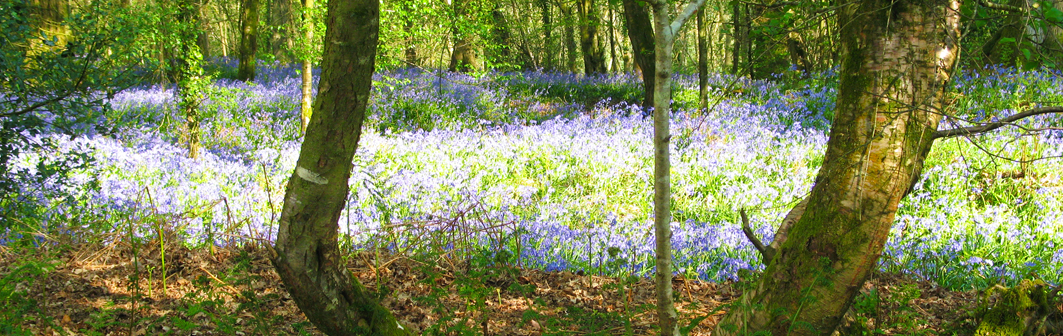
Author: Inner Ventures

  • Another Chance – by Ardhan Swatridge

    A new poem by Ardhan (Paul) Swatridge – October 2019

    We learned so much:
    How not to trust,
    how not to feel
    and if we did,
    to hide our fear
    our loneliness,
    our inner truth,
    at any cost.

    The rules served to
    indoctrinate,
    forced compliance,
    closed our hearts.
    We all obeyed
    except the few
    who broke and went
    to darker hells.

    We who survived,
    the lucky ones,
    buried deep our pain,
    which sits for years,
    a weight in waiting
    for that later crisis
    or the drip drip drip
    that wears away the stone.

    We needed armour then,
    to try to be a ‘man’,
    though much too young,
    our innocence suppressed:
    that vulnerable beauty
    of shame-free feelings
    lived fully in the raw;
    of laughter, tears and rage.

    Creativity first flowed
    and then was blindly crushed
    beneath those adaptations;
    ‘for your own good’ – they said.
    So I forgot to mind
    that innocent one,
    to hug and hold that boy;
    his fragile truth betrayed.

    Is this present crisis
    now another chance
    to override my need
    for a grey numb state?
    for safe isolation,
    for letting go a lie?
    Can those hatches,
    battened down for decades,
    release their padlocks now?

    Can I dare to feel
    the grief of those lost years?
    Can I let my ‘pleaser’ go?
    Can I face the facts
    and name it trauma now?
    Can I give myself
    the gift ‘he’ holds
    in ‘his’ unblemished hands?

    Relief at last, to breathe him
    back to life again.
    A light to penetrate
    the dark of old beliefs
    that nothing ever tried
    could mend those cracks.
    Now hope and love
    are seeping through.

    Is this coming home
    after so long away?
    Can these fragments
    make a healthy whole?
    So many loves lost,
    but what about him?
    He awaits me still,
    to hold him and say,
    “I love you my son.”

  • How Breath Can Heal Your Trauma – and transform your life

    by Kasia Patzelt
    Kasia Patzelt
    You might have heard it before: breath is essential for our well-being. Unfortunately, unless they have experienced ‘breathwork’, most people would say: Yeah, I know how to breathe, not even fathoming the possibility of the profound healing that can happen within a breath session.

    But first things first. Let’s define some terms here.

    What is breathwork?

    There are many types of breathwork: Holotropic Breathwork, Rebirthing, Alchemy of Breath, Biodynamic Breath and Trauma Release System (BBTRS), Transformational Breathing and many more.

    Even though I haven’t tried all of them, I know they have one thing in common: breath. Duh.

    The idea is to charge the body with oxygen through deep connected breathing. No pause between inhalation and exhalation. This brings you in a slightly altered state of consciousness and creates all sorts of unexpected unfamiliar sensations in the body. Some very pleasant, some initially maybe less so. But all of it can serve as a trigger for deep insights, in which you can feel more clearly the energetic undercurrent of your life.

    It’s like letting go of the left brain perspective of your life only and taking a deep dive into the unchartered waters of your subconscious

    In BBTRS the goal is to trigger the fight and flight response in order to give it an opportunity to complete its cycle. But before we go further into that, we have to understand one thing:

    What is trauma?

    The best way to describe it is through Peter Levine’s example in his book Waking the Tiger.

    Photo by Mark Galer on Unsplash

    Imagine a zebra being chased by a lion. Its adrenalin pumping as it runs for its life. Then the lion gets hold of it! What happens to the zebra? It goes stiff. Numb. Frozen.

    According to Levine, this response has two functions:

    a) when numb, the zebra won’t feel much whilst being eaten alive (which is a compassionate mechanism of nature itself) and

    b) this ‘playing dead’ may give it another opportunity to run for its life at a later time when the predator’s attention is averted.

    Let’s see what happens if for some reason the lion gets distracted and the zebra indeed gets a second chance for life. Imagine it: It’s stock stiff lying there on the ground. How does it get from that frozen state into running at 100km/h again? Or put it another way: what happened to all the adrenalin pumping through its blood before going into freeze?

    Exactly, it froze. It didn’t just disappear.

    That means it still is inside, somewhere. For the zebra to be able to get up and run again, it will first have to ‘shake off’ all that access energy. It literally does so through shaking, trembling and tremoring for some time. (Watch this youtube video to see a polar bear going through this process, only 2 minutes).

    After having gone through the ‘discharge’ process, it will take a few deep breaths, get up and join its zebra mates without experiencing trauma.

    As part of our brain is ‘reptilian’ in nature, we are wired the same way as our four-legged friends. This whole cycle is called the ‘fight, flight or freeze’ response. And every time we experience danger, this cycle gets triggered in us. It’s a fantastic tool that nature created to ensure our survival.

    There is one problem, however.

    Many of us are experiencing ‘fight and flight’ on a daily basis. The danger might not be a tiger, but the traffic jam making us late for work and maybe risking losing our job, an angry boss or spouse, the impending economic crisis, the emotional unsafety in our family homes, etc. They can all trigger our Nervous System into survival.

    These dangers are much more abstract and therefore less tangible. This means often we don’t even notice that we are in a state of fight and flight because society normalizes it. And through that, it invalidates the need for discharge or emotional release.

    (author’s note: there are of course many varying degrees and types of trauma. For the sake of this article, I will keep it general and mild as the principle behind is the same)

    To put it simply: We go through the ‘Fight, Flight and Freeze’- Response oftentimes without being consciously aware of it. Without understanding it, and without having the safe space to complete the cycle through discharge, like the zebra. Therefore the access build up energy stays inside of us which leads to trauma.

    Trauma results from the ‘Freeze’ energy in our bodies, energy that hasn’t had the chance to complete its cycle through a discharge. Trauma does NOT result from what happens to us. It results from how effective our Nervous System was able to deal with the energy that was triggered in us.

    Two people can go through the same horrific event, one ending up feeling traumatized and the other one without any adverse effects. It depends on whether the person went into ‘freeze’ and stayed there or whether they took action (fight and flight).

    The good news is that, regardless of the ‘what’ happened to you, you won’t have to carry it with you all your life if you give your self the chance to release it.

    How can breathwork help?

    As mentioned above: breathwork can create a safe space for the cycle of ‘Fight, Flight or Freeze’ to complete itself. Through charging the body with oxygen, and therefore energy, the Fight and Flight kicks in and the body can go through a process of discharging: shaking, tremoring, sweating, shivering, crying, laughing, shouting, myofascial unwinding (the body moving by itself).

    Emotions that had never been acknowledged can finally rise up to the surface, be felt and released. Muscular tension that has been holding the ‘frozen energy’ in place can finally relax and create a feeling of spaciousness inside.

    People often report they can breathe better and more freely. The feeling of looking at their lives from behind a window and not fully participating goes away and they start feeling part of everything. A sense of belonging emerges. They start sensing their own presence and the presence of others.

    They feel more connected to themselves, their feelings, their needs, and their physical aliveness. They have more confidence and trust in expressing their emotions and truth.

    They start feeling safe.

    In the last century humanity made huge leaps in understanding the physiology of trauma. There are countless techniques and tools to help individuals move beyond it.

    Personally I have found Breathwork and especially BBTRS to be incredibly fast and effective. Deep held tensions in my being started releasing just after 2,3 sessions, opening me up to a whole new felt-sense of existence.

    I hadn’t known, I had kept so much inside till I started releasing it. Which is the same I hear from all my clients!

    Wow, I had no idea I could feel like that just through my breath!

    And that’s exactly the beauty of breathwork: it’s the one thing that you have available 24/7 and it’s free. Of course, a skilled facilitator is needed to guide you through the process, however, this whole notion of ‘healer’ disappears as you are healing yourself through your own breath.

    And that’s empowering on a whole new level.

    For those of you interested in more information, I recommend reading ‘Feel to Heal’ by Giten Tonkov, founder of BBTRS. It provides an in-depth understanding of all the above and hopefully some inspiration and hope on your journey!

    Kasia Patzelt works as an Embodiment Coach and writer living in Ibiza, Spain. She helps individuals to move out of trauma into a more wholesome, joyful life through one-on-one sessions and retreats. She is the editor of Embodied Thinking.

  • The Unlearning – by George Monbiot.

    Boarding school, a peculiarly British form of abuse, has devastating impacts not only on the boarders, but on those they grow up to dominate.

    By George Monbiot, published in the Guardian 7th November 2019

    There are two stark facts about British politics. The first is that they are controlled, to a degree unparalleled in any other Western European nation, by a tiny, unrepresentative elite. Like almost every aspect of public life here, government is dominated by people educated first at private schools, then at either Oxford or Cambridge.

    The second is that many of these people possess a disastrous set of traits: dishonesty, class loyalty and an absence of principle. The current Prime Minister exemplifies them. What drives him? What enables such people to dominate us? We urgently need to understand a system that has poisoned the life of this nation for over a century.

    I think I understand it better than most, because there is a strong similarity between what might have been the defining event of Boris Johnson’s childhood and mine. Both of us endured a peculiarly British form of abuse, that is intimately associated with the nature of power in this country. We were sent to boarding school when we were very young.

    He was slightly older than me (11, rather than 8), but was dispatched, as so many boys were, after a major family trauma. I didn’t think a school could be worse than my first boarding school, Elstree, but the accounts that have emerged from his – Ashdown House – during the current independent inquiry into child sexual abuse, suggest that it achieved this improbable feat. Throughout the period when Johnson was a pupil, the inquiry heard, paedophilia was normalised. As the journalist Alex Renton, another ex-pupil, records, the headmaster was a vicious sadist, who delighted in beating as many boys as possible, and victimised those who sought to report sexual attacks and other forms of abuse.

    Johnson was at first extremely hostile to the inquiry, describing it as money “spaffed up a wall”. But he later apologised to other former pupils. He has accepted that sexual assaults took place at the school, though he says he did not witness them. But a culture of abuse affects everybody, one way or another. In my 30s, I met the man who had been the worst bully at my first boarding school. He was candid and apologetic. He explained that he had been sexually abused by teachers and senior boys, acting in concert. Tormenting younger pupils was his way of reasserting power.

    The psychotherapist Joy Schaverien lists a set of symptoms that she calls Boarding School Syndrome. The effects of early boarding, she finds, are similar to being taken into care, but with the added twist that your parents demand it. Premature separation from your family “can cause profound developmental damage”.

    The justification for early boarding is based on a massive but common misconception. Because physical hardship in childhood makes you physically tough, the founders of the system believed that emotional hardship must make you emotionally tough. It does the opposite. It causes psychological damage that only years of love and therapy can later repair. But if there are two things that being sent to boarding school teach you, they are that love cannot be trusted, and that you should never admit to needing help.

    On my first night at boarding school, I felt entirely alone. I was shocked, frightened and intensely homesick, but I soon discovered that expressing these emotions, instead of bringing help and consolation, attracted a gloating, predatory fascination.

    The older boys, being vulnerable themselves, knew exactly where to find your weaknesses. There was one night of grace, and thereafter the bullying was relentless, by day and night. It was devastating. There was no pastoral care at all. The staff watched with indifference as the lives of the small children entrusted to them fell apart. They believed we should sink or swim. (The same philosophy applied to swimming, by the way: non-swimmers were thrown into the deep end of an unheated pool in March).

    I was cut off from everything I knew and loved. Most importantly, I cut myself off from my feelings. When expressions of emotion are dangerous, and when you are constantly told by parents and teachers that this terrible thing is being done for your own good, you quickly learn to hide your true feelings, even from yourself. In other words, you learn the deepest form of dishonesty. This duplicity becomes a habit of mind: if every day you lie to yourself, lying to other people becomes second nature.

    You develop a shell, a character whose principal purpose is to project an appearance of confidence and strength, while inside is all fear and flight and anger. The shell might take the form of steely reserve, expansive charm, bumbling eccentricity, or a combination of all three. But underneath it, you are desperately seeking assurance. The easiest means of achieving it is to imagine that you can dominate your feelings by dominating other people. Repressed people oppress people.

    In adulthood you are faced with a stark choice: to remain the person this system sought to create, justifying and reproducing its cruelties, or to spend much of your life painfully unlearning what it taught you, and learning to be honest again: to experience your own emotions without denial, to rediscover love and trust. In other words, you must either question almost nothing, or question almost everything.

    Though only small numbers of people went through this system, it afflicts the entire nation. Many powerful politicians are drawn from this damaged caste: David Cameron, for example, was seven when he was sent to boarding school. We will not build a kinder, more inclusive country until we understand its peculiar cruelties.

    www.monbiot.com

  • Wild One – Record of a dream, written on a train, given to a stranger

    I know I am alive, but
    forget to remember and rejoice.
    So now, awake, I celebrate,
    Defying the numbness of my normal life.

    In my dream I glow
    And move with a singing vibrancy.
    I flow, with the current of life
    Volting through my veins.

    And now I see myself flesh-bare,
    Dancing the celebration of my sex.
    In my power, I stand
    Proud at last of my priapic energy.

    Not hunter, nor hunted, yet
    Grasping the emblems of my strength,
    Bow and spear, tight bound and spliced,
    Thonged, beaded, and bedecked.

    I feel my centre low;
    Steel in my guts and feet rooted to the earth,
    I am connected to all beings now
    And dance the universal dance.

    I reach back in time, to
    Primitive man whose leathered feet
    Trod the very earth I now tread.
    These sacred rocks support our fragile soles.

    We are of one spirit, he and I.
    Just for now I too am free
    from the yoke of my civilisation,
    Open to forces my mind cannot grasp.

    The wild calls me, and
    I respond as if to a lover
    For whom I yearn without and within.
    A wisdom only now revealed.
    native american

  • Your Incredible fullness – by Jeff Foster

    Do not reject a sense of rejection,
    or abandon a feeling of abandonment.
    Do not resist your resistance,
    or run away from the urge to run away.
    Do not make sadness sad by leaving it,
    or enrage anger by disconnecting.
    Or make loneliness more lonely
    by pushing it away.
    Hold the broken heart
    with as much love
    as the happy heart.
    Never lose the sense of being lost,
    and do not doubt the presence of doubt.
    Do not fear fear,
    or desire the absence of desire,
    or worry about worry;
    and if you do,
    don’t worry!
    All parts of you are sacred,
    the light and the dark alike.
    All are worthy,
    deserving of unconditional love.

  • Every Great Social Movement – by David Korten

    When ordinary people reject the cultural stories that limit their possibilities and bind them to servitude, the course of history turns.

    This article is adapted from excerpts from: Agenda for a New Economy: From Phantom Wealth to Real Wealth.

    Every great social movement begins with a set of ideas validated, internalized, and then shared and amplified through media, grassroots organizations, and thousands, even millions, of conversations. A truth strikes a resonant chord, we hear it acknowledged by others, and we begin to discuss it with friends and associates.The new story spreads out in multiple ever-widening circles that begin to connect and intermingle.

    A story of unrealized possibility gradually replaces the falsified story that affirmed the status quo. The prevailing culture begins to shift, and the collective behavior of the society shifts with it.

    For the civil rights and women’s movements, the old story said:

    Women and people of color have no soul. Less than human, they have no natural rights. They can find fulfillment only through faithful service to their white male masters.

    A profound cultural shift occurred between 1950 and 1980 as the consequence of a growing rejection of these stories in favor of a new story that recognized and affirmed the full humanity and rights of all people.

    It began with the civil rights movement, inspired in part by the words and writing of W. E. B. DuBois, founder of the National Association for the Advancement of Colored People (NAACP). His ideas were carried forward by others such as the Reverend Martin Luther King Jr. Communicated through books, periodicals, and speeches, these ideas inspired and shaped countless conversations, particularly in black churches, about race and the possibilities of integration based on a full recognition of the inherent humanity of people all races. A story of unrealized possibility gradually replaces the falsified story that affirmed the status quo. The prevailing culture begins to shift, and the collective behavior of the society shifts with it.

    Thinkers, writers, and activists who embraced the idea of integration engaged in verbal combat with those who defended the status quo as legitimated by the old story. As the story of possibility gained currency, proponents engaged in nonviolent civil disobedience in the form of sit-ins in segregated facilities, which began to create a new reality and set the stage for political demands to replace laws that institutionalized the old story with laws that institutionalized the new.

    In 1963, as the civil rights movement was gaining traction, Betty Friedan published The Feminist Mystique, calling attention to a vague dissatisfaction plaguing housewives. It touched a deep chord and became the focus of thousands of living room conversations in which women who had been raised on the story that the key to a woman’s happiness was to find the right man, marry him, and devote her life to his service gathered to share their own stories. Conditioned to believe that failure to find happiness in service to their husbands revealed a character flaw they must strive to correct, those for whom this wasn’t working found they were not alone. The flaw lay not with them, but with the false story.

    Those whom these discussions initially liberated lent their voices to a growing chorus that spread a story of women’s rights and abilities. As millions of women joined in the conversation, a new gender story came to the fore and unleashed the feminine as a powerful force for global transformation.

    The environmental movement emerged as a challenge to two old stories, one biblical and one secular:

    God gave nature to man to do with as he pleases.

    Nature has no value beyond its market price and is properly used for whatever purpose generates the greater financial return.

    Many trace the origin of the modern environmental movement to Rachel Carson’s Silent Spring, published in 1962. It stimulated countless conversations about the human relationship to nature. The resulting challenge to the old stories spread through media and academic programs. A new political consensus on the human imperative and responsibility to protect and conserve nature began to emerge.

    These transforming experiences have combined with the growth in global intercultural exchange that came with the expansion of international air travel to awaken a consciousness of culture as a perceptual lens and a human construct with powerful consequences. With that awakening came recognition of the need to accept responsibility for our shared stories and their consequences.

    The awakened consciousness is relatively immune to manipulation by corporate media, advertising, and political demagogues. For those who share this experience, the stories that affirm and encourage racism, sexism, homophobia, and consumerism are more easily seen for what they are—a justification for imperial domination, exploitation, and violence against life.

    The global awakening creates the opportunity for the first time in 5,000 years to consign the dominator structures of Empire to the dustbin of history, bring forth a New Economy, and complete the human transition to full-fledged democracy and Earth Community.

  • A left-handed Shame Attack

    It might have just been one of a number of ways that staff imposed their authority over school mealtimes, but I remember the day that the spotlight was on me in the most excruciating way.
    In the middle of a typical noisy lunch, with staff members eating at their table raised on a dais at one end of the dining hall, a loud bell sounded and we all reluctantly but dutifully fell into silence.

    From her seat next to her husband, the headmaster’s wife called my name, following it with a rhetorical question, designed to shame: “Swatridge!” – all eyes turn to me in the pregnant silence – “Why are you holding your spoon in your left hand? You know you should be using your right hand to eat with.”

    I remember the initial feeling of panic in that moment. I probably did swap hands just to take the accusing attention away from myself and so everyone could return to their meal. But underneath my embarrassment was something much more authentic. A sense of defiance coming from deep within me, along with an inner voice for which my ten-year-old self may not have had words. But I can express this now as:

    “You can control me and command my compliance in so many ways, but my left-handedness is an intrinsic part of who I am and you are NOT going to take that away from me!”

    I can feel the anger rising in me now, at the injustice of what happened all those years ago. But the fact that it has stayed with me as a significant or even typical and potentially harmful influence on my character, is a useful reminder to stand up and be proud of who I am, rather than hide, the learned pattern that I needed for self-protection, and which became my strategy for survival.

    This was just one of many traumatic moments at boarding school. Traumatic because of the low level of fear that I lived with all the time with no-one to go to for support or advice, as well as the specific moments, like standing outside the headmaster’s office, waiting to be beaten with the cane or the slipper. The waiting being intentional, to prolong the psychological aspects of our punishment.

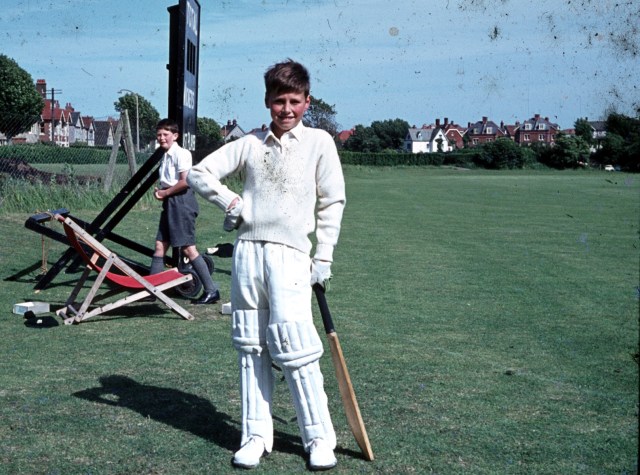
    me, captain of cricket age 11.

    Of course, there were many aspects of those school years that were moments of triumph and pride in achievement; that were character-building, that were full of fun and pleasure. We learned to focus on the positives to get through our challenges, and it is only years later, in a conscious revisiting of the experiences, that the darker side of those years gradually connects me more and more with the emotional scars that have influenced my adult life in negative ways.

    It is years later, through engaging with these processes that those old defence mechanisms and shame-based limitations can dissolve and fall away, to leave me naked in the authenticity and truth of who I can be.

    It is a journey, long and winding, perhaps with no final destination; but no-one else can walk it for us, and we owe it to ourselves in our search for our unique right to be, for self-belief and for an elusive inner peace.

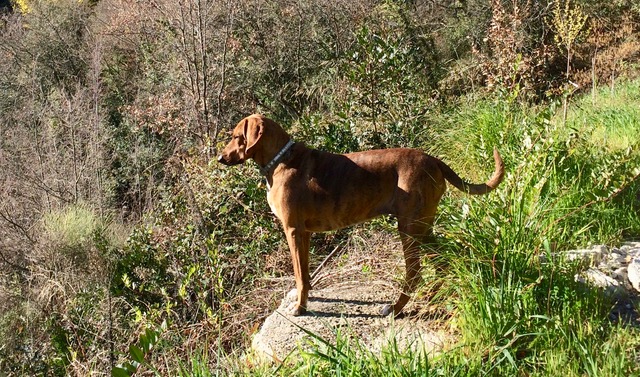
  • Ode to Misha

    Born in the forest
    Brought by her mother
    Fearful and timid
    Infested and starving
    She begged us to keep her
    This traumatised puppy
    So cute and appealing
    We couldn’t deny her
    The chance of a home

    But she tested our patience
    Destructive behaviour
    Unresponsive to love
    However we gave it
    Stealing food was her forte
    Disappearing at night
    To run wild in the woodland
    On the trail of the wild boar
    That her breed was bred for
    Returning exhausted
    To sleep on the sofa
    Unconcerned for her owners

    Yet slowly she bonded
    And accepted our family
    We knew she had come to
    Teach us some lessons
    Love grew as we learned
    Her curious nature
    Her orgasmic passion
    Her natural intelligence
    Her fierce independence
    Her elegant poses
    Her regal beauty

    The effect of her trauma
    Was always apparent
    her indifference to touch
    Till effects of her illness
    Softened her coolness

    As she needed our care
    She became very grateful
    Between hours of sleep
    She would hobble along
    For her walk and ablutions
    Dreamily sniffing
    For scent of the wild
    Find grasses for chewing
    Returning to climb
    The mountain of steps
    Then back to her bed

    As our love was growing
    For this sweet gentle creature
    Her life force was waining
    Towards tragic end
    The pain of deciding
    The sting of our guilt
    As we spoke to our vet
    And arranged for his service
    To put her to sleep

    She died in our arms
    To the words that we whispered
    Please forgive me
    I’m sorry
    Thank you
    I love you

    Repeated with tears
    At the graveside that evening
    On the edge of the woodland
    Where she felt at home
    We lowered her gently
    Sprinkling pink rose petals
    With candles alight
    And the moon as our witness

    A life ended early
    By infected sandfly
    Combined with her surgery
    Which caused too much stress
    On her highly strung system
    The shock of discovering
    She had Laschmaniosis

    That space where her bed was
    Her welcoming tail
    That I miss every morning
    Such a tragic farewell

  • Break Free From The Stimulation Nation

    I just came across this article which feels very relevant as a follow-on from my theme of Silence:

    Written by Dr. Perry, PhD


    “I believe people are afraid to be still because we’re used to being stimulated.” ~Michael W. Smith

    When was the last time you sat alone in silence without anything or anyone to distract you? For many of us, it is difficult to be alone without something to entertain us or to focus our attention on. In its most obvious and prevalent form, the distraction comes in the form of our mobile phones. The real question then should be when was the last time you spent a day without your mobile phone? I accept that we all depend on our mobile phones for a myriad of reasons such as work, staying in touch with friends and family and in case of an emergency. The issue that I am seeing more often in my practice is the inability to put the mobile phone down or to stop constantly checking social media apps for updates. Further, there appears to be almost a fear of being on our own without a mobile phone or some other distraction.

    The inability to tolerate quiet moments is something that we are being taught from the world around us. We are becoming a Stimulation Nation. Mass media, as well as current cultural norms, are promoting the idea that stimulation equals life. We are consciously and subconsciously being told that if we are not doing something exciting there must be something wrong with us.

    Our phone provides us with an illusory sense of connection with others in the world. Of course, others may be interested in your social media life but the reality is that the majority of people who “follow” are complete strangers. They do not know you in the same capacity that your loved ones know you. By choosing to focus your energy on your phone you are wasting a precious life source. The phone is an instrument designed for communication but in reality, it has become an object that robs us of a meaningful connection to the world around us.

    At the end of your life, what will have more meaning to you? Will it be the thousands of filtered images you spent “liking” on social media or the real-life moments you spent with loved ones? Realize that every single moment you spend looking at your phone instead of the face of your loved one is a missed opportunity of having a real connection. Your support group in life should consist of the interconnected arms of the real people you know encircling you with love, not the sporadic connectivity of the world wide web.

    So how does one stop feeding the need for stimulation? You have to decide to stop allowing yourself to be programmed. Most, if not all video games and social media apps are carefully and thoughtfully designed to keep you hooked to their programs. It is all very Pavlovian. But, the apps on our phones are not training dogs, they are training us, humans, to keep clicking and coming back for more. The constant and consistent exposure to your phone has programmed your brain to become accustomed to an endless supply of stimulation and it will no longer be able to patiently wait for what is next. There is no idle time, only restlessness if left without new stimulation. This restlessness will cause you to seek new ways to pacify your brain’s need for stimulation in order to avoid the anxiety of silence.

    Here are some steps that I use with my patients to help them become accustomed to less stimulation and learn to enjoy S. I. L. E. N. C. E.:

    1. Start slowly
    Do not rush into this without realizing that it may be challenging. You will need to acclimate to the “noise” of silence. Accept that you may not be able to be away from stimulation for long periods of time, but with patience and dedication, you can learn to wean yourself from the urge of constantly being on your phone.

    2. Intent
    The most essential ingredient to accomplishing any goal is to start. Set the intention to sit quietly for 10 minutes then gradually increase this time by 10-minute increments. The ultimate goal is for you to be able to spend time away from your phone without feeling that you have to check your phone. The phone should be an accessory in your life, not a necessity.

    3. Listen
    Listen to the world around you as well as the world within you. At first, the sounds of silence may be a bit distracting. You may experience a quiet buzzing or other noises in your ears or perhaps you will hear your heartbeat. Enjoy the quiet time for self-reflection. If you are taking a walk outdoors, enjoy the different sounds that nature has to offer.

    4. Endure
    Don’t give up. Be patient with yourself. Many times we are our own worst critique and this causes us to give up. Remember no one is judging you. Focus on the reason why you are trying to wean yourself off your phone. Life away from your phone and other electronic distractions can be more meaningful if you dedicate the time to building healthy bonds and surrounding yourself with positivity.

    5. Nurture
    Nurture your relationships with your loved ones. Perhaps being constantly on your phone has caused some disconnect in your relationship. Take the time to communicate and acknowledge that you have a problem. Together, you can create a system where there is accountability for over using your phone.

    6. Create
    Not having your life dictated by your phone or other electronic distraction will free up your time. Why not use your mind to create something beautiful. I believe that everyone has the ability to write and touch at least one person. Just imagine if you used all the time you spend on distractions on honing your writing skills. Perhaps if you unchained your brain from the internet you could write a beautiful poem or even a novel.

    7. Enjoy
    Once you have stopped the cycle of having to be constantly stimulated and are ready to exit the Stimulation Nation, put away your phone. Start enjoying your life while interacting and connecting with friends and family without having to disconnect to check your phone.

    When it comes to phone use or any other electronic device, moderation is key. Cell phones are an amazing technological development that has benefited many areas of our lives. Unfortunately, it has become too much of a good thing and to some, it has become a bit of a Pandora’s box. You may hold the whole world in the palm of your hand but if you are not careful, your whole world will become limited to the size of your palm. I welcome your comments and would love to hear your insight on this subject.

    The thoughts expressed in this blog post are my own and are not meant to create a therapeutic relationship with the reader. This blog does not replace or substitute the help of a mental health professional. Please note, I am unable to answer your specific mental health questions as I am not fully aware of all of the circumstances. If you would like to schedule a free 20-minute consultation with me to see if we would be a good fit to work together please click here to email my assistant, Isabel.

    Kindly,
    Dr. Perry


    CREDENTIALS
    Ph.D. in Clinical Psychology
    M.A. in Clinical Psychology
    B.A. in Psychology


    MENTAL HEALTH SUPPORT
    “I specialize in a solution-focused and results-driven approach to treating depression, anxiety, relationship issues, and narcissistic abuse.”
    www.MakeItUltraPsychology.com

  • ON SILENCE by Ardhan Swatridge

    Probably the biggest challenge and barrier for any of us to deal with in trying to pursue a spiritual practice is, in our search for some degree of inner peace and self-acceptance, we eventually realise that our restless minds endlessly generate thoughts from which it seems impossible to escape.

    In the early stages of meditation, years ago, I developed the belief that, with practice, I was going to be able to still my mind, empty my thoughts and float in some beatific realm of peaceful silence, from where all my earthly problems, my existential fear and my daily anxieties would all dissolve; at least temporarily.
    Predictably, as I see it now, I soon experienced a lot of frustration in my meditation sessions. Unable to distance myself for more than a few seconds from the tyranny of my thoughts, I tended to think that I was doing it wrong, that I was just not cut out for spiritual practice. And though I have continued to try to honour my commitment to meditation by searching in a number of traditions over the years, sitting with several different teachers to try and find an approach that would work for me, I have to admit that my record of showing up on ‘the cushion’ and my progress as a seeker has been patchy and limited.

    In spite of all this, there is a mystic in my being who lives with such a deep longing to transcend ordinary existence, who longs for and intuits a profound stillness and silence that lies at the heart of everything – the non-dual, interconnected co-arising, the Ground of Being, Emptiness, Oneness. I have read about it and felt the Truth of explanations from all my teachers; (Lama Yeshe, Joanna Macy, Eckhart Tolle, Yogananda, Thich Nhat Hahn, Sri Mooji, Igor Kufayev, Ken Wilbur, Alan Watts and others).

    I can speak of the vast interconnected web of existence that paradoxically is to be experienced within profound stillness and silence, because I have an intellectual understanding of it. Yet between the two poles of rational knowing and intuitive awareness there is a gap; a chasm in fact, so wide and yet paradoxically there is really only a gossamer veil between them.

    That veil, that I experience as a chasm, is created by my ego whose need for total control locks me into his dualistic take on life with fierce determination. Teachers tell us that spiritual awakening necessitates the dissolving of the ego’s hold over our assumed reality, and while this might seem appealing at first, most of us reach a point sooner or later, sooner in my case, where we face huge fear at the prospect of letting go. Who am I without the ego, which is all I know?

    The point here being that we can’t know what it is we are letting go into, or out of. I have undergone a number of trainings and spent many hours in individual therapy to try to resolve my anxieties and limitations at emotional and psychological levels. This has produced some benefits, as I have a much better understanding of my woundings and vulnerabilities that my ego thinks he has to protect, but it has been only partially helpful.

    A Zen practitioner and teacher, whose book I am reading (Zen and Therapy by Manu Bazzano 2017), describes how any path of healing or transformation involves being willing to allow ‘overwhelm’; to allow oneself to become lost. Our egos which protect and control our personality, are created from all the early experiences and influences from our family of origin and from the cultural setting in which we grew up. Nobody has perfect parents, we are all traumatised by these influences to varying degrees and we have the choice to live our lives according to the distortions and limitations that created us, all under the protecting/controlling eye of our ego; or we can search for ways to transcend these limitations. Bazzano calls this the process of ‘emancipation’.

    So where does silence come into all this?

    Before going back to the problem of our mind relentlessly creating thoughts, I just want to acknowledge the issue of silence in relationship to others, where in the main it implies the absence of communication and indeed can be used as a powerful weapon, a refusal to speak one’s truth, for example, which I am regularly guilty of; and yet it can also create a quality of intimacy between two people, when there is no need for talk because both people feel a resonance at a silent energetic level.

    However, in meditation we don’t get far by willing our thoughts to stop, and only a little further by learning to watch them from the equanimitous position of a witness. I was listening to a recent discussion between Gabor Mate and Adyashanti in which Adyashanti explained how he invites people to give up trying to stop their thoughts and to try something much more skilful and effective. This involves proposing a question, in order to avoid the trap of demanding something of the mind, which only serves to reinforce its hold over our focus of attention. He suggests asking ourselves this question:

    “What if I just listen to the part of me that is already quiet?”

    This is indeed skilful. And while I spend so much time at the mercy of my ego’s need to fill any space with something – any activity, sight or sound that creates a sense of novelty; I also know, as I have described above, there is already in all of us our Buddha Nature, the Ground of Being, which was never born and which never dies. This is the universal consciousness that is essentially silent and still, ever-present in the eternal now.

    I have used some terms and phrases here that have become somewhat cliche’d through misappropriation and over-use. But I do not apologise for them. Listening to Adyashanti’s suggestion this morning, as he explained it to Gabor Mate, I realise I need to apply my time on the meditation cushion to ask that question in a process of deep enquiry, while opening to Bazzano’s invitation to ‘lose’ myself to whatever arises in response to that simple question. Will it trick the ego and the thinking mind into taking a back seat? Can I touch into that deeper consciousness that is silent and ever-present?
    I know there is silence within me. When I drop down enough to bring presence to the silence that exists all around me here on the mountainside in Liguria, I love it. I love not having to speak, I love the time away from having to engage with all the drudgery of daily practicalities that dominate most of our lives. I value silence and solitude above everything once I let go of all my distractions and addictions. Silence is a rare commodity in these days of city-living and the business of managing a busy lifestyle in mainstream society, as most people are trying to do.

    To quote Adyashanti again: ‘Silence is not of high cultural value in our society’. But look how much stress and pain results from the effects of modern society. Noise is a destructive pollutant on the planet, along with all the other kinds of pollution, though not so obvious perhaps because of the extent to which we unconsciously adapt as we adjust to living in towns and cities instead of living in nature as we did in the past. I feel so lucky to be in a place where silence is possible and in a position where I have time to give to it.

    Not that the natural world is silent of course. I grew up on a farm, with background noises of mooing cows as they came to be milked twice a day, with the raucous call of rooks nesting in nearby elm trees every spring, with our dog barking at the postman’s van each morning, my father’s tuneful whistling as he went about his chores on the land; on waking in the night, the chiming of our grandfather clock in the hall downstairs and the occasional distinctive sound of an owl calling to it’s mate.

    Maybe to a city dweller the sounds and silence of the countryside are disconcerting or even scary, but these were and continue to be reassuring sounds for me, ‘announcing [my] place in the family of things’ (from Wild Geese by Mary Oliver). Not like the sounds of a city, as I experience them: cars, motorbikes, planes, sirens, factories, piped music. Manmade sounds that jar and offend the ear. Even the subliminal hum of a city experienced in the small hours disturbs me, unlike the silence of the countryside.

    Nature too has its background hum of course; but to me it is the positive hum of nature’s complexity, of inter-being, of the cycles of life, death and renewal, as opposed to that of the linear systems of consumption we humans impose on our struggling planet, producing so much trash and pollution at the end of that line. For me noise is associated with that destructive linear system, whereas Silence goes with the cyclical nature of life.

    I clearly recall that from an early age I would occasionally drop into a kind of silent reverie when I was alone outside. Tuning into the silence within the sounds of nature around me, I found myself becoming still and, sensing a subtle shift, I could experience a kind of merging that was somehow familiar and reassuring. A mystic’s knowing from a previous life? Or a connection to the oceanic bliss of being in my mother’s womb? Who knows.

    I can remember specific occasions when this happened in my childhood, and which left a big impression. But the influence of pragmatic parents and ten years at boarding school ensured that I developed as a logical pragmatist, with the mystic taking a secondary place, less trusted and too sensitive to give shape to my life in a significant way.

    My sense is that most people today have a real fear of Silence. I am not going to analyse that further here, but I do feel deeply sad that this is broadly the case. It says so much that we have to fill any and every space with something, with stuff. I admit to having a struggle combating the influence of sophisticated marketing and the bombardment of information and entertainment that have become ’the weapons of mass distraction’, as one of my teachers is quoted as saying. The media machines are trying to put us to sleep with ‘noise’ and are succeeding brilliantly, helping to keep us in denial about the urgent threat to the planet of Climate Change that we ourselves are creating in our hunger for short-term material pleasure.

    Yet in reaction to the threat of global collapse, the rise and availability of ways to evolve our consciousness through spiritual (as opposed to religious) practice has been exponential, and it continues to grow. Yoga, in its many forms, has become a major force, often providing a way into meditation through embodied practice for thousands of people, bringing with it dietary and health consciousness, ethical awareness and a sense of our interconnectedness; all of which is a force for good and a cause for hope going forward. I cling to the hope that a widespread rise in spiritual values will engender a growing sense of global responsibility and an appetite for real change before it is too late.

    I can’t end this post without including something about by-passing; a dreaded word in spiritual circles. We need to address our emotional baggage just as much as we need to gain spiritual insight. Many teachers tell their students that spiritual practice will also help their emotional woundings and psychological issues. The number of scandals of teachers (often highly evolved ones) abusing their students, is clear evidence that we can become spiritually awake and mature, while remaining emotionally a child, unable to grow up. There is a great danger of lop-sided development as a student of spiritual practice.

    Emancipation, to use Bazzano’s term, involves evolving and growing up at all levels, healing psychologically, maturing emotionally, as well as gaining spiritual insight. The term transcendance can imply bypassing, where it avoids the full embodiment of any of these processes. Embodied Evolution would be my definition of the term emancipation in this context, as it ensures that bypassing does not take place.

    I have been guilty of it. In fact it has been my primary defence in life to use rationalisation, escaping from my body/feelings into my head to rationalise issues away. A strategy to manage fear as a result of early trauma and the pragmatist’s response to the way of the mystic. The power of the thinking mind over the silent knowing of embodied mystical awareness.

    Then there are the levels of denial we use to avoid addressing the grave dangers of our planet in peril; glaring examples of by-passing of course, which is operating throughout western culture, but this is a huge topic to be addressed elsewhere.

    Silence is a jewel of great value. I need to keep reminding myself – or rather my pragmatist self – to make time and space for it, to afford it the importance and value it deserves, and I want to remind the world around me, in the face of terrible odds, that we lose this vital resource at our peril, both individually and globally.

    Silence gets us under the noise of our thoughts to reach a more subtle spacious consciousness, from where we can begin to touch into the rhythms of nature, the still centre of our own being, compassion for others (human and non-human) and even perhaps to the Ultimate Truth of reality.